USMNT
Ranking the Most Impactful USMNT Players in World Cup History
Published
7 hours agoon
Thomas Deschaine (@uskeeper on X and us_keeper on Instagram)
The U.S. Men’s National Team has played 37 World Cup matches across ten tournaments, producing no shortage of memorable moments and standout performances. Below is my ranking of USMNT players based on their World Cup impact, some from a single tournament, others across multiple appearances.
I’ve taken a few liberties with ties, as in several cases no single player clearly stood above the rest; instead, the moment itself, and the collective effort, defined the performance.
Honorable Mention:
Marcelo Balboa – Appearing in three consecutive World Cups (1990, 1994, and 1998), he anchored the USMNT defense throughout an important era of growth for the program. He also came close to one of the tournament’s most memorable moments with a spectacular bicycle kick attempt off a corner against Colombia that nearly found the net.
Michael Bradley – Across three World Cups (2006, 2010, and 2014), Michael Bradley was a driving force in the USMNT midfield, known for his engine, composure, and leadership. He delivered a crucial game-tying goal against Slovenia in 2010 and later provided the assist on Julian Green’s memorable strike in 2014, consistently stepping up in key moments on the world stage.
Cobi Jones – While Cobi Jones remains the all-time leader in USMNT caps and earned 11 World Cup appearances across three consecutive tournaments, he did not register any goal contribution in any of those World Cups.
Eddie Pope – Across three World Cups (1998, 2002, and 2006), Eddie Pope was a cornerstone of the USMNT backline, known for his composure, positioning, and aerial dominance. He played a vital role in the team’s run to the quarterfinals in 2002, anchoring a disciplined defense and providing veteran leadership against some of the world’s top attacking talent.
Matt Turner – If Turner earns the starting role and delivers a standout performance during a deep USMNT run, coming up with game-changing saves, he could break into the top 10 while surpassing the current records for wins and shutouts.
#10 – 1930 USMNT Pioneers-TIED
Jimmy Douglas
World Cups: 1 (1930)
Matches: 3
Wins: 2
Shutouts: 2
Bert Patenaude
World Cups: 1 (1930)
Matches: 3
Goals: 4
Assists: 2
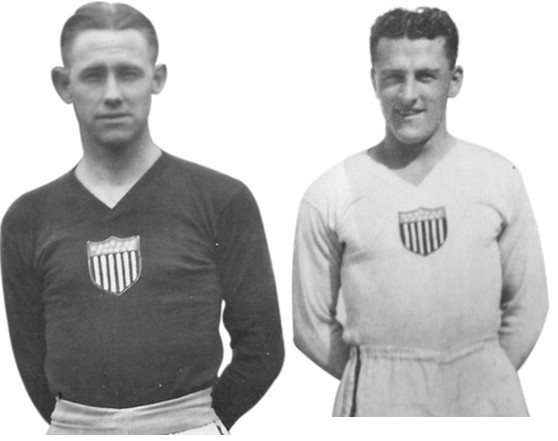
With limited historical data and in the context of the very first FIFA World Cup, I’m combining two true pioneers of the USMNT. Jimmy Douglas remains the only USMNT goalkeeper to record two wins and two shutouts in World Cup play, all achieved at the inaugural 1930 tournament, where the United States secured a third-place finish.
On the attacking side, Bert Patenaude scored four goals in that same tournament, including a hat trick in the U.S. second and final group-stage match. His performances were instrumental in helping guide the United States to its third-place finish in the first-ever FIFA World Cup.
#9 – 1950 USMNT Heros-TIED
Frank Borghi
World Cups: 1 (1950)
Matches: 3
Wins: 1
Shutouts: 1
Joe Gaetjens
World Cups: 1 (1950)
Matches: 3
Goals: 1
Assists: 0
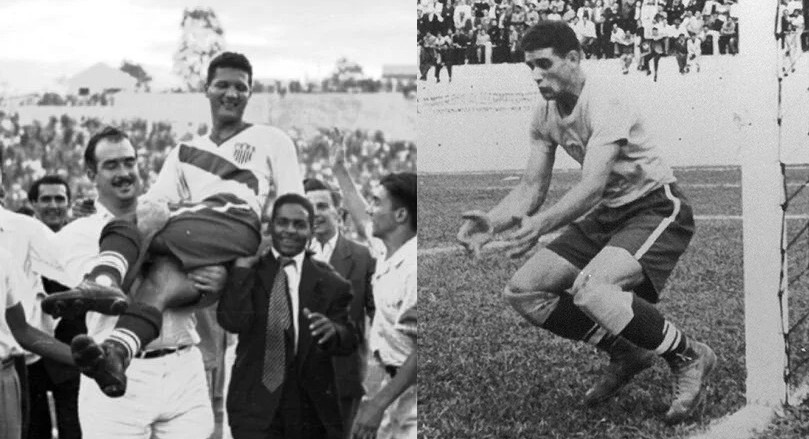
Another historic meeting, shaped by similar circumstances to the first group, but what is known for certain is that the USMNT pulled off a stunning victory over one of the top sides at the 1950 World Cup. Frank Borghi delivered a remarkable performance in goal throughout the match, standing firm under relentless pressure.
The breakthrough came in the 38th minute when Joe Gaetjens scored a crucial goal to give the USMNT the lead. From there, the match shifted entirely onto the shoulders of the U.S. defense and goalkeeping, who held strong to secure a famous 1–0 victory over England one of the greatest upsets in World Cup history.
Earnie Stewart
World Cups: 3 (1994, 1998, 2002)
Matches: 11
Goals: 1
Assists: 0
#8 – 1994 USMNT Trailblazers-TIED
Eric Wynalda
World Cups: 3 (1990, 1994, 1998)
Matches: 8
Goals: 1
Assists: 0
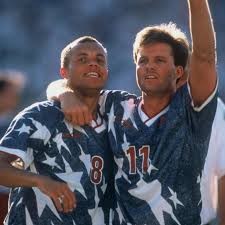
Two of the USMNT’s early trailblazers, Eric Wynalda and Earnie Stewart, delivered defining World Cup moments on home soil at the 1994 FIFA World Cup. Both played pivotal roles in energizing a new generation of American soccer fans.
The USMNT’s first goal of that tournament came via one of the most iconic set pieces in World Cup history, earning a crucial draw in the opener. That momentum carried forward when Stewart netted the game-winner against heavily favored Colombia, securing the United States’ first World Cup victory since 1950.
.
#7 – Claudio Reyna
World Cups: 4 (1994, 1998, 2002, 2006)
Matches: 10
Goals: 0
Assists: 0
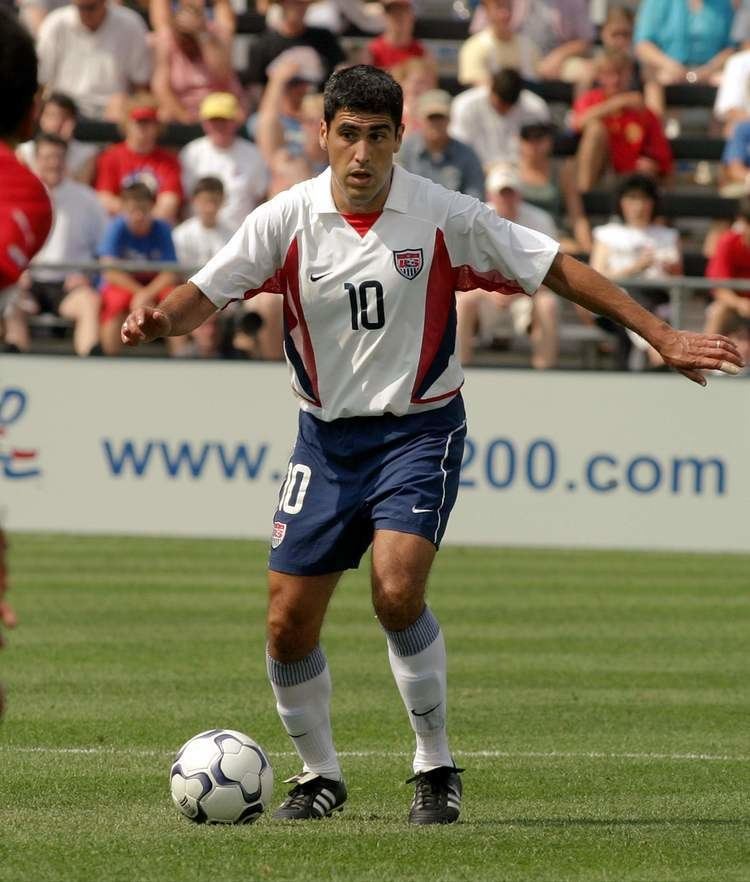
Named to four World Cup squads and appearing in three, Claudio Reyna was a cornerstone of the USMNT for more than a decade. While he didn’t record a goal contribution on the World Cup stage, his influence was undeniable, dictating tempo, providing composure in midfield, and serving as captain in both the 2002 and 2006 tournaments.
#6 – DaMarcus Beasley
World Cups: 4 (2002, 2006, 2010, 2014)
Matches: 11
Goals: 0
Assists: 1
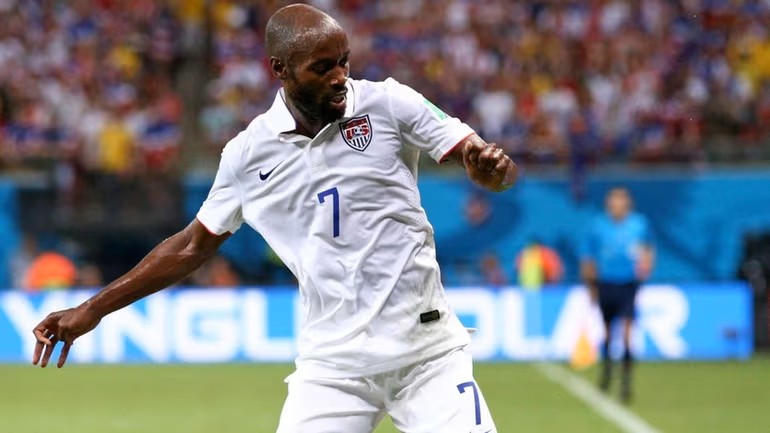
DaMarcus Beasley is the only USMNT player to appear in four World Cups (2002, 2006, 2010, 2014), a testament to his remarkable longevity, versatility, and consistent impact across multiple generations.
He emerged on the global stage at the 2002 World Cup as an explosive, attack-minded winger, using his pace and direct play to stretch defenses and play a key role in the United States’ run to the quarterfinals. As his career progressed, Beasley reinvented himself, most notably transitioning to left back by the 2014 World Cup, where his experience, defensive discipline, and composure helped stabilize the back line against elite international competition.
#5 – Brad Friedel
World Cups: 3 (1994, 1998, 2002)
Matches: 6
Wins: 2
Shutouts: 1
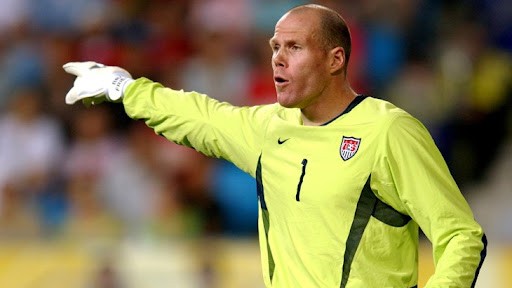
Brad Friedel’s World Cup legacy is defined by consistency, composure, and elite shot-stopping across multiple tournaments. He served as the primary starter at the 2002 World Cup, made a start at the 1998 World Cup, and was the backup to Tony Meola in 1994, providing a steady, reliable presence in goal during a pivotal era for the USMNT.
His standout performances came in 2002, highlighted by his penalty-saving heroics. Friedel recorded two penalty saves in the tournament (excluding shootouts), tying the World Cup record for most in a single edition. His ability to deliver in high-pressure moments played a key role in the United States’ run to the quarterfinals and solidified his place among the program’s all-time great goalkeepers.
#4 – Brian McBride
World Cups: 3 (1998, 2002, 2006)
Matches: 10
Goals: 3
Assists: 1
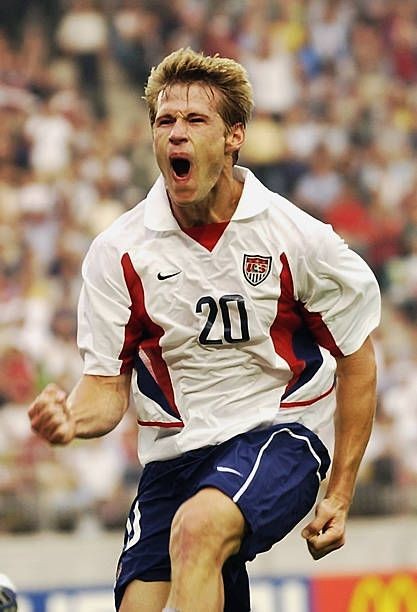
Brian McBride’s World Cup legacy is defined by big goals, relentless work rate, and a fearless, physical style that helped set the tone for the USMNT on the global stage. He scored the team’s only goal at the 1998 World Cup against Iran, rising to meet a corner kick with authority.
In 2002, he played a pivotal role in the opening-match upset of Portugal, constantly pressuring the defense and helping spark the historic win, before delivering again with a goal against Mexico in the Round of 16 to send the US. to the quarterfinals.
His grit and determination were on full display in his final World Cup in 2006, when he famously continued playing after suffering a broken nose and a bloodied face, an enduring symbol of his toughness, leadership, and commitment to the team.
#3 – Tim Howard
World Cups: 3 (2006, 2010, 2014)
Matches: 8
Wins: 2
Shutouts: 1
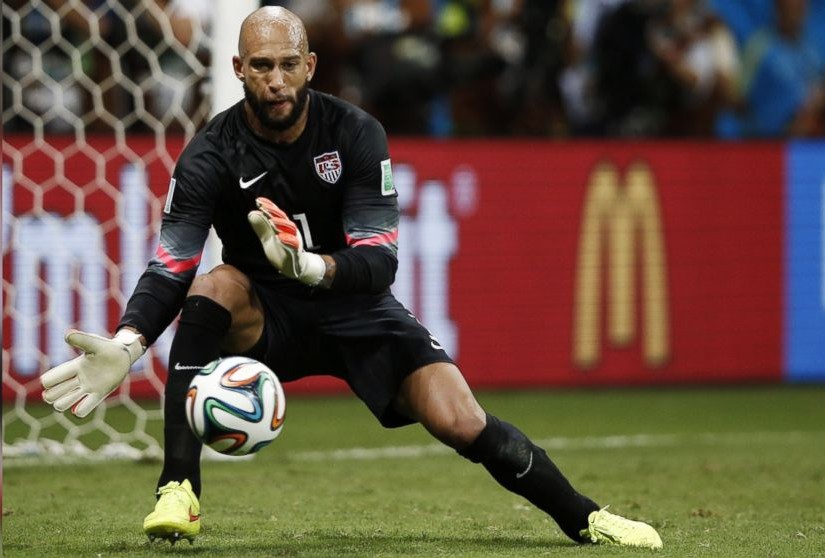
A starter in back-to-back World Cups, Tim Howard delivered on the biggest stage when it mattered most. From his record-setting 16-save performance against Belgium at the 2014 World Cup, widely regarded as one of the greatest goalkeeping displays in World Cup history, to his consistent ability to keep the United States competitive against elite opposition, he repeatedly elevated his game under pressure.
His shot-stopping brilliance, commanding presence, and calm leadership in high-intensity moments define a legacy that places him among the most influential goalkeepers the USMNT has ever had on the World Cup stage.
#2 – Clint Dempsey
World Cups: 3 (2006, 2010, 2014)
Matches: 10
Goals: 4
Assists: 0
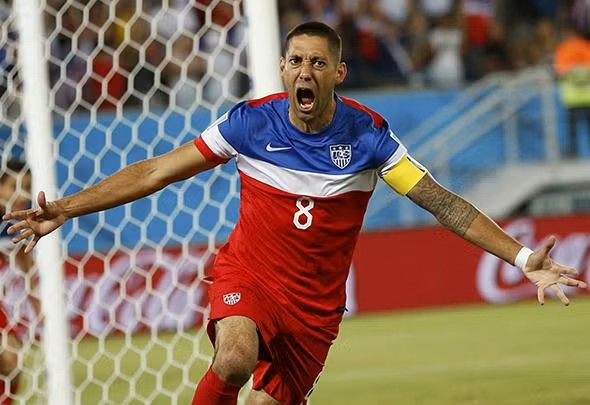
From his goal just 29 seconds into the match against Ghana at the 2014 World Cup, the fastest in USMNT World Cup history, to his composed finish against England in 2010 World Cup that helped secure a crucial draw, to becoming the first American to score in three different World Cups, Clint Dempsey consistently delivered on the game’s biggest stage.
Those moments, combined with his toughness, edge, and ability to show up in key situations, cement his place as one of the most impactful USMNT players in World Cup history.
#1 – Landon Donovan
World Cups: 3 (2002, 2006, 2010)
Matches: 12
Goals: 5
Assists: 3
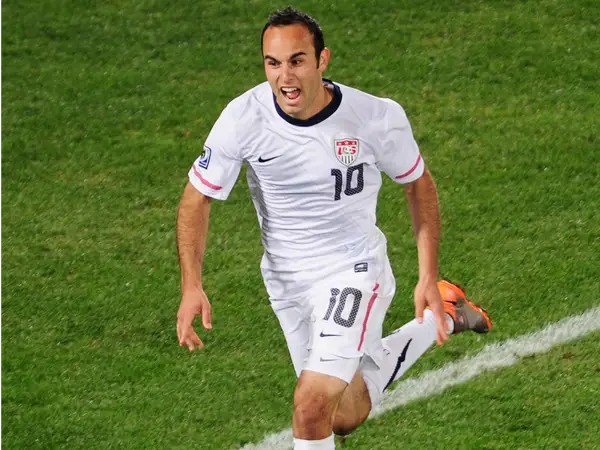
From his dramatic stoppage-time winner against Algeria that sent the USMNT into the knockout stage, to his goal in the “Dos a Cero” victory over Mexico that helped propel the team to the quarterfinals, to his deflected strike off Jorge Costa that contributed to him being named Best Young Player of the 2002 World Cup, Landon Donovan consistently delivered on the biggest stage.
Taken together, those moments make a strong case that he’s been the most impactful USMNT player in World Cup history, and it only adds to the “what if” of how much more he might have achieved had he been part of the 2014 squad.
You may like
USMNT
The Return of Third-Place Qualifiers at the FIFA World Cup
Published
7 hours agoon
June 13, 2026
Thomas Deschaine (@uskeeper on X and us_keeper on Instagram)
The expansion of the 2026 FIFA World Cup from 32 to 48 teams will dramatically change the race to reach the knockout stage. Under FIFA’s new format, the top eight third-place teams will advance to the Round of 32 alongside the top two teams from each group.
For the past seven World Cups, only the top two teams in each group have advanced to the knockout stage. The last time third-place teams moved on was at the 1994 World Cup, where the USMNT benefited from the format before losing to eventual champions Brazil in the Round of 16.
So how many points will teams need to advance in 2026?
History suggests that five points should safely secure a place in the knockout stage. Across the past seven World Cups, every team with five or more points advanced out of the group stage.
Three points, however, has almost never been enough. The only team to advance with just three points during that span was Chile at the 1998 World Cup.
Four points has produced mixed results. At the 2022 World Cup, three groups featured two teams finishing on four points, but only one team from each of those situations advanced. Similar scenarios also occurred at the 2010 and 2002 World Cups.
Overall, 46 teams have finished the group stage with four points since 1994, but only 20 advanced to the knockout stage. The USMNT accounts for three of those successful four-point campaigns, advancing in 1994, 2002, and 2014.
1986 World Cup

Semi-Finals Match between Belgium and Argentina
The 1986 World Cup was the first tournament with 24 teams to allow four third-place group stage teams to advance to the knockout round. While the 1982 World Cup also featured 24 teams, it used a different format with a second round made up of four groups of three teams, with only the group winners advancing to the semi-finals.
One of the most notable aspects of the 1986 World Cup was that two teams advanced to the knockout stage with just two points, something that seems highly unlikely under the format for the 2026 World Cup.
Among the third-place qualifiers, Belgium made the deepest run, reaching the semi-finals before losing to eventual champions Argentina.
1990 World Cup

World Cup Final Argentina against Germany
At the 1990 World Cup, every third-place team that advanced to the knockout stage finished with three points. The biggest surprise was Argentina, the highest-ranked third-place team, making an incredible run all the way to the World Cup Final before falling 1-0 to Germany.
1994 World Cup

The 1994 World Cup was arguably the most fascinating tournament when it came to the impact of third-place teams advancing to the knockout stage and likely played a major role in FIFA’s decision to expand the tournament to 32 teams in 1998.
Here’s a look at the top five FIFA World Cup group stage tiebreakers, which will almost certainly come into play this summer, especially when it comes to ranking the third-place teams.
- Overall Goal Difference: The greatest goal difference in all group matches.
- Overall Goals Scored: The greatest number of goals scored in all group matches.
- Head-to-Head Points: The greatest number of points obtained in the group matches between the teams concerned.
- Head-to-Head Goal Difference: Superior goal difference in the group matches between the teams concerned.
- Head-to-Head Goals Scored: The greatest number of goals scored in the group matches between the teams concerned.
Both Group D and Group F saw three teams finish with six points, something that has not happened at the FIFA World Cup since. That created dramatic tiebreaker scenarios that ultimately determined where all six teams finished in their groups. Of those six teams, only two reached the quarterfinals, with Bulgaria making the deepest run by reaching the semi-finals.
Group E may have been the most fascinating group of the 1994 World Cup. Mexico, Ireland, Italy, and Norway all finished with four points and an identical goal differential of zero. Norway was eliminated after scoring just one goal, the fewest in the group.
Italy, meanwhile, advanced as a third-place team and went all the way to the World Cup Final before losing to Brazil in a penalty shootout, an incredible run considering how close they came to being eliminated in the group stage.
Will the 2026 World Cup Deliver Another Chaotic Group Stage?
With the World Cup expanding to 48 teams, the traditional “group of death” may not carry the same weight at the 2026 tournament. Still, that doesn’t mean the group stage will lack drama. Fans will be hoping for the kind of chaotic and unpredictable scenarios that made the 1994 World Cup so memorable, where final group matches carried massive stakes and teams were fighting for survival until the final whistle.
From an entertainment perspective, more meaningful matches late in the group stage would be a huge boost for the tournament, but only time will tell if the expanded format can truly deliver that same level of tension and excitement.
USMNT
The USMNT’s World Cup Legacy: Highs, Lows, and Defining Moments
Published
1 week agoon
June 3, 2026
Thomas Deschaine (@uskeeper on Xhttps://x.com/uskeeper/ and us_keeper on Instagram)
The USMNT’s World Cup story stretches back nearly a century to the inaugural tournament in 1930. The 2026 FIFA World Cup will mark the United States’ 12th appearance on soccer’s biggest stage.
Over that time, the Americans have played 37 matches, earning 9 wins, 8 draws, and 20 losses, while scoring 40 goals and conceding 66. The U.S. has advanced to the knockout stage in seven of those tournaments.
Five different USMNT goalkeepers have recorded clean sheets at the World Cup, Matt Turner and Frank Borghi with two each, and Tim Howard, Brad Friedel, and Jimmy Douglas with one apiece.
The USMNT’s top World Cup scorers, Clint Dempsey, Landon Donovan, Brian McBride, and Bert Patenaude, all netted multiple goals in a single tournament, cementing their places in U.S. soccer history.
1930 – Uruguay
The inaugural World Cup in Uruguay saw the USMNT surprise the world by reaching the semifinals before falling 6–1 to Argentina. The U.S. dominated the group stage, defeating Belgium and Paraguay 3–0, with Bert Patenaude making history as the first player ever to record a hat trick at a World Cup. The Americans ultimately finished third, still their best result on the world stage to this day.

1934 – Italy
The USMNT’s 1934 World Cup appearance would be a brief one. Just days before the tournament began, the Americans secured qualification by defeating rivals Mexico 4–2 in Rome. Drawn straight into a knockout format, the U.S. faced host nation Italy in their opening match, falling 7–1. Aldo Donelli scored the team’s only goal, following up his remarkable four-goal performance from the qualifier.

1950 – Brazil
The USMNT pulled off arguably the greatest upset in World Cup history, and certainly their biggest win to date, by defeating England 1–0, thanks to Joe Gaetjens’ famous goal. Despite that historic triumph, the Americans fell 3–1 to Spain in their opener and 5–2 to Chile in their final group match, ending their tournament at the group stage.

1990 – Italy
After a forty-year absence, the USMNT returned to the World Cup with a young, hungry, and largely untested squad. Despite a rough start, suffering a 5–1 loss to Czechoslovakia, the Americans rebounded with a hard-fought 1–0 victory over host and eventual third-place finisher Italy before narrowly falling 2–1 to Austria. The invaluable experience gained at this tournament would help lay the foundation for the team’s performance at the 1994 World Cup.

1994 – United States
After several attempts to host a World Cup, the United States was finally awarded the 1994 tournament. The USMNT faced a very tough group but showed determination in all three matches. They opened with a 1–1 draw against Switzerland, with Eric Wynalda scoring a brilliant set-piece goal, still considered one of the best in World Cup history. In their second match, the Americans secured a 2–1 victory over a strong Colombian side, marking their first World Cup win since 1950. A narrow 1–0 loss to Romania in the final group match didn’t stop the U.S. from advancing to the Round of 16, where they were eliminated 1-0 by eventual champions Brazil. The 1994 World Cup had a lasting impact, helping to inspire and shape soccer culture in the United States.

1998 – France
It was an up-and-down cycle for the USMNT, but their fourth-place finish at the 1995 Copa América had fans optimistic about the team’s potential heading into 1998. However, the shocking omission of longtime captain John Harkes, who had worn the armband 30 times, raised serious questions. Meanwhile, trailblazers from earlier cycles struggled to make an impact: Alexi Lalas didn’t play a single minute, Marcelo Balboa saw just eight minutes of action, and Eric Wynalda featured in only two matches for a total of 51 minutes. The Americans went on to lose all three group-stage games, finishing last among the 32 teams.

2002 – Korea / Japan
After a hard-fought qualifying campaign, the USMNT made a memorable run at the 2002 World Cup, advancing to the quarterfinals after a historic 2–0 win over regional rivals Mexico. The Americans put in a strong performance against Germany but were denied a potential equalizer when a clear handball went uncalled, ending their dream run with a narrow defeat. Landon Donovan’s breakout performance earned him the tournament’s Best Young Player award.

2006 – Germany
The USMNT entered the 2006 World Cup brimming with confidence, dreaming of another deep run. But drawn into a brutal Group of Death, those hopes quickly unraveled. A 3–0 loss to the Czech Republic stunned the team, though a fierce 1–1 draw with Italy briefly reignited belief. Then came heartbreak, a controversial penalty on Oguchi Onyewu doomed the US to a 2–1 defeat to Ghana and a shocking early exit.

2010 – South Africa
Riding the momentum of their 2009 Confederations Cup runner-up finish, the USMNT entered the 2010 World Cup with real belief and growing hype. Every match in South Africa was a test of grit and heart. The opener against England ended 1–1, with Clint Dempsey’s late first-half strike shocking the favorites. In their second match, the Americans stormed back from two goals down to draw 2–2, keeping their hopes alive. Then came one of the most iconic moments in U.S. soccer history, Landon Donovan’s stoppage-time winner against Algeria, sealing a dramatic 1–0 victory and a place in the knockout stage. But the dream ended in heartbreak, as Ghana once again eliminated the U.S. in extra time, 2–1.

2014 – Brazil
The mood heading into the 2014 World Cup was cautious after Jurgen Klinsmann’s shocking decision to leave Landon Donovan, the team’s all-time leader in goals and assists, off the roster. The USMNT opened against familiar nemesis Ghana, who had eliminated them in the previous two tournaments. This time, redemption arrived when substitute John Brooks headed home a late winner to seal a thrilling 2–1 victory. In their second match against powerhouse Portugal, the Americans came within seconds of back-to-back wins before a last-gasp equalizer from Silvestre Varela snatched away the dream. A 1–0 loss to Germany in the final group game proved enough to advance on goal difference. In the Round of 16, the U.S. faced Belgium’s golden generation, pushing the match into extra time behind Tim Howard’s record-breaking 16 saves, but ultimately fell 2–1 in a valiant defeat that earned global respect.

2018 – Russia
An aging and uninspired USMNT failed to qualify for the 2018 World Cup, marking one of the darkest moments in American soccer history. Bruce Arena later suggested that, had the U.S. made it, the roster would have looked much younger and more dynamic. Still, it’s hard to imagine that group advancing past the group stage, unless teenage sensation Christian Pulisic had delivered a breakout performance on par with Landon Donovan’s heroics in 2002.

2022 – Qatar
A new generation of USMNT players brought back the energy and passion missing in recent cycles. After a turbulent qualifying journey, the Americans opened the World Cup with a 1–1 draw against Wales, Tim Weah’s first-half goal canceled out by Gareth Bale’s late penalty. A gritty 0–0 result against England kept hopes alive before Christian Pulisic’s heroic goal against Iran sent them to the knockouts. Out of gas in the Round of 16, the U.S. fell 3–1 to a superior Netherlands side.

2026 – United States / Mexico / Canada
One thing is certain; the 2026 FIFA World Cup will be unlike anything the world has ever seen. It’s destined to break records, captivate audiences, and redefine what soccer means in America. But the story still to be written is that of the USMNT. Can they rise to the moment, ignite a nation, and make a historic run on home soil, proving once and for all that soccer in the United States has arrived and is here to stay?
Thomas Deschaine (@uskeeper on X and us_keeper on Instagram)
Who is the greatest captain in the history of the U.S. Men’s National Team? With more than 100 different players having worn the armband over the years, which player truly stood out as the best leader on the field?
In this article, I’ll break down the statistics behind the players who have captained the USMNT the most, as well as those who have worn the armband at the FIFA World Cup. The information was gathered through a combination of U.S. Soccer media guides, match footage, newspaper archives, and various online resources that were cross-checked and confirmed through multiple sources.
Over the last several cycles, the “Captain America” label has often been attached to the face of the USMNT. I believe that trend really began around the 2014 World Cup when Clint Dempsey captained the United States in Brazil.
Today, that title is commonly associated with Christian Pulisic, who became the youngest player ever to captain the USMNT and has worn the armband more than any other player over the last two cycles. However, it has become increasingly clear that Pulisic prefers to lead through his performances on the field rather than serve as the outspoken public voice of the national team.
In some ways, I wish Landon Donovan had taken a similar approach at times instead of trying to carry the burden of being the vocal leader everyone expected him to be. As I often tell my daughter, there are many different types of leaders in sports, and not all of them need to wear the captain’s armband.
There are many fans who believe the captaincy itself doesn’t carry much importance, but I disagree. Leadership matters, and teams need players who can provide direction, accountability, and composure both on and off the pitch. For me, Tyler Adams and Chris Richards are two players who stand out as natural leaders for the present and the future of the USMNT. At the same time, Tim Ream has clearly filled that leadership role throughout the last two cycles.
Below is my list of the top five USMNT captains of all time, along with a breakdown of every player who has captained the national team at least 19 times, a group filled with some of the biggest names and legends in U.S. Soccer history.
Honorable Mention
Tyler Adams, who captained the USMNT at the 2022 World Cup, could become just the second player in team history to wear the armband at back-to-back World Cups. However, his overall number of matches as captain is still relatively low, making it difficult for him to crack the top five on this list at this point in his career.
Mike Windischmann defender, captained the USMNT during one of the most difficult and pressure-filled periods of the program’s modern era, helping lead the team as it fought to qualify for its first World Cup in 40 years, a feat the United States ultimately achieved in remarkable fashion.
#5 – Marcelo Balboa, Thomas Dooley and John Harkes

During the 1994 and 1998 World Cup cycles, these three USMNT trailblazers combined to captain more than 70 matches for the national team. Each was an outstanding leader on the field who consistently supported and elevated their teammates. Dooley was the captain of the 1998 World Cup team.
While choosing three players for the fifth spot may seem like a cop-out, all of them led this group in exactly the way the team needed during that era. Personally, I also prefer my captain to play in defense or as a holding midfielder, as those positions put them in the best spot to organize the team and quickly communicate with referees when attacking players are fouled higher up the field.
#4 – Tony Meola

I generally don’t prefer a goalkeeper to serve as captain, but Tony Meola, who became one of the youngest regular captains in USMNT history following the 1990 World Cup, really stood out to me as both a young soccer fan and aspiring goalkeeper.
His leadership throughout the 1994 World Cup cycle was especially impressive, as he captained the USMNT in nearly 60 matches and established himself as one of the defining leaders of that era.
#3 – Michael Bradley

Michael Bradley’s experience rising through the USMNT system while learning from several great leaders translated well when he became captain in 2015 after Clint Dempsey was stripped of the armband following off-field issues.
Bradley was expected to captain the USMNT at the 2018 World Cup had the team qualified, but unfortunately, he never got the opportunity to lead the United States on soccer’s biggest stage as captain.
#2 – Claudio Reyna

The only player in USMNT history to captain the team at two different World Cups, in 2002 and 2006, Claudio Reyna developed into the type of on- and off-field leader that U.S. Soccer has always been proud to represent.
Being named to four World Cup rosters, playing in three tournaments, and captaining the team in two of them places Reyna in a class of his own in USMNT history.
#1 – Carlos Bocanegra

Without question, my number one choice as the greatest captain in USMNT history is Carlos Bocanegra. Beyond my personal fandom, Bocanegra was an incredible talent and leader for the national team during both the 2009 Confederations Cup and the 2010 World Cup, guiding what I believe was one of the best USMNT squads of all time.
Top 15 USMNT Captains
64 Carlos Bocanegra
59 Tony Meola
48 Michael Bradley
46 Claudio Reyna
40 Mike Windischmann
30 John Harkes
29 Christian Pulisic
27 Tim Ream
25 Kasey Keller
23 Thomas Dooley
20 Clint Dempsey
19 Landon Donovan
19 Marcelo Balboa
14 Peter Vermes
13 Tyler Adams
13 Walter Bahr
USMNT Captains at World Cups
7 Claudio Reyna (2002 & 2006)
4 Carlos Bocanegra (2010)
4 Clint Dempsey (2014)
4 Tony Meola (1994)
4 Tyler Adams (2022)
3 Mike Windischmann (1990)
3 Thomas Dooley (1998)
3 Thomas Florie (1930)
2 Harry Keough (1950)
1 Earnie Stewart (2002)
1 Edward McIlvenny (1950)
1 Francis ‘Hun’ Ryan (1934)
Ranking the Most Impactful USMNT Players in World Cup History
The Return of Third-Place Qualifiers at the FIFA World Cup
The USMNT’s World Cup Legacy: Highs, Lows, and Defining Moments
Trending
-
Club News2 years agoAmerican Transfers: Stock Up & Stock Down
-
Club News6 years agoCJ dos Santos, Benfica
-
USMNT2 years agoUSMNT Kits Come in Different Styles and Colors
-
Club News6 years agoJulian Vincente Araujo
-
Club News6 years agoGive: Support Chasing a Cup by Supporting our Cause
-
USMNT6 years agoA Hidden Gem: Barça Residency Academy
-
USMNT3 years ago
World Cup Format History
-
USMNT2 years agoGregg Berhalter’s Legacy