Connect with us

USMNT

What NBA team is your World Cup team?

Published

on

Hungry for more sports action now that the NBA season is over? Not sure which World Cup team to cheer for this summer with the US squad watching from home?

Let’s start with the real contenders –

Germany — Golden State Warriors

Germany the 2014 defending champions are a completely loaded and stacked team that even their second unit and third could threaten in the World Cup. They are loaded and like the Golden State Warriors are always in the conversation for winning a tournament that they enter. They are well coached and always feared, health concerns may be their biggest weakness as it was for the NBA champs heading into the playoffs and finals.

Portugal — Cleveland Cavaliers

Portugal has a European Championship and lots of great young talent as well as an aging group of veterans from what should have been a golden generation. They don’t have Kevin Durant to blame, but they are surely known for not getting it done. The team is known as Cristiano Ronaldo and the other guys just as SNL covered LeBron and his team. This team can always be dangerous because of their star, but isn’t really seen as a threat on the World Cup scale against the powerhouses.

France — Houston Rockets

James Harden and Chris Paul, home field advantage how could they lose? Known more for choking than success of late, but feared and revered around the world because they are always capable of making a very deep run and always seem a play or player away from winning it all. France, like the Rockets, are deadly and able to hang with anyone and will likely make a long run in this tournament. However, as we saw in the Euros — will they get it done when it matters most?

Brazil — Boston Celtics

Brazil is loaded with depth, talent and expectations just as the Boston Celtics were to start last season before losing Gordon Hayward and then Kyrie Irving, among others. Like Boston, Brazil has a ton of depth, a youthful speedy team that can threaten even without its top players. They are loaded with talent, though many are inexperienced in the tournament and like the 2018 Celtics were embarrassed in their previous tournament (7-1 defeat to Germany at home) and will be hungry to redeem that effort.

Spain– San Antonio Spurs

Like the Spurs franchise, Spain has won this tournament and have great players who at any point can lead a team to the cup. Like the Leonard situation leading up to the playoffs, questions are around the mental state of the team. Their coach was fired days before the tournament because of another opportunity he has accepted. Spain has several players from their 2010 victory in the midfield, but seem to lack the bite on offense to really make a run at this years’ tournament. Perhaps they can string one more run together with some of their aging stars.

They can keep it interesting, but probably won’t have the legs to go the distance in the later rounds…

England — Toronto Raptors

So much talent, so many expectations and they get all of the fans of the game wondering if this is the year and then…and then they do what they do. England has one of the most dangerous strikers in the game, plenty of strong attacking midfielders on top clubs and their domestic league is arguably the best in the world. They have talent at nearly every position, but psychologically it is easy to see them getting swept from the tournament as the Raptors did.

Argentina — New Orleans Pelicans

Argentina has Lionel Messi, while physically not the imposing player that Anthony Davis is, he certainly creates as much fear with the ball at his feet as AD does in his hands. AD is a threat in the league at both ends of the court and made people believe that the Pelicans could make a run if they had everyone healthy. Messi is so good he can drag an aging mediocre team with a few deadly players to a final and even win it all.

Belgium — Oklahoma City Thunder 

OKC had a lot of potential to begin the season and many wondered if they finally had it figured out when the playoffs started. As we’ve seen in the past Russell Westbrook led teams have just not gotten it done. Belgium’s golden generation have really elevated their game this season with many players having won league titles over the last two years and established themselves as some of the best players in the world. Can they put it together as a team and get it done? Time will tell. Their window may be closing fast.

Uruguay — Washington Wizards

One of the most dangerous forwards in the world both from a football standpoint and with his teeth, Luis Suarez can take over a game. You can’t concentrate on him however because his counter part Edinson Cavani is equally dangerous. Much like the duo of guards in Washington they have a lot of star power and great pieces to make a deep run. Their defense can keep them in any game and their capable of scoring on anyone.

Colombia — Milwaukee Bucks

Giannis Antetokounmpo was always a dangerous player and good enough to make many wonder if even the Boston Celtics with 53 wins would be able to get out of the first round. With Kris Middleton meteoric play they very nearly pulled off the upset. James Rodriguez and Radamel Falcao have that dual threat component and are considered some of the best at their craft in the world. Columbia can certainly play with anyone because of their stars, but often get overpowered and their lack of depth fails them.
Continue Reading

USMNT

Voices of USMNT on the World Stage

Published

on

Thomas Deschaine (@uskeeper on X and us_keeper on Instagram)

Over the decades, the United States Men’s National Soccer Team has been accompanied by a wide range of voices behind the microphone, delivering some of the most memorable calls in World Cup history.

Along the way, several standout broadcast duos have helped shape the viewing experience and left a lasting mark on the USMNT landscape.

Here’s a look back at the voices that have defined US World Cup broadcasts since 1990.

1990 FIFA World Cup – Italy 

Network: ESPN

Play-by-play: Bob Ley

Color: Paul Gardner

Coverage of the USMNT at the 1990 World Cup was limited, particularly in the early rounds, but Bob Ley emerged as one of the defining voices of soccer on U.S. television during that era. His presence helped introduce a new generation of American fans to the international game, providing context and credibility at a time when the global stage still felt unfamiliar to much of the US audience.

1994 FIFA World Cup – United States of America

1998 FIFA World Cup – France

2002 FIFA World Cup – Japan / South Korea

Networks: ABC / ESPN

Play-by-play: JP Dellacamera

Color: Ty Keough

This play-by-play and color commentary duo called three World Cups for the USMNT, becoming the defining voice of the team during my peak viewing years. Ty Keough the former USMNT midfielder from the late 1970s and early 1980s.

JP Dellacamera stands out as one of, if not the, best play-by-play announcers and remains one of my favorites. While others on this list delivered memorable moments, they didn’t quite match that same level of longevity.

2006 FIFA World Cup – Germany 

Networks: ABC / ESPN

Play-by-play: Dave O’Brien

Color: Marcelo Balboa

New England native Dave O’Brien, widely known today for calling major sports across his career, had just one World Cup as the primary play-by-play voice for the USMNT. His run calling USMNT matches, primarily in the mid-2000s on ESPN, was relatively brief but still memorable. While he isn’t as closely associated with the USMNT as some other broadcasters, he was behind the mic for several standout moments during that era.

2010 FIFA World Cup – South Korea

Network: ESPN

Play-by-play: Ian Darke

Color: John Harkes

Ian Darke brought a global voice to American audiences as the lead play-by-play announcer for the USMNT during the 2010 FIFA World Cup. Already well known around the world, he made the tournament easy to connect with for U.S. fans and delivered one of the most iconic calls in American soccer history.

Darke’s iconic call of the USMNT game winning goal by Landon Donovan in must win final group stage match against Algeria to advance to the knockout stage of the 2010 World Cup gives me chills every time I see it.

2014 FIFA World Cup – Brazil 

Networks: ESPN / ABC

Play-by-play: Ian Darke

Color: Taylor Twellman

This duo might be my favorite to date. Ian Darke brought a clear, global voice to USMNT viewers during the 2014 FIFA World Cup, making the tournament easy to follow for US fans while elevating the biggest moments with calm, sharp, and memorable calls.

Alongside him, Taylor Twellman emerged as one of the most recognizable and influential voices of the modern era, primarily as a lead analyst on ESPN. His passionate, unfiltered style stood out, most notably with his unforgettable “What are we doing?!” reaction following the USMNT’s failure to qualify for the 2018 World Cup, a moment that’s still talked about today.

2022 FIFA World Cup – Qatar

Network: FOX Sports

Play-by-play: John Strong

Color: Stu Holden

If the USMNT had qualified for the 2018 World Cup, this broadcast team would have called their matches, marking what would have been a third straight World Cup cycle with the same primary commentary crew. It’s also likely he’ll be paired again with Stu Holden for USMNT matches at the 2026 World Cup.

John Strong has served as a lead play-by-play voice for U.S. soccer on FOX Sports since 2018, bringing a modern, high-energy style to the booth. Since taking on major international assignments, he’s become one of the defining voices for USMNT audiences in top competitions, known for his clear, sharp calls and a big-game tone that fits the moment.

Continue Reading

Club News

The Expanding Impact of MLS on the World Cup

Published

on

The growth and success of Major League Soccer has led to more players from around the world representing MLS at the World Cup, with this summer’s tournament expected to feature the highest total yet.

1998 was the first World Cup played after the launch of Major League Soccer. Here’s a breakdown of MLS-based players on World Cup rosters by year:

1998 – 18 (T-8th)
Tied with Liga MX for 8th most. This would the first and only time the USMNT World Cup roster  

2002 – 11 (18th)
All 11 were from the USMNT

2006 – 15 (14th)
11 of the 15 were #USMNT players.

2010 – 6 (25th)
The lowest total to date. Only 6 MLS players, with 4 on the USMNT. This coincided with the peak of US players based in Europe.

2014 – 21 (10th)
Less than half were USMNT players, though the US still led the way the 10 most notably DeAndre Yedlin (20) getting the call.

2018 – 18 (11th)
This number likely would’ve been significantly higher had the USMNT qualified, potentially pushing MLS into the top 7–8 leagues.

2022 – 36 (6th)
The highest total yet, just behind Ligue 1 for 5th. Also worth noting, rosters expanded from 23 to 26 players for this tournament and the first time that the USA didn’t have the most players 

Overall, the trend shows steady growth in MLS representation, both domestically and internationally.

MLS Pipeline Continues for the USMNT

It’s rare for a World Cup–qualified nation not to have a strong share of its players featured across tournament rosters. Canada was a recent exception in 2022, though their ties to MLS remain significant with multiple clubs in the league.

With roster selection less than a month away, it’s reasonable to expect that roughly a third of the #USMNT squad will come from MLS. Below is a positional breakdown of the MLS players Mauricio Pochettino has called in during his tenure as USMNT manager.

Goalkeepers

The USMNT is set to start an MLS-based goalkeeper at a World Cup for the first time, with all of the top options currently playing in MLS.

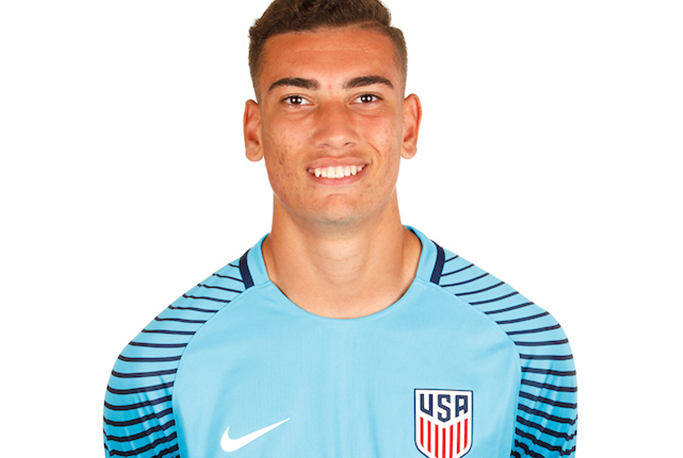
Chris Brady is one of the goalkeepers I’m most excited to watch in the coming cycles. He’s been performing at a high level in Major League Soccer and looks like a strong candidate to fill the long-term role as the USMNT’s primary starter over the next few cycles.

Chris Brady
Roman Celentano
Matt Freese
Patrick Schulte
Matt Turner

Defenders

Veteran center-backs Tim Ream and Miles Robinson seem likely to be selected with Blackmon a possibility depending on the health of the remaining pool. Arfsten seems to be almost a lock due to his ability to attack and create scoring chances with his crosses from the wing.

Max Arfsten
Tristan Blackmon
Tim Ream
Miles Robinson

Midfielders

The USMNT has strong depth in midfield, and Mauricio Pochettino’s recent roster selections suggest he’ll likely round out the squad with some of the players listed below.

One of the biggest gaps in this USMNT roster is the true dynamic, creative spark in the attacking third. Diego Luna stands out in that role, capable of unsettling defenses, breaking lines, and changing the rhythm of a match. He’s exactly the type of player who could thrive in a super-sub role, coming on against tired legs and making an impact at this summer’s World Cup.

Sebastian Berhalter
Diego Luna
Jack McGlynn
Cristian Roldan
Timothy Tillman

Forwards

Striker may be the toughest position for the MLS group to crack the #USMNT World Cup roster, but Brian White is making a strong case, scoring eight goals in his first nine MLS matches at the time of writing.

Brian White is a highly productive, “old-school” style striker for the USMNT, known for his elite positioning, relentless work rate, and ability to finish in a variety of ways. That combination makes him a strong option as a striker off the bench, where he could be especially dangerous against tired defenses at this summer’s World Cup.

Paxten Aaronson
Josh Sargent
Brian White

MLS Representation in the USMNT Player Pool

Since 1998, the last time the majority of a USMNT World Cup roster was composed primarily of MLS-based players, it has become increasingly clear that a meaningful portion of the squad still comes from MLS. Consistently, roughly 30–40% of the roster has been drawn from the domestic league, reflecting a long-standing and relatively stable trend in player selection over time which I don’t seen changing anytime soon.

Continue Reading

USMNT

The More Things Change, The More They Remain the Same

Published

on

Thomas Deschaine (@uskeeper on X and us_keeper on Instagram)

In light of the recent resignation of Matt Crocker, I revisited something I wrote nearly a decade ago, an early attempt to capture what I called the “Dark Decades of US Soccer.” At the time, the piece was overly long and packed with detail—probably more than today’s audience would stick with.

But buried in that work were meaningful patterns, clear, recurring behaviors that shaped how the federation operated more than 60 years ago. What stood out most, looking back now, is how familiar some of those patterns still feel today.

So, I went back, stripped the piece down, and pulled out the most relevant sections, those that highlight the parallels between past and present. The goal isn’t to draw conclusions for you, but to put those similarities side by side and let you decide: how much has really changed?

World Cup Momentum to the First American Soccer Boom

Soccer star Pele in action during World Cup competition.

Photo of Pele at the 1966 World Cup
Photograph: AP Photo

After the success and popularity of the 1966 World Cup which saw over one million viewers of the tournament many America investors saw the vision and believed that there was the market for soccer in the United States and Canada

The investors moved very quickly and in 1967 there were two American professional leagues making their debuts the USSFA-sanctioned United Soccer Association (USA) and the independent National Professional Soccer League (NPSL).  

These leagues would only last one year and be merged at the request of FIFA into the North American Soccer League (NASL) kicking off in 1968 and relying on mainly on foreign talent. The American investors believed building the interest in soccer in the US would have a direct impact on the growth and performance of the US Men’s National team which and of course more money for the investors and federation.

First Attempt at Modernizing the USMNT

Phil Woosnam, in 1977 as the commissioner of the NASL.
Photograph: AP Photo

Off the back of the success of the inaugural NASL season, the U.S. Soccer Federation appointed Phil Woosnam, fresh off leading the Atlanta Chiefs to a championship and earning Coach of the Year honors, to take charge of the U.S. Men’s National Team.

Woosnam immediately shifted the structure of the program. Instead of a player pool selected by committee, he pushed decision-making toward the coaching staff, allowing selections to be based on performance and fit rather than geography or internal bias. The move was not universally welcomed, and it reportedly created friction with members of the federation’s leadership.

With professional players now more fully available, Woosnam’s approach helped assemble what was widely considered the strongest possible squad at the time. He also introduced organized training camps ahead of friendlies and World Cup qualifiers, an uncommon practice in that era, but one that clearly improved cohesion and preparation. Those changes contributed to the U.S. advancing further in World Cup qualifying than it had in previous cycles.

By early 1969, the USMNT appeared to be building real momentum toward a potential place in the 1970 World Cup. However, tensions between Woosnam and the federation began to escalate. Frustrated with compensation issues and growing interference from the USSF in team operations, Woosnam stepped away from the national team in the spring of 1969. become commissioner of the NASL.

Following his departure, assistant coach Gordon Jago took over as manager. His tenure began under difficult circumstances, with not being able to set up pre-qualifying friendlies, an important part of the progress made under Woosnam along with interference from USSF board members as it related to roster selection which created instability and morale issues on the field. The USMNT struggled in qualifying and ultimately fell short, losing both matches to Haiti, a team they had previously been competitive with in a series of friendlies in 1968.

The Crocker Era: Coaching Chaos and Course Corrections

Photo of Cindy Parlow Cone, Gregg Berhalter, Matt Crocker and JT Batson
Photograph: AP Photo/Lucas Peliter

It’s been roughly three years since the Matt Crocker era began at U.S. Soccer, when he stepped in as Sporting Director, replacing Earnie Stewart.

One of Crocker’s first major responsibilities was hiring the next U.S. Men’s National Team manager. In the previous cycle, the federation had reportedly operated with a narrow set of internal criteria, preferences widely believed to favor English-speaking and American candidates, which significantly limited the coaching pool and shaped the direction of the search.

Roughly two months later, during the Concacaf Nations League semifinal window, it was announced that Gregg Berhalter would be reappointed as USMNT head coach. The decision caught many around the program and in the media off guard, raising questions about how the process had ultimately unfolded.

More recently, in an interview with GiveMeSport, Jesse Marsch stated he was effectively told he was set to become the next USMNT head coach in the late spring of 2023, only for that opportunity to be withdrawn at the last moment, a shift that reportedly had ripple effects on a potential move to Leicester City that was nearing completion.

The abrupt reversal and eventual rehiring of Berhalter has been widely attributed to a mix of factors, including rumored influence from within the player pool, with U.S. Soccer ultimately reversing course. Roughly a year later, after a disappointing Copa América campaign on home soil, Berhalter was dismissed.

Crocker’s second opportunity to reset the program took a different direction. He first secured the high-profile appointment of Emma Hayes, one of the most accomplished managers in women’s football, to lead the USWNT. That move was followed by the hiring of Mauricio Pochettino for the USMNT, a tenure that has delivered mixed early results and will ultimately be judged through the lens of the 2026 World Cup on home soil but truly disappointed that Crocker wouldn’t see through what he helped build, and you have to ask yourself why?

Continue Reading

Trending