Connect with us

USMNT

The More Things Change, The More They Remain the Same

Published

on

Thomas Deschaine (@uskeeper on X and us_keeper on Instagram)

In light of the recent resignation of Matt Crocker, I revisited something I wrote nearly a decade ago, an early attempt to capture what I called the “Dark Decades of US Soccer.” At the time, the piece was overly long and packed with detail—probably more than today’s audience would stick with.

But buried in that work were meaningful patterns, clear, recurring behaviors that shaped how the federation operated more than 60 years ago. What stood out most, looking back now, is how familiar some of those patterns still feel today.

So, I went back, stripped the piece down, and pulled out the most relevant sections, those that highlight the parallels between past and present. The goal isn’t to draw conclusions for you, but to put those similarities side by side and let you decide: how much has really changed?

World Cup Momentum to the First American Soccer Boom
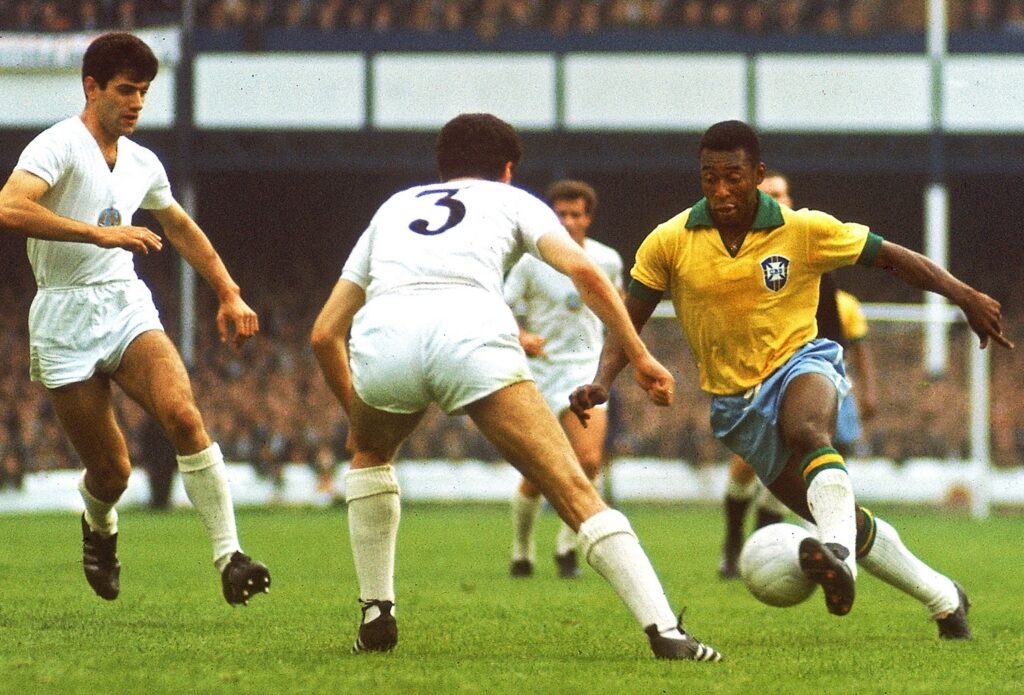
Soccer star Pele in action during World Cup competition.

Photo of Pele at the 1966 World Cup
Photograph: AP Photo

After the success and popularity of the 1966 World Cup which saw over one million viewers of the tournament many America investors saw the vision and believed that there was the market for soccer in the United States and Canada

The investors moved very quickly and in 1967 there were two American professional leagues making their debuts the USSFA-sanctioned United Soccer Association (USA) and the independent National Professional Soccer League (NPSL).  

These leagues would only last one year and be merged at the request of FIFA into the North American Soccer League (NASL) kicking off in 1968 and relying on mainly on foreign talent. The American investors believed building the interest in soccer in the US would have a direct impact on the growth and performance of the US Men’s National team which and of course more money for the investors and federation.

First Attempt at Modernizing the USMNT
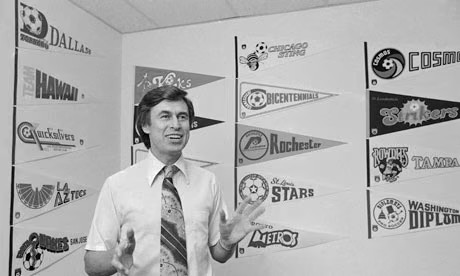
Phil Woosnam, in 1977 as the commissioner of the NASL.
Photograph: AP Photo

Off the back of the success of the inaugural NASL season, the U.S. Soccer Federation appointed Phil Woosnam, fresh off leading the Atlanta Chiefs to a championship and earning Coach of the Year honors, to take charge of the U.S. Men’s National Team.

Woosnam immediately shifted the structure of the program. Instead of a player pool selected by committee, he pushed decision-making toward the coaching staff, allowing selections to be based on performance and fit rather than geography or internal bias. The move was not universally welcomed, and it reportedly created friction with members of the federation’s leadership.

With professional players now more fully available, Woosnam’s approach helped assemble what was widely considered the strongest possible squad at the time. He also introduced organized training camps ahead of friendlies and World Cup qualifiers, an uncommon practice in that era, but one that clearly improved cohesion and preparation. Those changes contributed to the U.S. advancing further in World Cup qualifying than it had in previous cycles.

By early 1969, the USMNT appeared to be building real momentum toward a potential place in the 1970 World Cup. However, tensions between Woosnam and the federation began to escalate. Frustrated with compensation issues and growing interference from the USSF in team operations, Woosnam stepped away from the national team in the spring of 1969. become commissioner of the NASL.

Following his departure, assistant coach Gordon Jago took over as manager. His tenure began under difficult circumstances, with not being able to set up pre-qualifying friendlies, an important part of the progress made under Woosnam along with interference from USSF board members as it related to roster selection which created instability and morale issues on the field. The USMNT struggled in qualifying and ultimately fell short, losing both matches to Haiti, a team they had previously been competitive with in a series of friendlies in 1968.

The Crocker Era: Coaching Chaos and Course Corrections
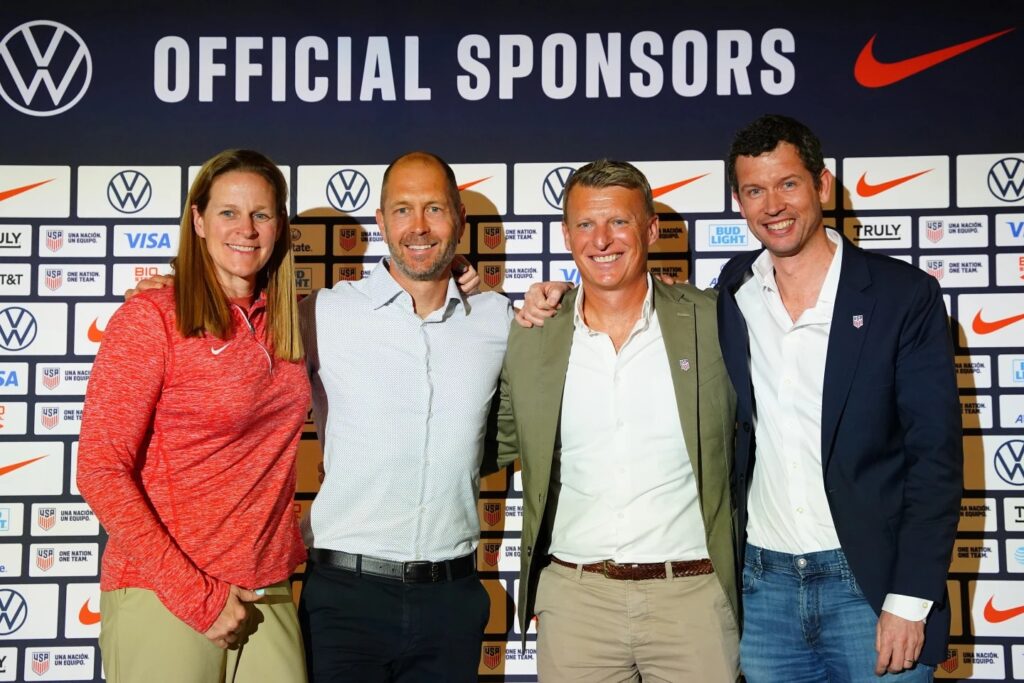
Photo of Cindy Parlow Cone, Gregg Berhalter, Matt Crocker and JT Batson
Photograph: AP Photo/Lucas Peliter

It’s been roughly three years since the Matt Crocker era began at U.S. Soccer, when he stepped in as Sporting Director, replacing Earnie Stewart.

One of Crocker’s first major responsibilities was hiring the next U.S. Men’s National Team manager. In the previous cycle, the federation had reportedly operated with a narrow set of internal criteria, preferences widely believed to favor English-speaking and American candidates, which significantly limited the coaching pool and shaped the direction of the search.

Roughly two months later, during the Concacaf Nations League semifinal window, it was announced that Gregg Berhalter would be reappointed as USMNT head coach. The decision caught many around the program and in the media off guard, raising questions about how the process had ultimately unfolded.

More recently, in an interview with GiveMeSport, Jesse Marsch stated he was effectively told he was set to become the next USMNT head coach in the late spring of 2023, only for that opportunity to be withdrawn at the last moment, a shift that reportedly had ripple effects on a potential move to Leicester City that was nearing completion.

The abrupt reversal and eventual rehiring of Berhalter has been widely attributed to a mix of factors, including rumored influence from within the player pool, with U.S. Soccer ultimately reversing course. Roughly a year later, after a disappointing Copa América campaign on home soil, Berhalter was dismissed.

Crocker’s second opportunity to reset the program took a different direction. He first secured the high-profile appointment of Emma Hayes, one of the most accomplished managers in women’s football, to lead the USWNT. That move was followed by the hiring of Mauricio Pochettino for the USMNT, a tenure that has delivered mixed early results and will ultimately be judged through the lens of the 2026 World Cup on home soil but truly disappointed that Crocker wouldn’t see through what he helped build, and you have to ask yourself why?
Continue Reading

USMNT

2026 USMNT Roster Predictions

Published

on

Thomas Deschaine (@uskeeper on X and us_keeper on Instagram)

The official USMNT roster will be released Tuesday, May 26th in New York City, and there’s already plenty of debate among media, fans, and analysts about who should make the squad and what Mauricio Pochettino is likely to do.

Here’s a breakdown of each position, including what I think Pochettino will do and what I would do. What are your thoughts, and which players do you think will miss out?

Goalkeepers

It’s clear that Matt Freese and Matt Turner have done enough to establish themselves as the top two goalkeeping options, but the third goalkeeper spot remains up for debate.

Many fans want to see a younger goalkeeper, such as Chris Brady or Diego Kochen, included with the hope they can eventually become the USMNT’s long-term No. 1 in this cycle or the next. Others would prefer a more experienced option with stronger club resumes, like Roman Celentano, Patrick Schulte, or Zack Steffen.

Here’s what I think Pochettino will do, and what I would do.

Pochettino’s PickUSKeeper Picks
Chris BradyChris Brady
Matt FreeseMatt Freese
Matt TurnerMatt Turner

Defenders

The USMNT defense, particularly at center back, has looked unsettled and inconsistent, raising real questions about what the back line will ultimately look like. There’s still uncertainty around whether the team will defend in a two- or three-center-back system, and that decision will shape everything else.

Continuity in defense is essential for a team’s success, but right now that consistency hasn’t been established. Much of that will need to be developed quickly through the upcoming friendlies and into the group stage, though there’s a real concern that it may be a case of too little, too late for the group to fully gel.

There also aren’t many clear-cut surprises expected in this area of the roster. The main competition appears to be between Auston Trusty and Joe Scally for a similar role, while questions remain about where Tim Weah is best utilized defensively or higher up the field. On top of that, there’s the added uncertainty of whether Noahkai Banks will commit to a roster spot with the USMNT.

Here’s what I think Pochettino will do, and what I would do.

Pochettino’s PickUSKeeper Picks
Max ArfstenNoahkai Banks
Sergiño DestSergiño Dest
Alex FreemanAlex Freeman
Mark McKenzieMark McKenzie
Tim ReamTim Ream
Chris RichardsChris Richards
Antonee RobinsonAntonee Robinson
Auston TrustyJoe Scally
Tim WeahAuston Trusty

Central Midfielders

Many still consider central midfield one of the USMNT’s stronger areas, but recent injuries have introduced some uncertainty heading into the 2026 World Cup. Johnny Cardoso’s injury, who has been ruled out of the tournament, along with Tanner Tessmann’s whose recent muscle issues has missed several matches for Lyon, has raised legitimate questions about depth in the position.

Those setbacks put added focus on who will partner with Tyler Adams in what is likely to be a double pivot, an area that will be crucial in protecting and connecting play in front of the back line.

Several candidates have emerged in recent discussions. Aidan Morris is frequently mentioned, having been consistently reliable in the EFL Championship with Middlesbrough, who narrowly missed promotion to the Premier League. Others in the mix include Yunus Musah and Gianluca Busio, both of whom have had limited or inconsistent involvement under the Pochettino era so far, leaving their roles still somewhat undefined.

Here’s what I think Pochettino will do, and what I would do.

Pochettino’s PickUSKeeper Picks
Tyler AdamsTyler Adams
Sebastian BerhalterWeston McKennie
Weston McKennieAidan Morris
Aidan MorrisYunus Musah
Cristian RoldanTanner Tessmann
Tanner Tessmann

Attacking Midfielder / Wingers

The biggest question in this group is whether Gio Reyna will be part of the USMNT’s 2026 World Cup roster. Across social media and among USMNT analysts, opinions are sharply divided, with the outlook on Reyna currently feeling close to 50/50.

Beyond that uncertainty, there are clear internal battles for attacking midfield and wide roles. One of the most notable competitions appears to be between Alejandro Zendejas and Diego Luna, with it likely that only one of them will ultimately secure a roster spot. 

Jack McGlynn is another player who could fit into this role or slide into a central midfield position. He remains firmly on the radar and could work his way onto the roster if another player drops out or a spot opens up.

There is also a growing push from some supporters for the inclusion of younger attacking talent. Depending on how the roster shapes out, this could open the door for players like Mathis Albert, Zavier Gozo, or Julian Hall to break into the squad and fill one of those remaining attacking positions.

Here’s what I think Pochettino will do, and what I would do.

Pochettino’s PickUSKeeper Picks
Brendan AaronsonBrendan Aaronson
Diego LunaZavier Gozo
Christian PulisicChristian Pulisic
Giovanni ReynaGiovanni Reyna
Malik TillmanMalik Tillman
Tim Weah

Strikers

This may be the only position where a large majority of the USMNT community agrees on at least two of the three striker options, if not all three. Some believe the roster should include a fourth striker, but I’m not in that camp.

After Patrick Agyemang’s injury, the debate over the third striker spot alongside Haji Wright largely disappeared. Brian White continues to make a strong case in MLS, approaching double-digit goal contributions on the season. Beyond those names, however, there don’t appear to be many standout alternatives, with Josh Sargent and Damion Downs currently sitting further down the depth chart.

Here’s what I think Pochettino will do, and what I would do.

Pochettino’s PickUSKeeper Picks
Folarin BalogunFolarin Balogun
Ricardo PepiRicardo Pepi
Haji WrightHaji Wright

USMNT Roster Decisions Impacts

The official USMNT roster will be unveiled Tuesday, May 26th in New York City, and the debate is already heating up among fans, media, and analysts over who deserves a spot and what Mauricio Pochettino’s final decisions will look like.

Below is a position-by-position breakdown of what I believe Pochettino is likely to do, along with the choices I would make if I were building the squad. Which players do you think will make the cut, and who could be left out?

Continue Reading

USMNT

Side by Side: The Looking at USMNT Center Back Pairings – Past & Present

Published

on

If the March 2026 window revealed anything about the United States men’s national soccer team, it’s that their center-back group, whether in a two- or three-man setup, lacks cohesion heading into the 2026 FIFA World Cup. The partnership, continuity, and communication between center backs are critical to organizing the entire defense, and right now, that foundation doesn’t look fully settled.

That realization prompted a look back over the past 40 years, examining the different center-back pairings, how they developed chemistry, and the impact those partnerships had on the USMNT at the highest level.

The Steadfast Anchor of the 1990 USMNT Defense

Mike Windischmann, captain of the 1990 USMNT World Cup team, was a cornerstone of the squad throughout the 1990 cycle. For much of that period, he was paired at center-back with Steve Trittschuh, though the two didn’t start together at the World Cup itself. Windischmann also formed defensive partnerships with John Doyle, Marcelo Balboa, and Paul Caligiuri at various points. At the World Cup, he teamed up with Jimmy Banks in two of the three matches, providing leadership and stability at the heart of the U.S. backline.

Trailblazers Building a Solid Back Line for the Future

Much like the 1990 cycle, Marcelo Balboa was a constant presence on the USMNT back line, whether playing as a sweeper under Bora Milutinović or in a back three with six midfielders in front of him under Steve Sampson. He formed key partnerships with emerging talents like Alexi Lalas, who joined the team in 1992, and dual-national Thomas Dooley. This defensive core enjoyed significant successes throughout the 1994 and 1998 cycles, including advancing out of the group stage at the 1994 World Cup, defeating Argentina at the 1995 Copa América, and taking Brazil to the brink in a hard-fought semifinal.

A Defensive Anchor in U.S. Soccer History

Widely regarded as one of the top center-backs in U.S. men’s national team history, Eddie Pope featured in three consecutive FIFA World Cups (1998, 2002, and 2006), starting in all three for the USMNT. At the 2002 tournament, he anchored a formidable back line alongside Tony Sanneh and Jeff Agoos, forming a disciplined and resilient defensive unit for the United States men’s national soccer team. That group played a key role in one of the program’s deepest modern World Cup runs, but does it stand as the best defensive unit the USMNT has ever produced?

A Peak Partnership Interrupted

For me, one of the strongest center-back pairings in United States men’s national soccer team history emerged during the 2010 cycle, anchored by Carlos Bocanegra and Oguchi Onyewu. The duo arguably reached their peak at the 2009 Confederations Cup, forming a physically dominant and well-organized backbone.

Unfortunately, Onyewu’s injury leading into the 2010 World Cup limited his effectiveness, preventing the partnership from carrying that same level into the tournament. In his absence, Jay DeMerit stepped in seamlessly, providing valuable depth and steady performances, highlighting the overall strength of the USMNT’s center-back pool during that period.

From Breakthrough to Breakdown

The center-back pairing of Omar Gonzalez and Matt Besler came together late in the 2014 cycle but quickly developed into a reliable and cohesive duo at the 2014 FIFA World Cup. Their understanding and physical presence helped stabilize the back line on the world stage.

That tournament also introduced a rising presence in John Brooks, who memorably scored the game-winning goal against Ghana after Besler picked up a knock, announcing himself in a major moment.

As the cycle turned toward 2018, Brooks continued to establish himself, often partnering with Geoff Cameron, while Gonzalez and Besler remained in the mix depending on form and fitness. However, as the 2018 cycle progressed, inconsistency and a lack of cohesion among the center-backs became an issue, one of several factors that ultimately contributed to the United States men’s national soccer team failing to qualify for the 2018 FIFA World Cup.

Emerging Stability Ahead of the 2022 World Cup

Heading into the 2022 FIFA World Cup, the United States men’s national soccer team faced real uncertainty at center back, with no clear anchor or leader emerging. That quickly changed, as Tim Ream stepped in and solidified himself as the steadying presence of the back line.

A major turning point came when Miles Robinson suffered a ruptured Achilles tendon in the summer leading up to the tournament—a significant blow given his form and importance to the group. His absence opened the door for Walker Zimmerman, who had already been in contention, to establish a strong partnership alongside Ream.

Meanwhile, Aaron Long, returning from his own Achilles injury in 2021, earned a place on the roster, and Cameron Carter-Vickers also featured, with both players contributing minutes during the tournament. Together, this group brought stability to a position that had looked unsettled just months earlier.

2026 at Center Back Uncertainty and Opportunity

There are more questions than answers surrounding the United States men’s national soccer team center-back picture heading into the 2026 FIFA World Cup. Chris Richards appears to be a near lock, while Tim Ream, though still a trusted presence, has shown signs of decline compared to four years ago, yet could still find his way onto the roster based on experience and leadership.

A key variable will be how Mauricio Pochettino sets up tactically, particularly whether he opts for a two or three center-back system. In a back three, players like Joe Scally and Alex Freeman could slide into right center-back roles given their versatility, while Mark McKenzie and Auston Trusty provide options on the left. Miles Robinson also remains firmly in the mix as competition for a roster spot.

Perhaps the biggest unknown is Noahkai Banks. The 19-year-old dual national, currently playing in the Bundesliga, opted out of a recent USMNT camp while weighing his international future between the United States and Germany. If he ultimately commits, his emergence could significantly impact the depth and ceiling of the USMNT’s center-back pool heading into 2026.

Continue Reading

USMNT

Voices of USMNT on the World Stage

Published

on

Thomas Deschaine (@uskeeper on X and us_keeper on Instagram)

Over the decades, the United States Men’s National Soccer Team has been accompanied by a wide range of voices behind the microphone, delivering some of the most memorable calls in World Cup history.

Along the way, several standout broadcast duos have helped shape the viewing experience and left a lasting mark on the USMNT landscape.

Here’s a look back at the voices that have defined US World Cup broadcasts since 1990.

1990 FIFA World Cup – Italy 

Network: ESPN

Play-by-play: Bob Ley

Color: Paul Gardner

Coverage of the USMNT at the 1990 World Cup was limited, particularly in the early rounds, but Bob Ley emerged as one of the defining voices of soccer on U.S. television during that era. His presence helped introduce a new generation of American fans to the international game, providing context and credibility at a time when the global stage still felt unfamiliar to much of the US audience.

1994 FIFA World Cup – United States of America

1998 FIFA World Cup – France

2002 FIFA World Cup – Japan / South Korea

Networks: ABC / ESPN

Play-by-play: JP Dellacamera

Color: Ty Keough

This play-by-play and color commentary duo called three World Cups for the USMNT, becoming the defining voice of the team during my peak viewing years. Ty Keough the former USMNT midfielder from the late 1970s and early 1980s.

JP Dellacamera stands out as one of, if not the, best play-by-play announcers and remains one of my favorites. While others on this list delivered memorable moments, they didn’t quite match that same level of longevity.

2006 FIFA World Cup – Germany 

Networks: ABC / ESPN

Play-by-play: Dave O’Brien

Color: Marcelo Balboa

New England native Dave O’Brien, widely known today for calling major sports across his career, had just one World Cup as the primary play-by-play voice for the USMNT. His run calling USMNT matches, primarily in the mid-2000s on ESPN, was relatively brief but still memorable. While he isn’t as closely associated with the USMNT as some other broadcasters, he was behind the mic for several standout moments during that era.

2010 FIFA World Cup – South Korea

Network: ESPN

Play-by-play: Ian Darke

Color: John Harkes

Ian Darke brought a global voice to American audiences as the lead play-by-play announcer for the USMNT during the 2010 FIFA World Cup. Already well known around the world, he made the tournament easy to connect with for U.S. fans and delivered one of the most iconic calls in American soccer history.

Darke’s iconic call of the USMNT game winning goal by Landon Donovan in must win final group stage match against Algeria to advance to the knockout stage of the 2010 World Cup gives me chills every time I see it.

2014 FIFA World Cup – Brazil 

Networks: ESPN / ABC

Play-by-play: Ian Darke

Color: Taylor Twellman

This duo might be my favorite to date. Ian Darke brought a clear, global voice to USMNT viewers during the 2014 FIFA World Cup, making the tournament easy to follow for US fans while elevating the biggest moments with calm, sharp, and memorable calls.

Alongside him, Taylor Twellman emerged as one of the most recognizable and influential voices of the modern era, primarily as a lead analyst on ESPN. His passionate, unfiltered style stood out, most notably with his unforgettable “What are we doing?!” reaction following the USMNT’s failure to qualify for the 2018 World Cup, a moment that’s still talked about today.

2022 FIFA World Cup – Qatar

Network: FOX Sports

Play-by-play: John Strong

Color: Stu Holden

If the USMNT had qualified for the 2018 World Cup, this broadcast team would have called their matches, marking what would have been a third straight World Cup cycle with the same primary commentary crew. It’s also likely he’ll be paired again with Stu Holden for USMNT matches at the 2026 World Cup.

John Strong has served as a lead play-by-play voice for U.S. soccer on FOX Sports since 2018, bringing a modern, high-energy style to the booth. Since taking on major international assignments, he’s become one of the defining voices for USMNT audiences in top competitions, known for his clear, sharp calls and a big-game tone that fits the moment.

Continue Reading

Trending