
USMNT
Beware The Bust
The USMNT’s 10 Most Disappointing Players
With so much optimism justifiably emanating from the USMNT faithful about our crop of young talent (even US Soccer produced a video!), let’s take a stroll down a proverbial Boulevard of USMNT’s Broken Dreams and examine some past failures. Here are ten (10) USMNT players who did not pan-out as expected for our national team, and their backstories.
Age alert: I am older than most readers, so this list stretches back. Some of these names are not known to the younger generation of fans, and that’s probably down to soccer’s lack of popularity at the time they played. But for those that do remember them – or for any I missed – please share your own views in the Comments section or take it to Twitter, where I am on @DisgruntleUSMNT.
Oh, and – as you already know – there is really only one candidate for the top spot on this list. Since the placing of spots 2-10 are relatively arbitrary, this will not be a “wait for it” reverse ranking / countdown. Let’s just go with the obvious one first. Enjoy!

1. Freddy Adu (2005-present)
Picture this: you are at a summer barbeque with extended family. You are bantering about soccer with a relative, when you are interrupted by your soccer-hating thug of a cousin. He ruins your conversation by insulting the game, intermittently sprinkling in “sissy sport” and suggests that the game be played with two balls when…….he pauses and says, “Hey, whatever happened to that, like, 15 year-old kid that was supposed to be so good? Frankie something?”
So that’s Freddy Adu, the US Soccer bust so colossal that even people outside the sport recognize his name. We will not rehash his career, as its’ unfortunate shortcomings have been penned thoroughly, and we are probably only a couple years away from a “30 for 30” episode on it. I will personalize his story only by adding that his performance in the 2011 Gold Cup Final against Mexico – a 4-2 loss – had me very encouraged that, still only aged 22, he was going to evolve into an impactful USMNT player. He was creative and dangerous on the wing against a very talented Mexican team. But after the match, Bob Bradley was fired, and Adu officially disappeared into the USMNT player pool void. The tale ends even more sadly when you consider his career has landed him in the cesspool of popular American culture, Las Vegas.

2. Jovan Kirovski (1994-2004)
The younger fans may recognize Kirovski as a commentator from BeIN Sports or in his current Technical Director role for the LA Galaxy. Some older fans who remember him may object to his being ranked so high. He did, after all, play in the Quarterfinals of Champions League in Borussia Dortmund’s 1996-97 UCL-winning season. (He was not named to the bench for either the Semifinal or Final but is technically labeled the first and only American to win the competition.) He also was capped 62 times.
But to frame his potential as a youngster, consider only this: Kirovski was at Manchester United as a teenager in 1995. (!!!) Die-hard US youth soccer fans, as I was at the time, did not dare dream of an American achieving such an elite soccer status. Saying to a friend that you hoped to one day play at Old Trafford was akin to the kid at the science fair bragging that he would discover life on Mars. Old Trafford was a far-off, ethereal soccer fiefdom where only the world’s elite players (read: not Americans) honed their trade.
So when, one year before hosting the 1994 World Cup, and with the popularity of the sport soaring, we heard that Kirovski was at Manchester United, we wrote songs and spun yarns about him in the town pubs until the ale ran dry. Well, not really, but you get the point: more than the Next Big Thing, he was going to be the First Big Thing, the first-ever American making world-class plays alongside the global games’ biggest names: Cantona, Beckham, Scholes, Keane, etc. (Pardon us for not realizing at the time that the unforgiving grind of the UK Academy System meant most youth players there never saw the field for the senior team.) He never stepped on the pitch for United’s senior team and transferred to Dortmund in 1996, where he stayed until 2000, gathering 20 senior appearances and scoring one goal.
After Dortmund, Kirovski knocked around some lower-tier clubs in England, scoring a handful of goals but never finding a steady Starting XI role before joining MLS in 2004, after which time he never got another USMNT call-up. Even when he did wear the shirt, he was basically a non-entity; he featured in the 1999 & 2003 Confederations Cup, but never played in a World Cup, despite being healthy and available in 1998, 2002 & 2006.
3. Roy Wegerle, aka Wegs, Roy Boy & The Grand Daddy of Dual Natties (1992-98)
Some 1990’s-era USMNT supporters are probably fuming reading this name. How could I declare a striker who secured 41 USMNT caps and played in 2 World Cups “disappointing”? As with Kirovski, it’s about the expectation.

As background, the South-African born Wegerle secured his US citizenship in 1991 by marrying an American woman. At this same time, his club status was ascending rapidly: he was in the middle of a scoring binge for Queens Park Rangers in England’s top flight that would see him score 29 goals in 65 matches for the club from 1990-92. This success led to speculation about which national team program he would represent, as it was rumored at the time that he could wear the shirt for as many as five (5) countries: his native South Africa, USA, England, and (allegedly) two different countries through his parents, at least one of which was Scotland. When he chose the US in 1992, it was a major coup for the USMNT: our first real Dual Natty with world-class talent! Certain of us believed that we had managed to snag him from a red-faced England National Team.
And Wegerle did not disappoint. He stormed on the scene in his first USMNT game, a nationally-televised 4-1 U.S. Cup win against Ireland’s first-choice team in May of 1992. On the game’s most memorable play, Wegerle bull-dozed his way through a series of defenders and flamboyantly delivered a majestic back heel pass to John Harkes, who slammed home the game’s final goal. “Wegs” or “Roy Boy” had arrived! And along with the European-based Harkes, Earnie Stewart, Eric Wynalda and Tab Ramos, our hope was that he was going to form the creative, attacking core of the USMNT team for the ensuing 5-6 years and take us to a new level.
Wegerle kind of did that; he featured for the 1994 World Cup squad and played in some big games in the 1990’s, including a memorable 4-3 friendly win over Germany. But overall, he was tepid in a USMNT shirt, scoring only 7 goals in 41 caps.
With the benefit of hindsight, Wegerle was already 28 years old by the time he played his first cap for the US and may well have been past his prime. At the club level, he was never able to replicate the spell he enjoyed with QPR from 1990-92, and he ultimately came to MLS in 1996. He made the 1998 World Cup as a member of the now-defunct Tampa Mutiny in MLS. He did not play, but most USMNT supporters would agree he had quite an impact when he (allegedly!) informed USMNT Coach Steve Sampson of the extra-marital indiscretions of a teammate who would later be left-off the roster of that tournament as a result. But that’s a story for another day.

4. Frank Klopas (1987-1995). Perhaps Klopas’s name should be on here with an asterisk, with the attribution of his status owed to a strange relationship he apparently had with then-USMNT Manager Bora Milutinovic in 1994.
In the late 1980’s and early 1990’s, Klopas played professionally for AEK Athens in Greece, where he was born before coming to the USA as a child. In those days, Athens was consistently the best club in the Greek top flight and regularly participated in Europe’s elite Cup competitions. Because US Soccer was so out of sync with the rest of the footballing world’s calendar at the time, Klopas was rarely available to play in any USMNT friendlies. As a result, he was overlooked in for Italia ’90 in favor of guys that played professionally for the Albany Capitals and Milwaukee Wave, as well as even a few collegiate players.
But just before the 1994 tournament, Klopas’s stock skyrocketed. He enjoyed a brilliant run of form for Athens, including a goal-scoring surge, and followed it up by scoring in a series of USMNT pre-tournament friendlies that cemented his place in the team. USMNT supporters were ecstatic to see a striker from a big global club so in-form just as the tournament was beginning. A Greek warrior would lead our attack!
Then, shockingly, Klopas never saw the pitch in USA ’94. Most curiously, he was not brought on as an attacking substitute in a 1-0 group stage loss to Romania. A draw in that match would have given the US top position in the group and would have meant they avoided Brazil in the next round. Equally head-scratching was Klopas not getting called into that Brazil game, a 1-0 loss, despite the absence of Harkes (suspension) and Ramos, who was viciously elbowed during the match and had to be substituted.
The tale of Klopas not playing has gone largely undiscussed in the annals of USMNT banter. Still, for a player in his prime during the most important soccer tournament in our country’s history, Klopas needed to will his way onto the field. He did not, despite a toothless US attack in the tournament’s two most important games.
The most diehard among USMNT faithful will point to Klopas’s swan song with the team in 1995, when he scored against Argentina in the legendary 3-0 Copa America upset, as his most crowning achievement. This was certainly a fantastic individual moment, but most USMNT from that era will recall that so more was expected of him on a much bigger stage a year earlier.
5. The American striker Leading MLS in Scoring for the Last 25 Years (1993-present). When I initially started to compile this list, it quickly ran past 10 candidates when I considered the number of consistently high-scoring MLS strikers that never turned into regular USMNT contributors. So rather than scrutinize each individual’s specific circumstances, I elected to lump them together under a collective, straightforward thesis: topping MLS in goals scored rarely leads to an effective tenure in the USMNT lineup.

Since I am not much of an MLS fan, I will leave the arguments to the more informed pundits to debate the particulars: does Wondolowski endure as the most disappointing USMNT striker ever due solely to his miss against Belgium in 2014? Does Roy Lassiter feel like more of a disappointment than Brian Ching? Should Taylor Twellman have moved to 1860 Munich when he apparently had an offer? What was lacking in Edson Buddle’s game? How come Jeff Cunningham never got a European offer? Is Teal Bunbury being overlooked right now as a result of the failure of all his predecessors?
These are not debates I care to engage in, but certainly MLS supporters will have their own personal recollections here, and their stories are welcome.

6. Jonathan Spector (2004-present). Just like Kirovski, Spector joined Manchester United as a teenager. The key difference between the two playing ten years apart was that I could watch Spector play on television, and I did!
Most notably, his first-team debut came against Arsenal in the FA Community Shield in 2004. This symbolic match kicks-off the Premiership season by pitting the prior season’s Premiership winner against its’ FA Cup Champion. As an 18-year-old, Spector started for an injury-plagued United and did not look out of place at all against a first-choice Arsenal side. He even came close to scoring a goal when he screamed a laser inches wide of the right post after an impressive run through the midfield. Seeing this, I imagined an American scoring on his Manchester United debut as the precursor to an illustrious USMNT career.
And his career as a USMNT was not poor by any stretch. He played brilliantly in the 2009 Confederations Cup run, was on the 2010 World Cup team despite not seeing the field, and was welcomed back into the squad in 2015 for a series of successful friendlies against top European teams. Still, going from starting for Manchester United at age 18 to never playing in a World Cup game for your country has to be seen as falling short.
One key factor in Spector’s lack of USMNT success is that he basically played only Right Back, a position Steve Cherundolo had locked down for the first half of Spector’s USMNT career. Then came a manager, Jurgen Klinsmann, who clearly did not hold English Championship players in high esteem, regularly omitting guys like Spector, Tim Ream & Eric Lichaj, even though they all played regularly. Thus, despite featuring so prominently for Birmingham in 2014, Spector was overlooked in favor of a teenage D’Andre Yedlin from MLS and a dreadfully out-of-form Timmy Chandler (more on him later) from the Bundesliga. Certainly some positional diversity would have helped Spector get more caps, but it was not meant to be.
7. Sacha Kljestan (2007-present). Most USMNT supporters over the last 10 years would agree Kljestan’s club form has well outpaced his USMNT performances. But the reason I consider him a disappointment is perhaps bizarrely personal. Let me explain:
I, like Kljestan, grew up playing soccer in New Jersey. I have played against dozens of guys like him: wiry, uncoordinated-looking, seemingly blown over by a stiff breeze. On the pitch, they display amazing footwork and creativity alongside almost needless confrontation toward opponents and even teammates. They regularly lead the team in yellow cards and almost always incur the wrath of teammates but make up for it because they have more talent that shows-up in big spots.

Off the pitch, meanwhile, they embody the rebellious counterculture. In my day, that constituted openly smoking pot – before it was trendy to do so – wearing baggy, unkempt clothes with Doc Martens shoes, and attending alternative music festivals, among other things. They were frequent targets of the “bully-boy” football player crowd, but always had something to say back. So many of these kids had talent but rarely developed it; almost none played in college despite having the tools to do so. (There were three kids on my high school team that fit this profile. 25 years later, one is a successful art entrepreneur, another has spent time in prison, and the third is an openly gay rancher in Montana. Unique for sure!)
So when I saw Sacha play for the first time –deking between defenders, scrapping with opponents, barking at teammates – I thought: one of these Jersey “punk ass bitches” – the moniker that another high school teammate of mine branded this type of player – has finally made it to the USMNT stage! Never mind that Kljestan did not actually fit this persona off the field; with his greasy, matted long hair and creepy pedophile-ish mustache, he looked like one. And that was enough; I was rooting for him!
As far as his USMNT tenure goes, his ardent supporters would argue he must have been black-balled by Klinsmann. How else could he be left out of the USMNT picture when he was starting for a UCL Quarterfinalist at Anderlecht? Neutrals like me that really wanted him to succeed would state plainly that he just did not look effective when he had his chances. He was not “positive,” as the Brits say, always passing back when he needed to dig deep for that Jersey punk attitude and take players on. His USMNT legacy will be mixed at best, but for me personally, he is uniquely unsuccessful.

8. David Regis (1998-2002). The disappointment of David Regis’s tenure stems from an almost mythical beginning to his USMNT career. Regis was born in France and married an American in the late 1990’s, becoming a US Citizen just weeks before the 1998 World Cup in France.
An important backdrop to his introduction was John Harkes not getting named to the US team for personal reasons, despite being miles better than most players on the roster. USMNT Manager Steve Sampson and US Soccer’s Press team needed to distract from the issue and flaunted Regis’ arrival in a genius PR stunt. It was as if they were saying: “Don’t worry about Harkes, there is this guy that was almost named to France’s squad, but who has agreed to play for the US!” I’m paraphrasing, but there was popular belief amongst willingly-persuaded US fans like myself that Regis was carefully evaluated to play alongside Deschamps, Zidane, Henry, etc. in that tournament. Never mind that he was 30, had never been called-up even for a friendly, and had been playing for a club in Germany that had just been relegated – we got him!
Regis was actually pretty good at the 1998 World Cup. But of course the U.S. as a team was dreadful, finishing dead-last in the tournament’s first-ever 32-team format. Afterwards, Regis was portrayed in the media as a polarizing presence. He had drawn the ire of other players who felt his presence was undeserved. Oh, and he did not speak any English, so he was not exactly a “clubhouse guy.”
Regis improved his USMNT clubhouse posture enough to get capped an additional 24 times, including a bench spot at the 2002 World Cup.. That said, the tone set when he entered onto the USMNT stage was probably a bit unfair and set expectations of his capabilities way too high.

9. Luis Gil (2014-present). Before there was Christian Pulisic, there was the lingering question on every USMNT supporter’s mind: “Who is the next Landon Donovan?” And I remember typing a search term like this into Google some time in 2011. I landed on a 2010 ESPN article (it’s still out there) profiling a 16 year-old Luis Gil, who had just signed a Generation Adidas contract. Reading it, I got VERY excited, as did many USMNT supporters that read articles like this about Gil in other outlets.
Perhaps this and other articles set unreasonably lofty expectations for Gil, but his hype felt warranted since so few soccer media outlets at the time – especially ESPN –wrote blustery pieces about individual USYNT players. Further, Gil kept the hype train moving by finding success with the USYNT U-17 & U-20 teams, where he displayed excellent play-making and strong leadership in big spots. There were evidently European club trials, and though none panned-out, he was firmly on the radar for the next generation of USMNT breakout players.
From there, though, I really do not know what happened, other than – like most of the other US players in his age range – Gil just never arrived. Were there injuries? Did the hype overwhelm him at too young an age? He is still only 24 but looks thoroughly out of favor, bouncing between MLS, USL & Liga MX clubs without securing regular minutes. Perhaps I am paying the ESPN article too much favor, and he was never that talented in the first place? But I was certainly not alone, which is a big reason he lands on this list.
10. Timothy Chandler (2011-present). I placed Chandler last on this list because he is the only mention who we can reasonably declare “too soon” to be calling a disappointment. He is 28 years old and just completed what was probably his best Bundesliga season. Most importantly for his USMNT prospects, Chandler displayed positional flexibility, showing strongly as both a defender and winger, where he scored goals and doled-out assists at the highest rate of his career.

Now…about his attitude: Chandler has looked positively awful at times for the U.S., appearing some combination of uninterested, lost, lazy, or annoyed. His alleged comments to Bobby Wood that Wood should effectively prioritize club over country may not be true, but they at least seem like something he would say given how he has performed for the USMNT.
But Chandler can still find a USMNT renaissance that will wipe his name from this list in the future. He recently made overtures to US Soccer in public interviews, claiming he really wants a call back into the team. And if his club form continues, the new USMNT manager will be unable to ignore him. With so many unproven youngsters coming up and other seasoned players retiring or falling out of favor, the time is perfect for Chandler to seize his opportunity to be a critical asset to the 2019 Gold Cup & 2022 World Cup success. I certainly hope he takes it.
Honorable Mention: Frankie Simek, Marc Pelosi, Bobby Convey, Aron Johannsson, Mix Diskerud, Joe Gyau, Robbie Rogers, Benny Feilhaber

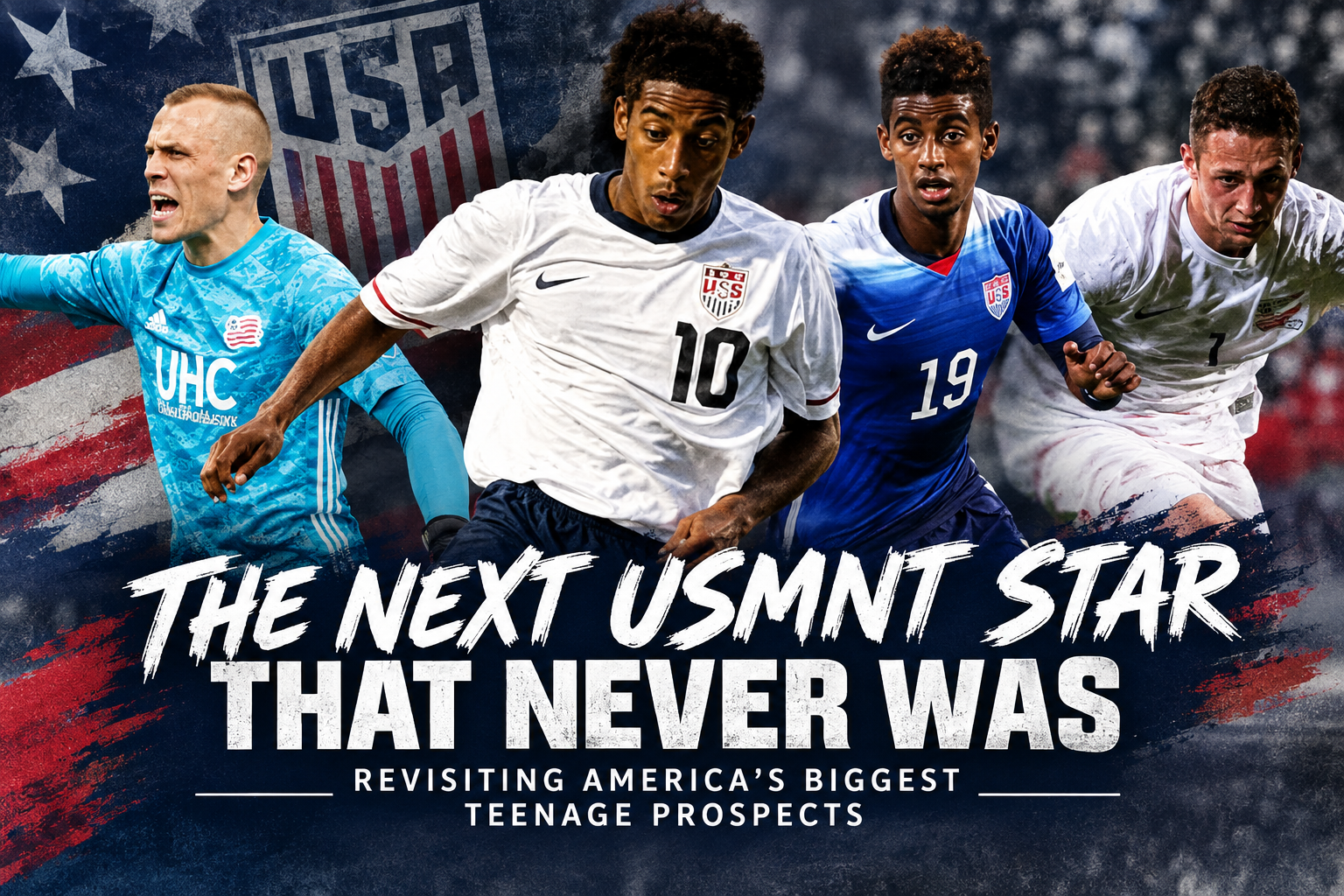
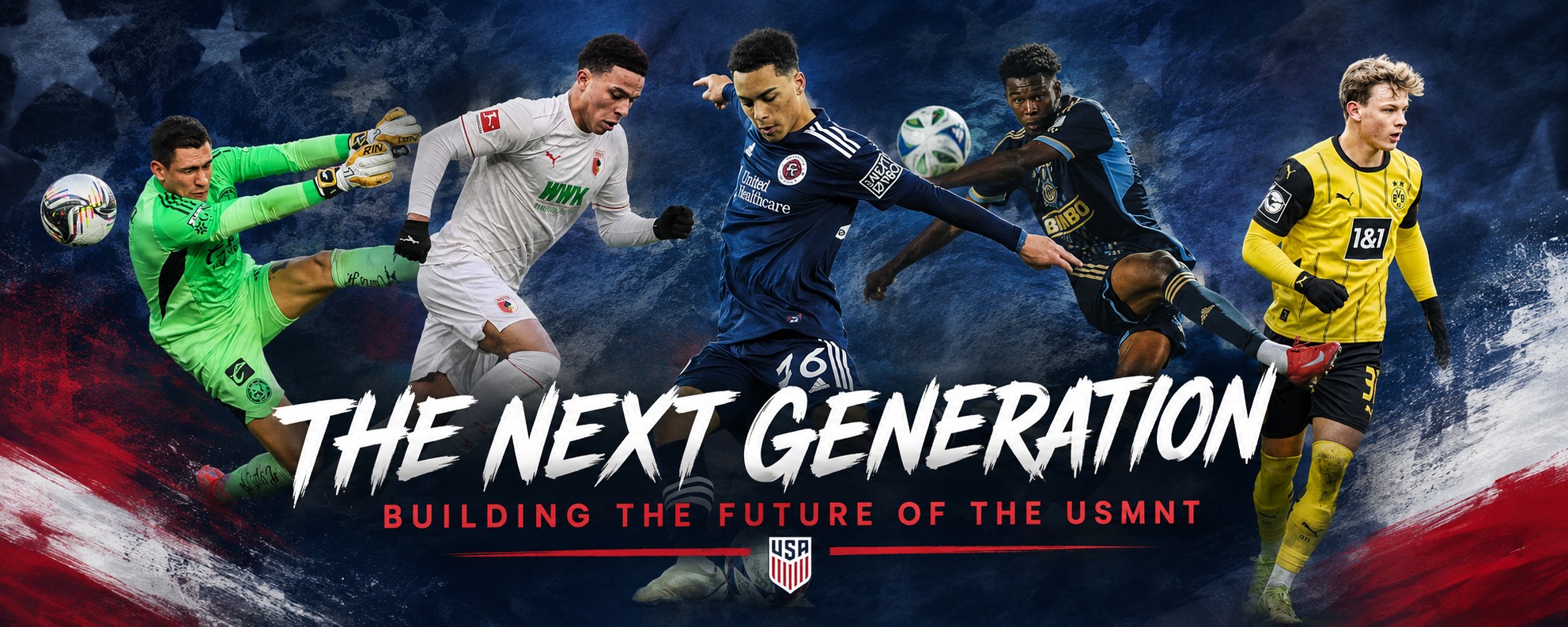
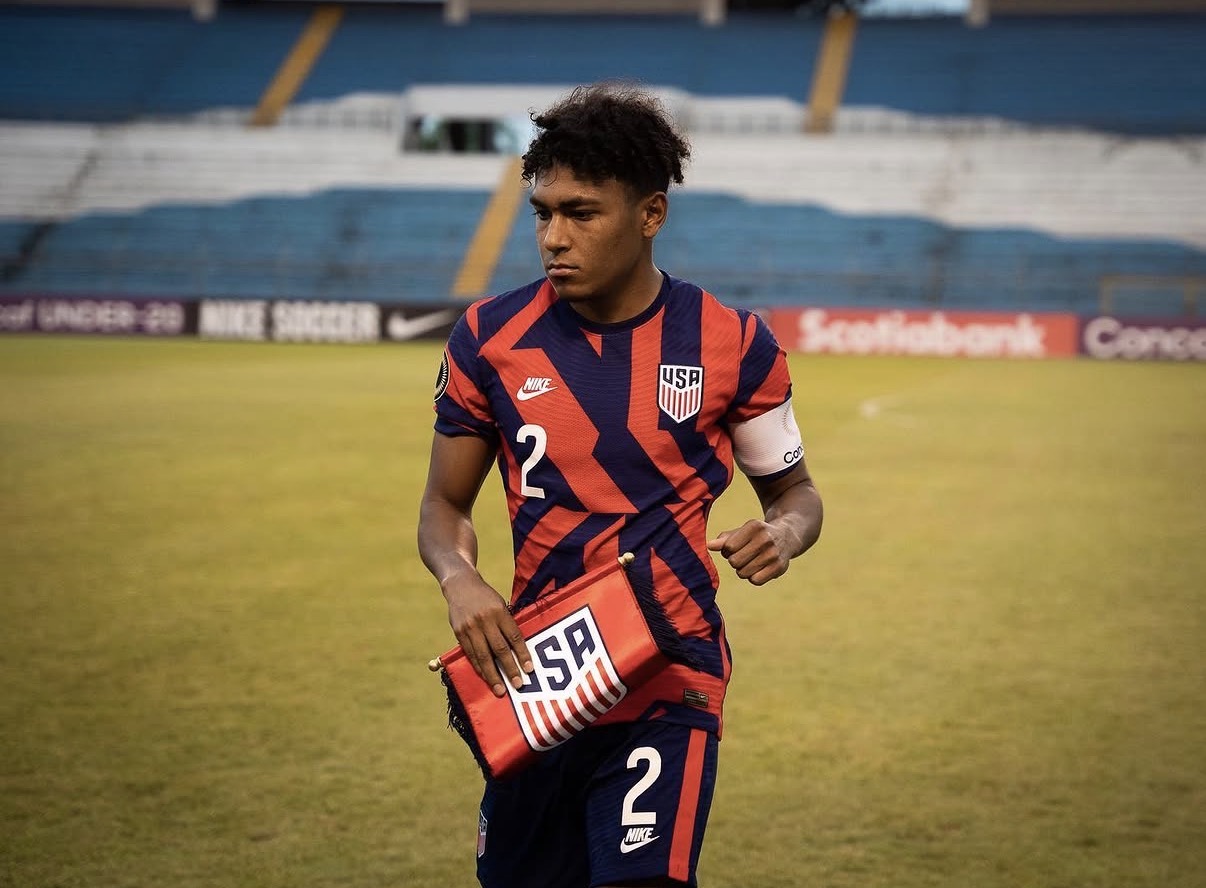


The Next USMNT Star That Never Was: Revisiting America’s Biggest Teenage Prospects

Building the Next Generation: Who Should Be on Pochettino’s USMNT Radar?

Mauricio Cuevas Taking “Huge Step Forward” in Liga MX
-
 Club News6 years ago
CJ dos Santos, Benfica
-
 USMNT2 years ago
Gregg Berhalter’s Legacy
-
 Club News6 years ago
Give: Support Chasing a Cup by Supporting our Cause
-
 USMNT2 years ago
Medals on their Minds
-
 Club News7 years ago
Julian Vincente Araujo
-

 Club News2 years ago
American Transfers: Stock Up & Stock Down
-
 USMNT3 years ago
USMNT Kits Come in Different Styles and Colors
-
USMNT4 years ago
World Cup Format History