

Club News
Cards, Chaos, CONCACAF: A Dive Into CCL
Those of you who follow MLS know how really wild it can get at times (#MLSAfterDark anyone?). Those of you who follow the USMNT know how rough and bruising CONCACAF can be. Now imagine you have a competition that takes the craziest, most crunching-tackle-that-only-leads-to-a-yellow-card-at-best parts of MLS and CONCACAF and combines them into one tournament that at any given moment can go completely off-the-rails. And that is what we call the CONCACAF Champions’ League (CCL).
MLS has always fallen painfully short in CCL, a competition absolutely dominated by Liga MX. Of the twenty-four teams to have played in the final of the current form of the contest since 2008, TWENTY have been Mexican teams, which includes all twelve winners. Only Los Angeles FC, Toronto, Montreal Impact, and Real Salt Lake have finished as runners-up (though DC United and LA Galaxy each won the previous iteration of the tournament called the Champions’ Cup in 1998 and 2000 respectively, so shouts out to them). A variety of factors contribute to the inability of MLS to close the deal in the CCL, chief among them that MLS teams are in pre-season when it takes place, in contrast to Mexican, Central American, and Caribbean leagues often being in full swing. It’s not easy trying to get to full match fitness in the hot, muggy, sometimes high-elevation conditions of away games in CONCACAF, not to mention the extremely hostile crowds, though the fall dates for the semis and the finals could be a favorable twist this year. We can also point to the gap in spending and perceived quality between Liga MX and MLS (how big the gap in quality really is remains up for debate).

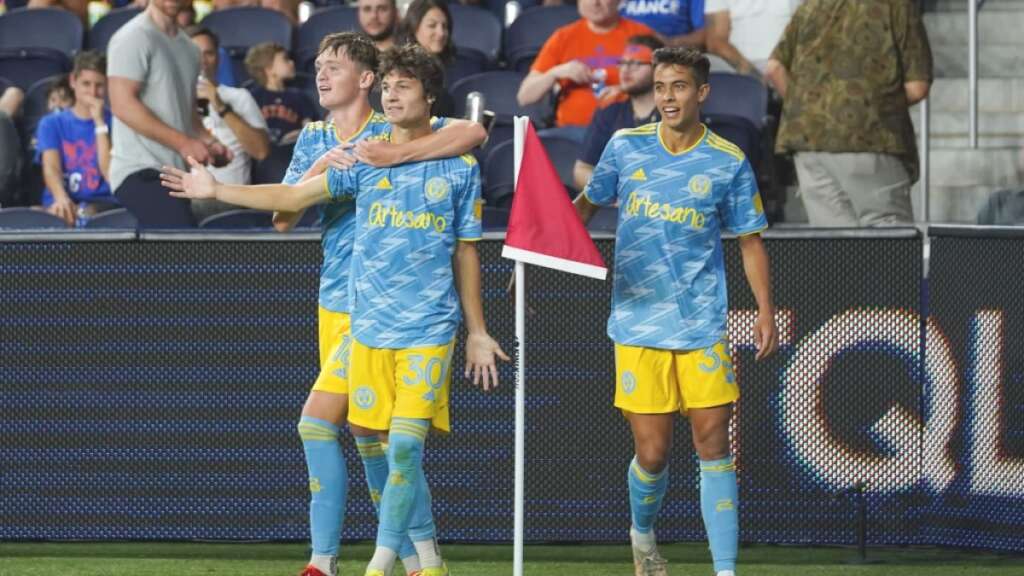
THAT BEING SAID, this does not stop the MLS fans from beginning another year with a (albeit somewhat jaded) sense of hope that this could be THE year it finally happens. The year an MLS team could finally win the CONCACAF Champions’ League. This time around is no different, and results have been promising so far! The five MLS teams in this year’s contest (Atlanta, Philly, Portland, Toronto, and Columbus) went undefeated in both legs of the first round, leading to Liga MX matchups in the quarterfinals for all but Atlanta and Philly, who play each other (guaranteed MLS spot in the semifinals, let’s gooo). Five MLS teams have never made it to the quarterfinals before. Ever. But what’s exciting about this is not just advancing to the next round. It’s that, at times, several of the MLS teams thoroughly dominated their opponents. Portland and Philly certainly didn’t let anyone question who would be advancing late into their second leg, after highly contested first matches. And Columbus left no room for doubt right out of the gate on night one.

That’s not to say there weren’t moments of CONCACAF-y craziness and heart-stopping moments of extreme anxiety for those watching (had to catch my breath a little after Toronto leaving things a bit too close late in the game against defending Liga MX champion side Leon). Several yellow cards were awarded after studs-straight-to-the-ankle tackles that certainly should’ve resulted in a card of a much darker shade. After Philly’s first leg against Costa Rican side Deportivo Saprissa, it was announced that the referee for the game would not be officiating further in the competition following a red card tackle that resulted in only a yellow and led to a bit of a brawl. Somehow this was followed by a very similar tackle and yellow card result in the second leg; go figure.
The best thing about MLS and CONCACAF, though we sometimes love to hate it, is the unpredictability that makes it so much fun. We don’t watch CCL for pristine soccer. We watch for the drama and the mess, the heart-stopping anxiety, and the equal chance that the game will end in jubilation or despair as we wait (somewhat impatiently) for MLS to assert itself as the dominant league in the region that we want it to be. We watch because we still hold out hope that one day an MLS team will emerge when the smoke (or rather the humidity) clears as CCL champions (wow, I can’t even describe how much I really hope it’s this year). A title wouldn’t mean that MLS has arrived as THE dominant league in the region, but it’s a big step in the right direction. That first win will be historic. When that finally happens, it’s going to be incredible. And if you haven’t been watching, it’s way past time for you to catch that #CCLFever.
Club News
USL’s American Soccer Dream
USL made national headlines when they announced on February 13th, 2025, their plans to launch a Division One league, followed by the announcement of promotion/relegation on March 19th for the new Division One league, the Championship, and League One. If sanctioned by US Soccer, USL Division One would be of equal status to MLS and compete for the best major soccer league in the U.S. The implementation of promotion/relegation in the USL would become the first in the U.S. and test the question asked for many years, “would pro/rel work in the U.S.” USL HQ informed the public that they planned to have the inaugural season of Division One during the 2027-2028 season with promotion/relegation beginning in 2028.
Until November 3rd, with the announcement of Tony Scholes being hired as the President of the Division One, only three teams have applied for membership to the inaugural season of Division one: Louisville City, North Carolina FC (who announced at the time of the Scholes news that they would fold until the launch of Division One), and Pittsburgh Riverhounds. There has been a rapid expansion of teams in the already existing leagues since the two announcements. Teams joining League One are: Fort Lauderdale FC (2026 debut), New York Cosmos (2026 debut), Port St. Lucie SC (2027 debut), Sporting Cascades FC (2026 debut), and Rodeo FC (2027 debut). Fort Wayne FC and Sarasota Paradise would also be joining League One from League Two (2026 for both teams). For the Championship, Reno, NV will once again have a team planned for a 2027 debut. Along with those teams, USL is actively working to expand to other markets. The markets and partners they are looking at are Brevard County, FL (Space Coast Pro Soccer), Riverside, CA (Riverside Pro Soccer), Brownsville, TX (City of Brownsville), Winter Garden, FL (Central FL Pro Soccer), Santa Rosa, CA (City of Santa Rosa), and Pensacola, FL (City of Pensacola).
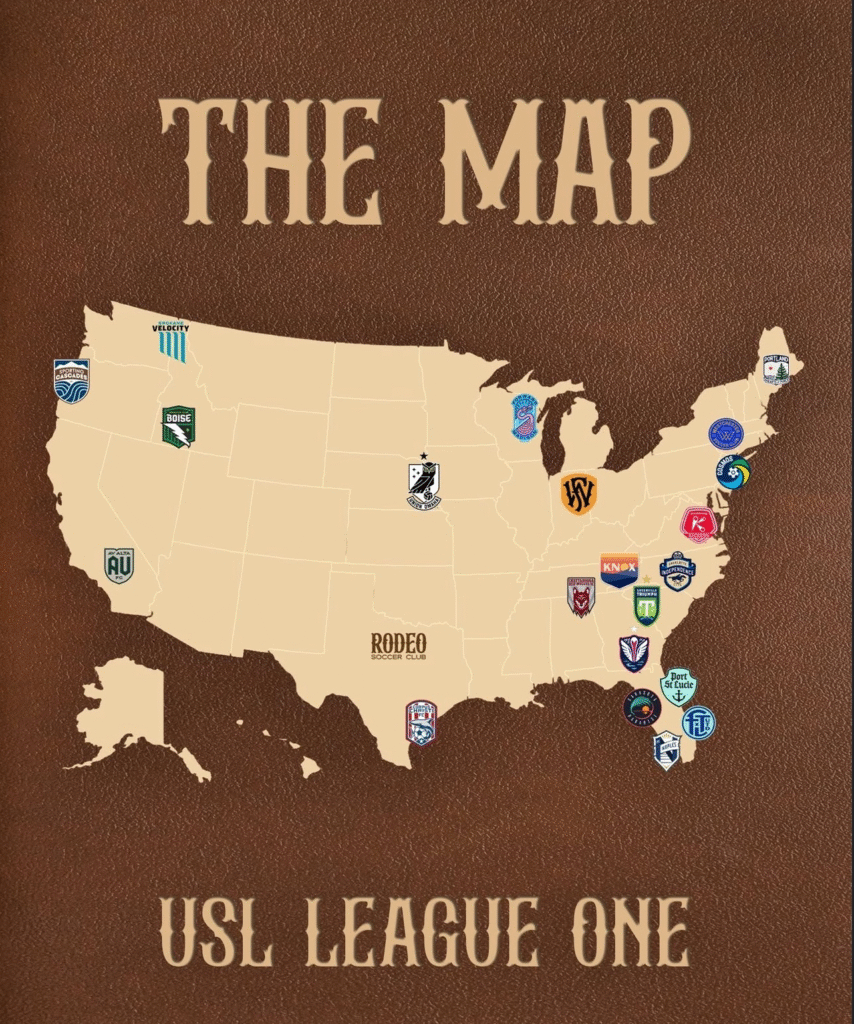
Along with these recently announced teams and partnerships, USL has teams joining the organization just in time for promotion/relegation that were announced prior to the February and March news. Starting with League One, these teams include: Corpus Christi FC (2026 debut) and Athletic Club Boise (2026 debut). As for the Championship, they will be adding Brooklyn FC (2026 debut), Sporting Jax (2026 debut), Atlético Dallas (2027 debut), Milwaukee Pro Soccer (TBD), USL Pro Iowa (TBD), Buffalo Pro Soccer (TBD), and Ozark United FC (2027 debut), while Santa Barbara Sky FC (2027 debut) would replace Memphis 901 FC.
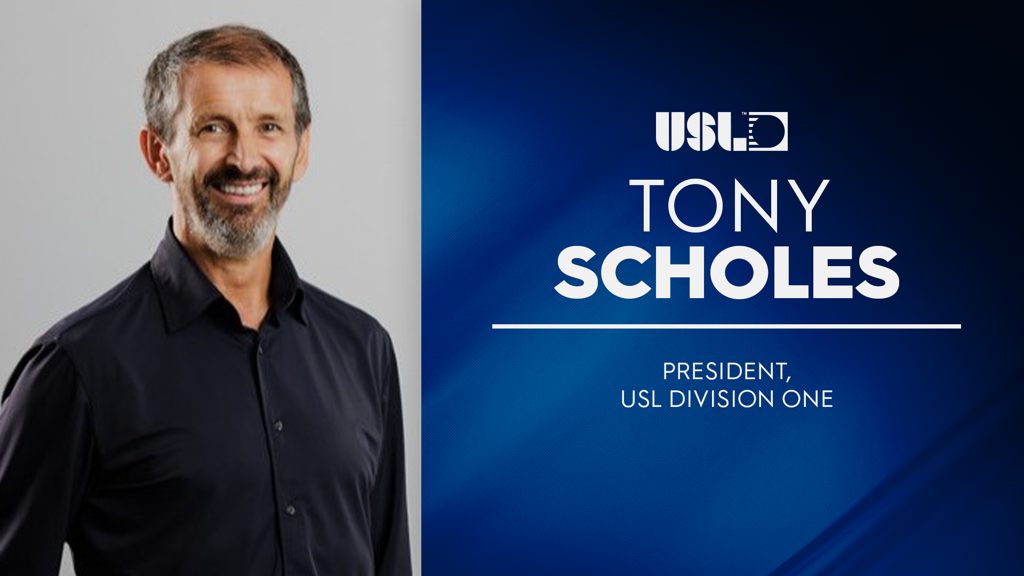
Other than that, news on the Division One and promotion/relegation had been quiet until USL snatched Tony Scholes from the English Premier League. Tony Scholes will be the President of Division and help with the implementation of promotion/relegation. Scholes served as the chief football officer of the EPL and will join USL at the end of the EPL season. As of November 15, 2025, USL Division One has not been sanctioned as a division one league by US Soccer. The hiring of Scholes indicates that they are confident this new league will get approved or they have already been told it will, behind closed doors. The fact that we have not heard news on what the promotion/relegation format would be, and Scholes task would be to help implement it could mean that USL has not come to a decision on one. Since we do not have any ideas on what the format could be, I want to provide a possible option that they could go with.
One of the biggest questions people have had since the USL announced promotion/relegation was how they would tie it to the playoffs. There is an option they could do, but it would result in only having one playoff. USL would have a playoff for Division One, but they would eliminate the concept for the Championship and League One. It might not be the most popular idea here in the U.S., but the main goal for the lower leagues is to get promoted, not to win a trophy. They would retain the league title for those two leagues with the winner being the team with the most points at the end of the season, just like how it is in the European leagues. The purpose is to create fairness for the top performing team(s) in the two lower leagues and reduce confusion. If there is a need for a playoff format, they could adopt the format the Bundesliga uses where the 16th best team in the first division and the 3rd best in the second division face-off in a two-leg match to see who would be in the first division the following season. The other option is the Championship concept, where the teams who finished 3rd through 6th in the table compete in a promotion playoff. The semi-finals are two-leg matches while the final is a single-leg match. The winner is promoted to the EPL. The execution of promotion/relegation must be done perfectly to retain fans, gain fans, prevent confusion, and be entertaining.
USL already has a division one league with their women’s Super League, who is competing against the NWSL. Currently, the S League has only nine teams (Brooklyn FC, Carolina Ascent FC, Dallas Trinity FC, DC Power FC, Ft. Lauderdale United FC, Lexington FC, Spokane Zephyr FC, Sporting Jax, and Tampa Bay Sun FC) to the NSWL’s 14 teams (3 teams in the works). The Super League will be adding an additional nine teams (Athletic Club Boise, New York Cosmos, Ozark United FC, Buffalo Pro Soccer, Chattanooga Red Wolves FC, Forward Madison FC, Indy Eleven, Oakland Soul SC, and USL Palm Beach) with all but three to have their inaugural season to be determined. What makes the S League unique from the rest of the soccer leagues in the U.S. is that they use a fall-summer schedule. Competing against a top five women’s league in the world is a tall ask, but it shows the ambitions of USL.
They are also willing to take risks by voting to pass promotion/relegation for the men’s league and have a fall-summer schedule for the S League. If the S League schedule format proves successful, it stands to reason that they would move the men’s leagues to the same schedule. It would also avoid the organization from having to fight MLS for viewership when the leagues are in play, especially when they launch a direct rival and are at their most ambitious point in their history. The same can be done for the S League if promotion/relegation is successful for the men. USL can start establishing lower women’s leagues and introduce promotion/relegation to the women’s game here in the U.S.
Many would say USL still stands no chance at competing against MLS, even with promotion/relegation and having a division one league. That is the case when you look at the quality of the players is finance, but that is the reason why the USL made these decisions based on the reports prior to the announcements and afterwards. Promotion/relegation and the introduction of a division one league could see an increase in investors. We are already seeing that with the likes of Gio Reyna joining Fort Lauderdale as an investor, BellTower Partners investing into USL, Sofia Huerta and Kasey Keller joining the Athletic Club Boise ownership group, and the Chickasaw Nation becoming an investor of the OKC for Soccer just this year alone. Then there is the expansion fee for MLS, MLS Next Pro, and the USL leagues. MLS charges an astounding $500 million! Yes, the money is used to construct a proper stadium, acquire players, etc., but at this point it will discourage many from purchasing a franchise license. MLS currently only has two leagues and one of them is advertised as a development league to prepare for MLS. The expansion fee for an independent team to join MLS Next Pro is unknown, but Sports Business Journal reported in 2024 that it is significantly cheaper than the USL Championship. The fee to join the USL Championship is $20 million while League One is only $5 million. These two fees are significantly lower than MLS and that will be more appealing to potential owners, but unlike the MLS fee, it is not enough for a stadium, training grounds, and players. As for what the fee is to join USL Division One, that is unknown at the moment.
I highly recommend reading the ESPN article by Jeff Carlisle titled “Will USL’s Move to Pro-Rel Change U.S. Soccer, Threaten MLS?” In there, Carlisle discusses the reasons behind the decision and that it is mostly financial. For example, a USL spokesperson said they expect to see an increase in commercial revenue by 15% to 30% due to promotion/relegation. Also, the former owner of San Diego Loyal lost $40 million in 4 seasons. As for the reaction from MLS, we have not heard one yet. The only possible reaction we have seen from them is what the former MLS Next Pro president, Charles Altchek, told to Backheeled back on March 6th, 2025. In the interview, he told them they aim to have 40 to 50 teams and a possible second league with one of the MLS Next Pro leagues being a second division, putting it in direct competition with USL Championship. The biggest question is, whichever league that is, can compete for fans? Due to the Apple TV deal, we currently do not have the ratings of MLS Next Pro. The closest idea we have is the attendance, which is 5,580 for USL Championship per match to MLS Next Pro’s 3,361, according to Transfermarkt. Unlike the attendance, the viewership for USLC is much higher where the season premiere match had 453,000 viewers. MLS Next Pro’s massive expansion plan announcement date was either a coincidence, or MLS got word USL’s promotion/relegation implementation with the division one news, and this was their response. I will let you come to your own decision.
It seems, as of right now, it appears MLS will sit back and wait to see how the USL’s Division One and promotion/relegation will play. Division One and promotion/relegation will either be successful for USL and lead them to the financial success they are hoping for or lead to the possible collapse of USL. American sports fans are not the only ones keeping their eyes on USL now, but the rest of the soccer world is after their two massive news. The coming years are going to be exciting times for American soccer!
Club News
The constructing of a World Cup roster
Thomas Deschaine (@uskeeper on X and us_keeper on Instagram)
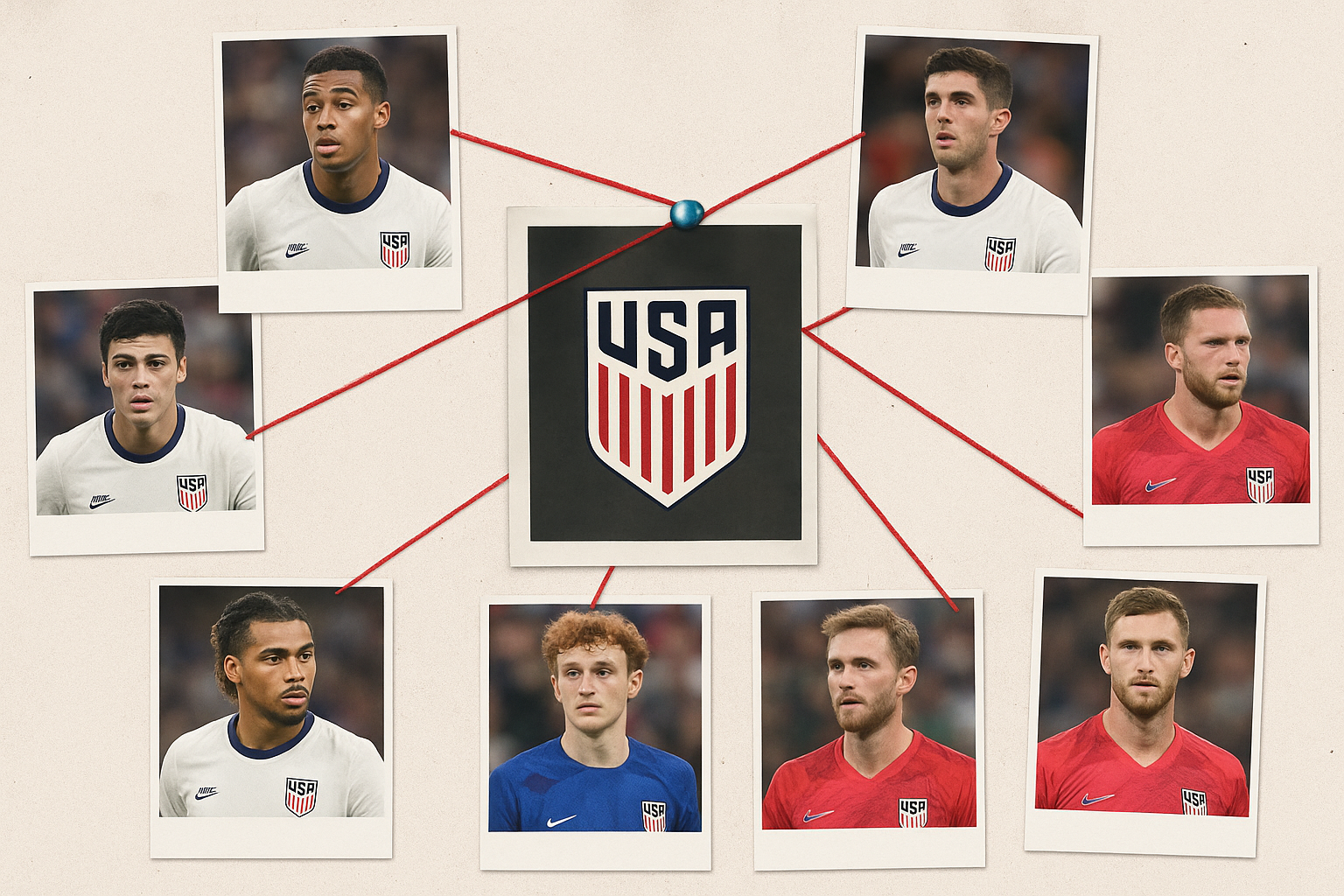
With the September FIFA window now in the rearview mirror, and only three more windows left before final rosters are set in late May or early June 2026, Mauricio Pochettino has drawn a clear line.
He’s stated that September’s camp was the “last camp to have the possibility for new faces.”
If we take him at his word, the nearly 70 players who’ve been called across six camps and the Gold Cup will form the pool from which he selects the 2026 World Cup squad.
Of the 60 players named to the 2025 Gold Cup provisional roster, only five, Maxi Dietz, Richie Ledezma, Tim Tillman, Caleb Wiley, and Griffin Yow, have yet to appear on a #USMNT roster under Pochettino.
Comparing the 2025 Nations League provisional roster to the Gold Cup list reveals over a dozen different players, raising the question: are these minor differences simply the edges of the player pool Pochettino intends to draw from?
Goalkeepers
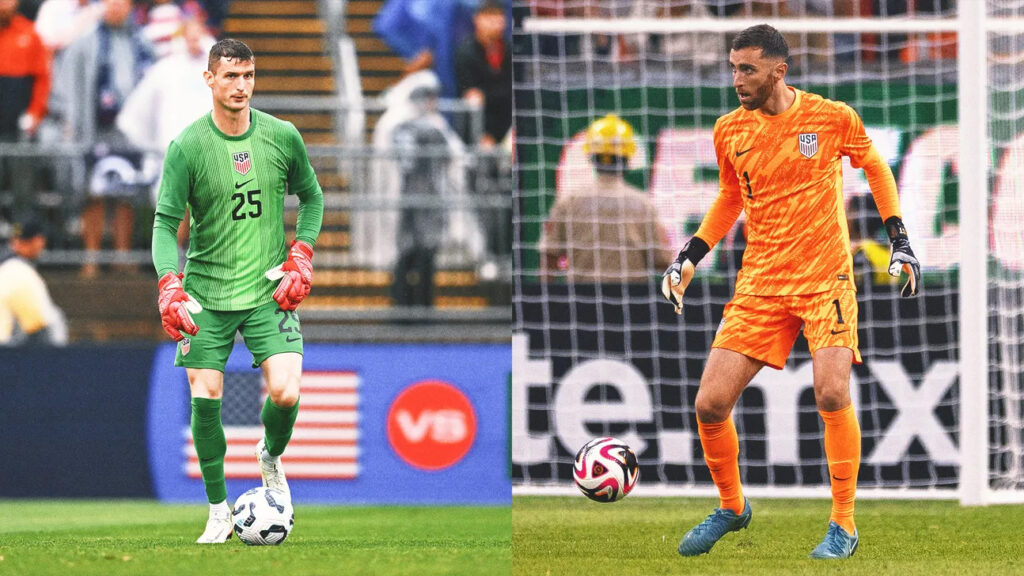
Nine goalkeepers have been called into Pochettino’s camps, but it’s clear that Matt Freese is his first-choice right now, with Matt Turner likely the No. 2 as we sit just 10 months from the World Cup.
- Chris Brady
- Drake Callender
- Roman Celentano
- Matt Freese
- Ethan Horvath
- Jonathan Klinsmann
- Diego Kochen
- Patrick Schulte
- Zack Steffen
- Matt Turner
Fullbacks
Outside of Sergiño Dest and Antonee Robinson, the USMNT’s fullback depth remains a concern. Pochettino appears high on MLS defenders Alex Freeman and Max Arfsten, while Caleb Wiley, though yet to feature in a USMNT camp but named to recent provisional rosters, could still be on his depth chart.
- Max Arfsten
- Sergino Dest
- Alex Freeman
- Marlon Fossey
- DeJuan Jones
- Kristoffer Lund
- Shaquell Moore
- Antonee Robinson
- Joe Scally
- John Tolkin
Centerbacks
Center back remains another position with uncertain depth. Chris Richards and the veteran Tim Ream look like locks for now, leaving three spots up for grabs. If Pochettino opts for a back three, that tactical shift could influence which players ultimately make the cut. Notably, Jackson Ragen and Maxi Dietz are the only center backs from the recent provisional rosters who haven’t been called into a USMNT camp.
- Noahkai Banks
- Tristan Blackmon
- George Campbell
- Cameron Carter-Vickers
- Mark McKenzie
- Tim Ream
- Chris Richards
- Miles Robinson
- Auston Trusty
- Walker Zimmerman
Central Midfielders
The central midfield position is the deepest for the #USMNT, with many players in the pool capable of also playing fullback, center back, or winger. Although Richie Ledezma has primarily played as a right back and right wing-back for his current club and for PSV last season, USMNT coaches view him primarily as a midfielder. This likely explains why he hasn’t yet been called into a USMNT camp.
- Tyler Adams
- Sebastian Berhalter
- Gianluca Busio
- Johnny Cardoso
- Ben Cremaschi
- Luca de la Torre
- Emeka Eneli
- Jack McGlynn
- Weston McKennie
- Aidan Morris
- Yunus Musah
- Tanner Tessmann
- Sean Zawadzki
Attacking Midfielders
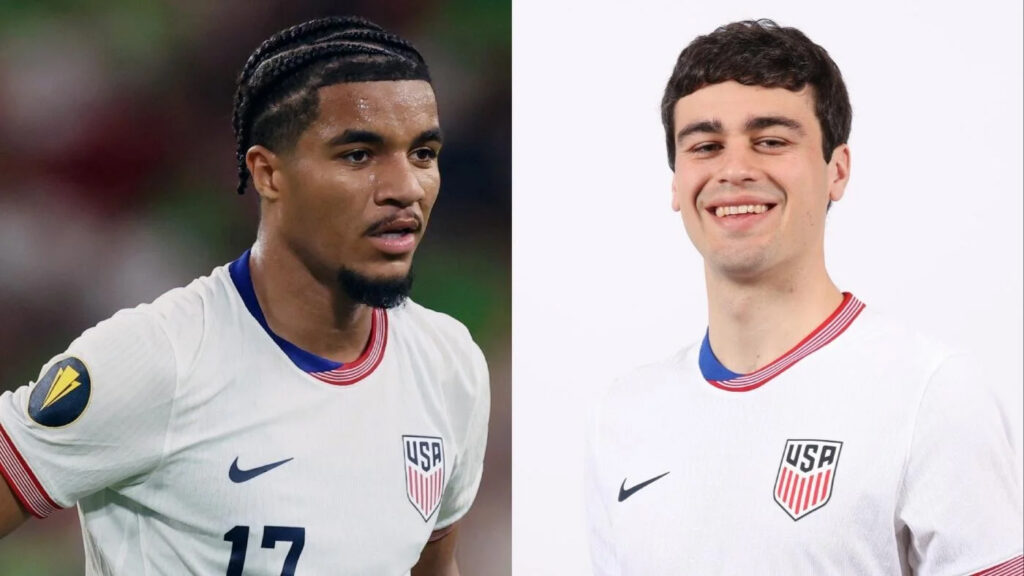
There are several players at this position who could add real quality and play pivotal roles for the #USMNT at next summer’s World Cup. Gio Reyna remains a major question mark, but his talent is undeniable. With his recent club change, there’s hope he can return to the high level of form we’ve seen from him in the past.
- Brenden Aaronson
- Paxten Aaronson
- Brian Gutiérrez
- Djordje Mihailovic
- Matko Miljevic
- Gio Reyna
- Malik Tillman
Wingers
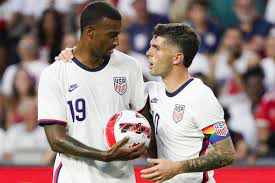
The winger position remains thin for the #USMNT, though several players there can also slot in as attacking midfielders, strikers, or even fullback. Notably, two young wingers, Cole Campbell and Griffin Yow, appeared on provisional rosters but have yet to be called into any Pochettino camp.
- Cade Cowell
- Diego Luna
- Christian Pulisic
- Quinn Sullivan
- Indiana Vassilev
- Tim Weah
- Haji Wright
- Alejandro Zendejas
Strikers
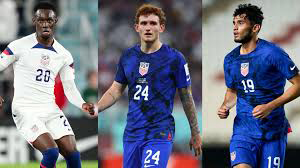
Another area of concern for the USMNT is striker depth. While the top options have all produced well for their clubs when healthy, injuries have kept the pool thin. If everyone is fit, the primary competition for the starting role likely comes down to three players: Folarin Balogun, Ricardo Pepi, and Josh Sargent. Haji Wright and Tim Weah can also step in as center-forward options if needed.
- Patrick Agyemang
- Folarin Balogun
- Damion Downs
- Jesus Ferreira
- Ricardo Pepi
- Josh Sargent
- Brandon Vazquez
- Brian White
Conclusion
It’s tough to read Pochettino’s mindset right now. Many expect fewer MLS players to be called for the October window, partly because the league continues through FIFA dates and the regular season ends mid-October.
Most World Cup rosters largely select themselves, with only a few surprising omissions, think of the 1994 squad, which left out several players many felt deserved a spot.
But with Pochettino still showing a shaky grasp of the USMNT player pool, this cycle could produce more notable snubs than ever, though there’s still time for him to get it right.
Club News
From Louisville to Lisbon: Joshua Wynder’s Journey with S.L. Benfica

The current state of the USMNT has been at an all-time low since Couva in 2017. One of the positions in dire situation is Center Back. Tim Ream will be 38 by the time of the 2026 World Cup. Chris Richards has too many highs and lows and has not shown his club form with the US. Cameron Carter-Vickers and Auston Trusty have yet to perform for the national team. Miles Robinson, despite what many MLS fans want to believe, is not good enough and makes too many errors, like the second Turkish goal on June 7th, 2025. Walker Zimmerman has one World Cup left in him and he has a history of making critical errors as well, like the penalty against Gareth Bale in the 2022 World Cup. Lastly, Mark McKenzie has improved his game since his move to Toulouse, but he is lacking the deserved opportunities and a good partnership.
Our U20 CBs will need to be called up sooner rather than later, either before or immediately after the 2026 World Cup. The top 3 prospects by fans and analysts are Noahkai Banks, Matai Akinmboni, and Joshua Wynder. Of the three, Joshua Wynder is the oldest at 20 years old and is part of a club that is world-renowned for their development, S.L. Benfica.
How did Wynder manage to accomplish such a move from Louisville City in the USL Championship to Benfica? To summarize, Wynder had a breakout season for Lou City at 17 years old in 2022, so much so that he was included in the US U20 World Cup team in 2023.

Wynder secured a spot to go on trial at Benfica and passed. On June 8th, 2023, Benfica officially acquired Joshua Wynder from Lou City for a record-breaking $1.2 million transfer fee, which still stands today.

Benfica registered Wynder with the second team for the 2023/2024 season, who participate in Liga Portugal 2. Due to Portuguese rules (players play in the youth system until they are 19 years old), he spent the season with Benfica’s UEFA Youth League team and U23 team and only received 21 minutes with the B team until a season-ending injury. What began as a promising start, with the support of the fans, was cut short after just six matches. The following season went according to plan for Wynder. Wynder became a consistent starter for the B team where he started in 29 matches and appeared in a total of 31 matches. He also scored four goals, all headers from corners.

His success with the B team made him a fan-favorite and several calls to be called up to the first team by fans on social media. That day came on April 9th, 2025, when he made the team sheet for Benfica’s Taça de Portugal Semi-Final match against FC Tirsense. Wynder made his first team debut when he was subbed in at the 76th minute mark of that match. He made a following appearance on the bench for the first team in their second leg match against FC Tirsense.
As early as November 27, 2024, it was reported by Glorioso 1904 that Joshua Wynder had gained the attention of the Benfica manager, Bruno Lage. The report further said that Wynder was becoming an option for the next season’s first team. A similar report surfaced on March 25, 2025, by Record, in Portugal, that Wynder is on track to be with the first team for the 2025/2026 season. That day may be coming sooner rather than later. Joshua Wynder will be joining Benfica on their 2025 Club World Cup campaign. This will be a true test for him to prove to Bruno Lage that he is ready to be part of the first team for the upcoming 2025/2026 Liga Portugal and UEFA Champions League season. If he is given serious minutes with the first team and performs, Joshua Wynder needs to be considered for the 2026 World Cup or immediately following the World Cup.

Benfica is in Group C of the Club World Cup with Auckland City, Bayern München, and Boca Juniors. Their first match is against Boca Juniors, 33-time Argentine champions, on June 16th. Game two is on June 20th against 10-time New Zealander champions, Auckland City FC. Lastly, their 3rd group stage match is against the 6-time UEFA Champions League winners, Bayern München, on June 24th.


Entry into US Men’s National Fandom

Breaking the Mold: Freese a Unique USMNT Goalkeeper

2025 Summer Transfer Window Review
-

 Club News2 years ago
American Transfers: Stock Up & Stock Down
-
 USMNT2 years ago
USMNT Kits Come in Different Styles and Colors
-
 Club News6 years ago
CJ dos Santos, Benfica
-
 USMNT5 years ago
A Hidden Gem: Barça Residency Academy
-
 Club News6 years ago
Julian Vincente Araujo
-
USMNT3 years ago
World Cup Format History
-

 USMNT2 years ago
Is the MLS Specifically Targeting Expansion to USL Cities?
-
 MLS4 years ago
2022 Youth Series: MLS Club Youth Talent Rankings