

USMNT
Five Players Who Must Hit for USMNT To Be Successful in 2020
By John Roche ([email protected])
For the die-hard USMNT fan, 2019 was a frustrating year, with much angst attributed to Bert’s dull and inept player selection. (Quick—who was your USMNT breakout player of the year?)
If we can draw on one encouraging data point, though, it is this: if you are healthy and playing regularly in an elite Top Flight European league, you are getting a call-up. These pickings are very slim currently largely due to injuries, but the current injury trend will endure, as it always does. We have to consider that, in 2020, the core of our most talented, European-based contingent will likely never be on the field together because, at some point, any one of – and probably multiple of – Christian Pulisic, Tyler Adams, Weston McKennie, Josh Sargent, John Brooks, Sergino Dest, DeAndre Yedlin, Alfredo Morales, etc. will be hurt.

Right now, Bert’s backfill to this plague is a markedly less-talented MLS contingent. And while we have seen encouraging spurts from some of them, we largely know what we can expect from this bunch, and it’s simply not good enough. Few supporters would argue that USMNT will be successful heading into World Cup Qualifying in September with the current “Group” of Berhalter-favored MLS options like Christian Roldan, Daniel Lovitz, Paul Arriola, Gyasi Zardes, Jonathan Lewis, Corey Baird, etc. Even the in-form Jordan Morris is not known for dissecting hunkered-down Honduran or Jamaican defenses, a skill that is so critical to grinding-out results in a brutal Hexagonal qualifying cycle (Hex).
So, what do we do in September 2020, when the Hex kicks-off, if Weston McKennie, Tyler Adams, and Josh Sargent are all on the shelf? Ideally, we call on the below players, each of whose development is crucial this year because their core strengths address critical attacking gaps.
I would go so far as to say that if these five players are not all regular contributors by the time of the Hex, USMNT senior team is doomed in 2020. A combination of Bert’s poor talent selection and awful in-game management, coupled with an inevitable rash of injuries, will cripple USMNT in the early stages of qualifying. So, no pressure guys, but you have to perform at the club level in a way that Bert simply must call you in!
Please note a few caveats: Firstly, as always, I do not talk about goalkeepers.
Secondly, the emergence of these players is weighted by combining a positional need with the likelihood that Bert will call them in. At CB, for example, I consider that Chris Richards or Miles Robinson emerging as a top-choice option would serve as a relatively moderate upgrade over current starters in the short-term. Hence, they are not on here. Similarly, Julian Green might garner another seven MOTM performances in 2020, but so long as he does it in Bundesliga 2, he will not be a blip.
Lastly, we would all LOVE for there to be an as-yet-unknown player in the pool somewhere, perhaps a youth player whose stock skyrockets quickly, or a dual national who declares unexpectedly, who could jump to the front of the line. For good measure, I have included a couple of Dark Horse candidates, but – while I would love to be wrong – I think the best emerging prospects are in plain sight.
Let’s dive in.
1. Paxton Pomykal, ACM or Winger, FC Dallas

So, after all the buildup of the European contingent, an MLS player tops this list! Pomykal is simply the most practical candidate to inject a much-needed attacking flair into the midfield in 2020 under Bert. (Emphasis: under Bert.) He is slippery, creative, versatile, and –though not big – can play physical, as he demonstrated most capably against a group of larger, more seasoned French U-20’s. An injury slowed his progress post U-20 World Cup, but few doubt that a full-fitness Pomykal is an upgrade at ACM or winger.
Bert has already called him into a couple friendlies, so the hope is that a dominant January Camp – which is very feasible considering how he distinguished himself against his MLS peers in 2019– means he should leapfrog a thoroughly underwhelming Christian Roldan in a Starting XI. He could realistically do so by March, at which point Dallas would justifiably keep him and his $650k annual salary out of Olympic Qualifying.
Given his new contract, he is likely to remain in MLS for this full season. However, at his current trajectory and with access to a European passport, he is almost certain to be in a Top Five European league by January 2021, ideally through a $7m-$10m transfer fee. But that is for later; USMNT needs him in 2020.
2. Richie Ledezma, ACM, PSV Eindhoven

Ledezma may be second on this list, but his upside as a creative midfield force – the vision, the pivots, the ball control in tight spaces, the open field sprints, GLORY BE! – is higher than anyone else in the current pool. His physicality needs to evolve, but put him next to a destroyer in the midfield, and that wart just about disappears.
PSV’s situation is an interesting one, with a new manager at the senior team and a relegation-threatened Jong side, but the organization clearly rates Ledezma. He should see first-team opportunities in 2020, and the hope is that he seizes his chances and makes Bert bristle at the prospect of an all-European midfield. Likely the only inhibiting factor is another long-term injury.
3. Tim Weah, Winger, Lille

More compelling than his obvious athleticism and versatility – in peak form, he is an upgrade at winger or striker – Weah brings a much-needed intangible: leadership. Did you see how, after he scored the game-tying goal against Ecuador in the U-20 Quarterfinal, he demonstrably huddled and rallied his teammates with an emphatic pep talk? Can you think of anyone in Bert’s current arrangement (maybe McKennie?) that would do something like that?
Perhaps it’s bold to think he would be such a strong presence for the senior team right away, but his competitive fire will be needed during away games in the Hex: humid nights, hostile crowds pelting the players with debris, belligerent opposing players hacking them at every touch, the pitch coming apart under their feet, etc. At minimum, Weah needs to be a first option off the bench in these circumstances.
4. Giovanni Reyna, Winger/ACM, Borussia Dortmund

Stop us if you have heard this one before: a US teenage phenom ascending the first-team latter at Dortmund before his 18th birthday! Reyna, like Weah, offers positional versatility, with a significantly higher goal-scoring upside that the senior team desperately needs right now. Few who have seen him play believe he cannot transition to senior team football in 2020, and others (this guy!) would argue to include him in the Hex even if he is not yet playing senior team football every week.
If you think calling him a “must hit” for 2020 is aggressive, you might be right, but I would argue his indoctrination into Dortmund’s first team and the senior USMNT squad at such a young age would be a continued momentum builder for the broader player pool by adding to the unprecedented number of young Yanks thriving at football’s highest levels.
5. Chris Gloster, LB, PSV Eindhoven

Sergino Dest’s decision to play for the US has somewhat offset the need for Gloster to emerge right away, but adding a pure LB with Gloster’s rigid defending and probing, crafty attacking thrusts would allow Dest to play his more natural RB.
Gloster’s trajectory since the 2017 U-17 World Cup – from RBNY to Germany to commanding a premium salary as a foreign-born player at one of the top clubs in Holland – is hugely encouraging. A first-team chance at a very unsettled PSV side could well emerge in 2020, and if Gloster grabs it, Bert would have no choice but to finally stop calling in Daniel Lovitz!
Dark Horses:
Ulysses (Uly) Llanez, Winger, VFB Wolfsburg
Most USMNT die-hards would probably have Llanez higher on this list. His blend of audacious ball possession (both to get out of tight spaces and dart through the open field), deft give-and-go passing, and dangerous shot-taking is unparalleled in USMNT senior team player pool annals. He is dominating for Wolfsburg’s U-19 team and will almost certainly see a senior team debut in the spring for a senior team not brimming with creative options.
He is low on this list for two (2) reasons. First, his physicality against senior competition has not yet been tested, and I worry there is a 3-to-6-month injury spell lurking just after his emergence for his senior club team. Secondly, USSF leadership is so inept they are not actively courting him, even for the U-23/Olympic qualifying tournament. (This came from his father on social media.) They will likely come around just in time, but well after most supporters would like to see him.
Nick Tatigue, Winger, Schalke
The sample size is extremely small and has been gathered against far inferior competition, but when he is healthy, the 20-year-old winger looks and plays like Christian Pulisic. He was once rated in the Guardian’s Top 50 teenagers in the world (along with Pulisic) and it’s not outrageous to think a healthy, productive spell on the U-23’s could land him on their first team come spring. He will impress if he gets that call-up; the only question is health, which has been an even bigger problem for him than most.
Brenden Aronson, ACM, Philadelphia Union
Aronson was something of a surprise debutant in 2019, taking MLS by storm in the spring. He tapered-off a bit, as any youngster thrust into a grueling MLS schedule would. But he followed-up a slow end to the season with an impressive performance against a Brazil U-23 team in the fall, shielding possession, taking players on, and architecting scoring chances – all against top-level competition. Like Pomykal, we hope he can dominate a January camp and supplant more tired CM options.
Jesus Ferreira, Striker, FC Dallas
Finally a US citizen, Ferreira is lower on this list because Dallas no longer employs him as a pure striker, so Bert may not be evaluating him as such. But someone will have to player striker in January Camp! Let’s hope that it is him, as striker depth is much-needed, and the 19-year-old Ferreira projects to see the pitch for FC Dallas regularly in 2020.
Owen Otasowie, CB/DM, Wolverhampton Wanderers
He is lower on this list because he has recently transitioned to being a CB for Wolves, where he has made the bench twice in the Prem and seen time in Europa League (where he almost scored in his first touch) at the age of 18. Apparently larger clubs are beckoning with his contract due to expire in the spring of 2020, so England – where he also has citizenship – might take notice. If Bert can find a way to employ him as a destroying CM, he would be higher on this list.




USMNT
Will the Next USMNT Manager Be American?
Thomas Deschaine (@uskeeper on X and us_keeper on Instagram)
I said after Mauricio Pochettino’s extension that I didn’t expect him to make it through the 2030 cycle as #USMNT manager, whether due to results or another club offering him a deal he couldn’t refuse. However, I never expected things to reach this point so close to the start of the cycle.
In some ways, the timing might not be the worst, provided US Soccer can quickly interview and hire a replacement well before the March FIFA window. That said, I was really starting to buy into Pochettino’s vision and his commitment to building the #USMNT around youth.
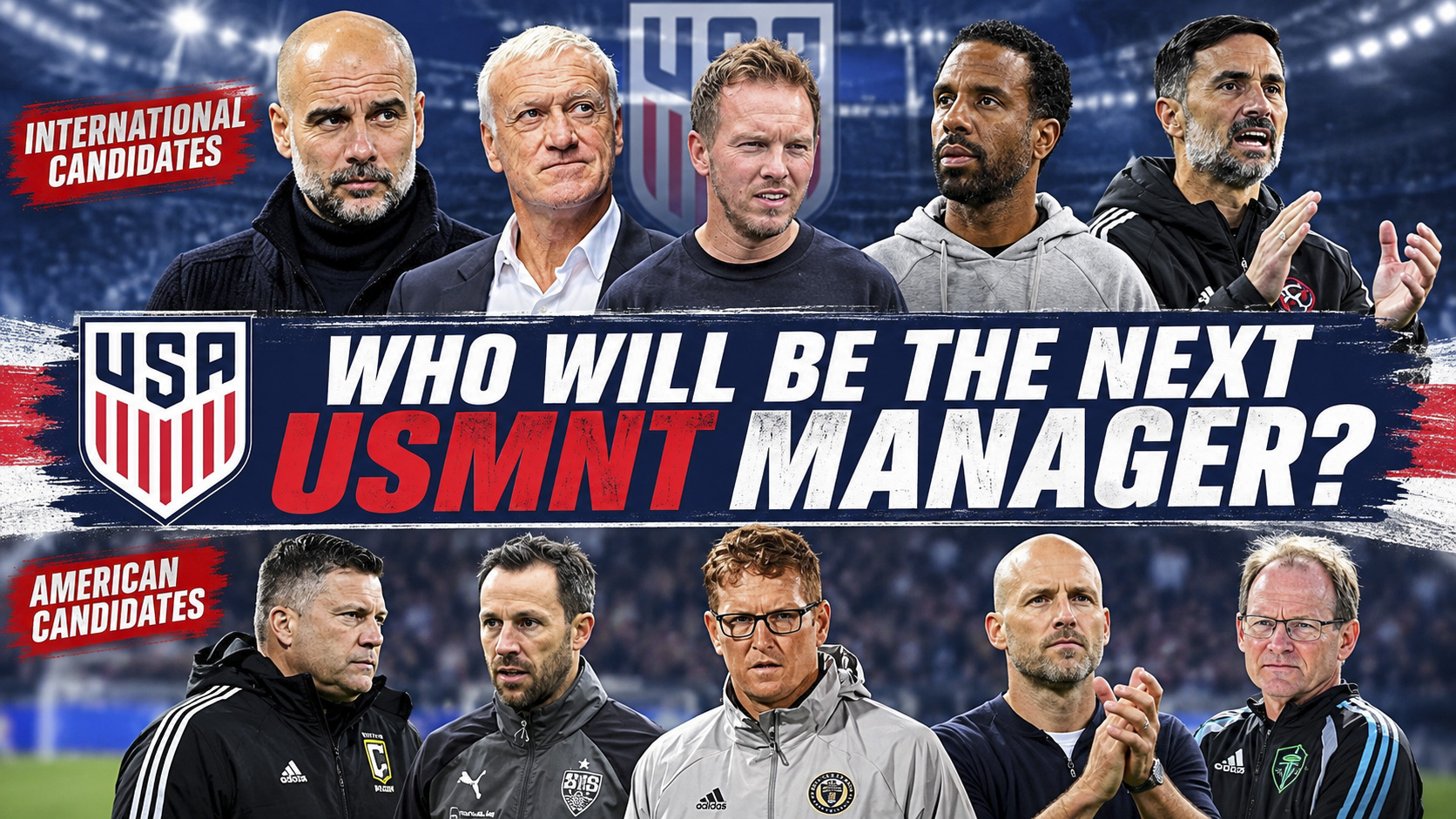
Hopefully, US Soccer recognizes the value of having a high-profile manager and pursues another big name like Pep Guardiola, Didier Deschamps or Julian Nagelsmann. My gut, however, tells me they’ll pivot back toward an American coach or an experienced MLS manager like Wilfried Nancy.
Another intriguing option is Marko Mitrović, former U19, U20 and U23 USMNT manager and current New England Revolution coach. He already has experience working with many of the young players in the current player pool.
Here’s a look at some of the most likely American candidates to become the next USMNT manager.
Michael Bradley (39)
I truly believe Michael Bradley will someday manage the USMNT. His soccer intelligence, leadership qualities, and playing experience across Europe and MLS give him both an international perspective and a deep understanding of American soccer culture. However, Bradley likely projects more as a candidate for the 2034 cycle at the earliest and he still needs time to develop at the club level.
B. J. Callaghan (45)
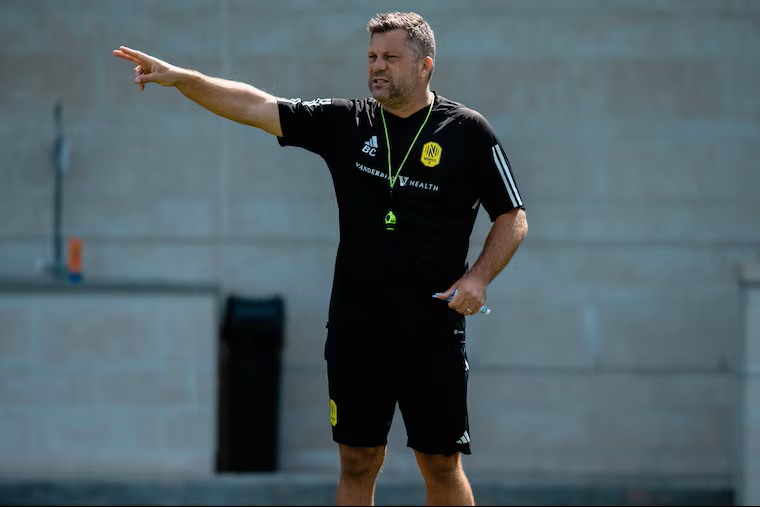
It would be difficult not to include B.J. Callaghan after the positive impression he made as interim USMNT manager. Coming off an MLS-best record and Supporters’ Shield title, Callaghan continues to demonstrate his ability to prepare and get the most out of his teams despite a relatively limited managerial résumé. He earned the trust of the players and fans by delivered strong performances during his time with the national team. If the position opens again, U.S. Soccer would almost certainly explore his interest.
Steve Cherundolo (47)
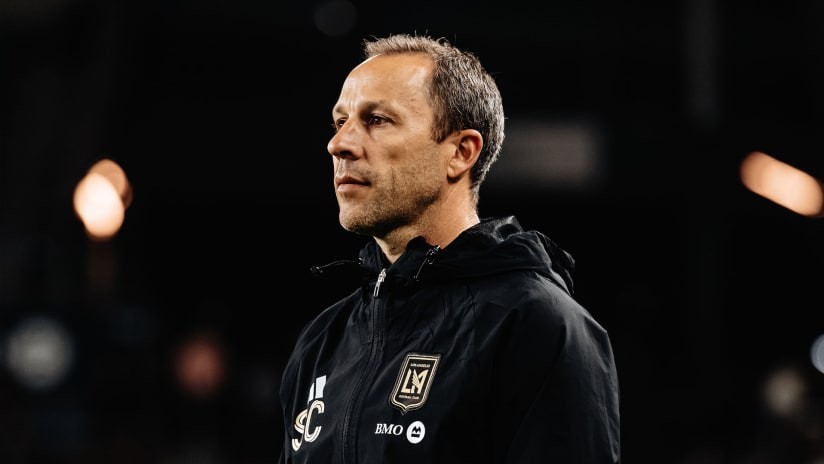
Steve Cherundolo may be one cycle away from becoming a serious candidate, especially after recently leaving MLS to return to Germany. Still, his experience as both a player and manager at high levels of the game makes him someone U.S. Soccer should strongly consider.
Jim Curtin (47)
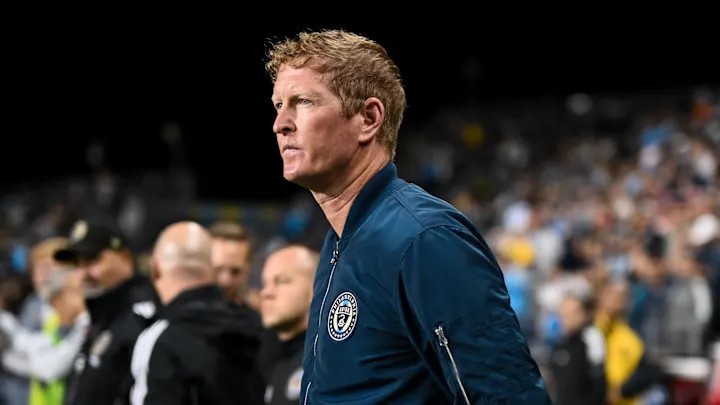
If Pochettino can be convinced to leave the #USMNT, perhaps newly appointed Austin FC manager Jim Curtin could also be persuaded to make the move if U.S. Soccer views him as the right fit. His success with the Philadelphia Union, highlighted by winning the 2020 Supporters’ Shield, showcased his ability to build a strong team culture and maximize the talent at his disposal.
Pellegrino Matarazzo (48)
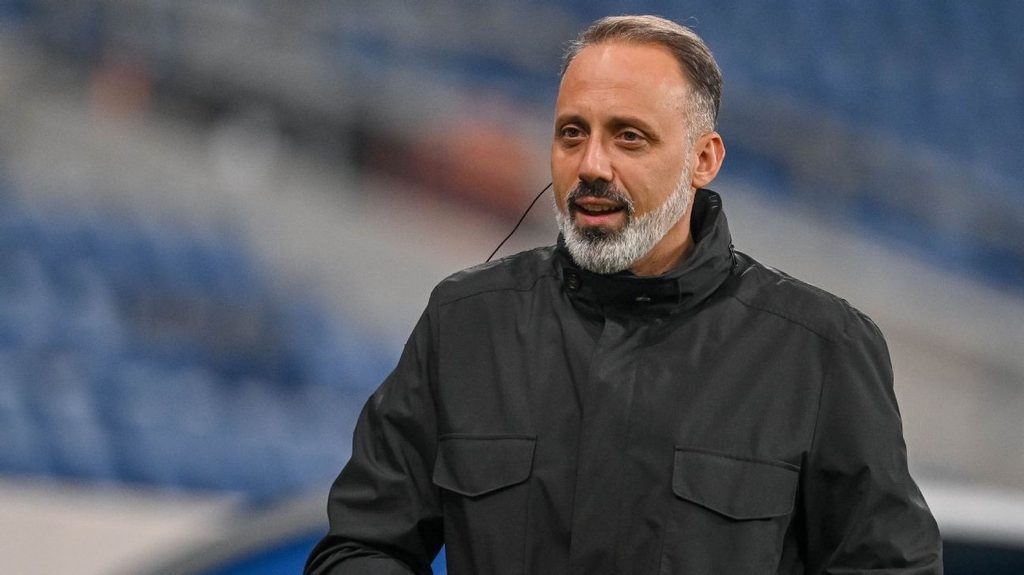
I’m not convinced U.S. Soccer would seriously pursue Pellegrino Matarazzo, but hopefully I’m wrong. His success coaching in Europe has made him one of the most respected American-born managers in the game and a popular choice among many fans for the future of the USMNT.
Brian Schmetzer (63)
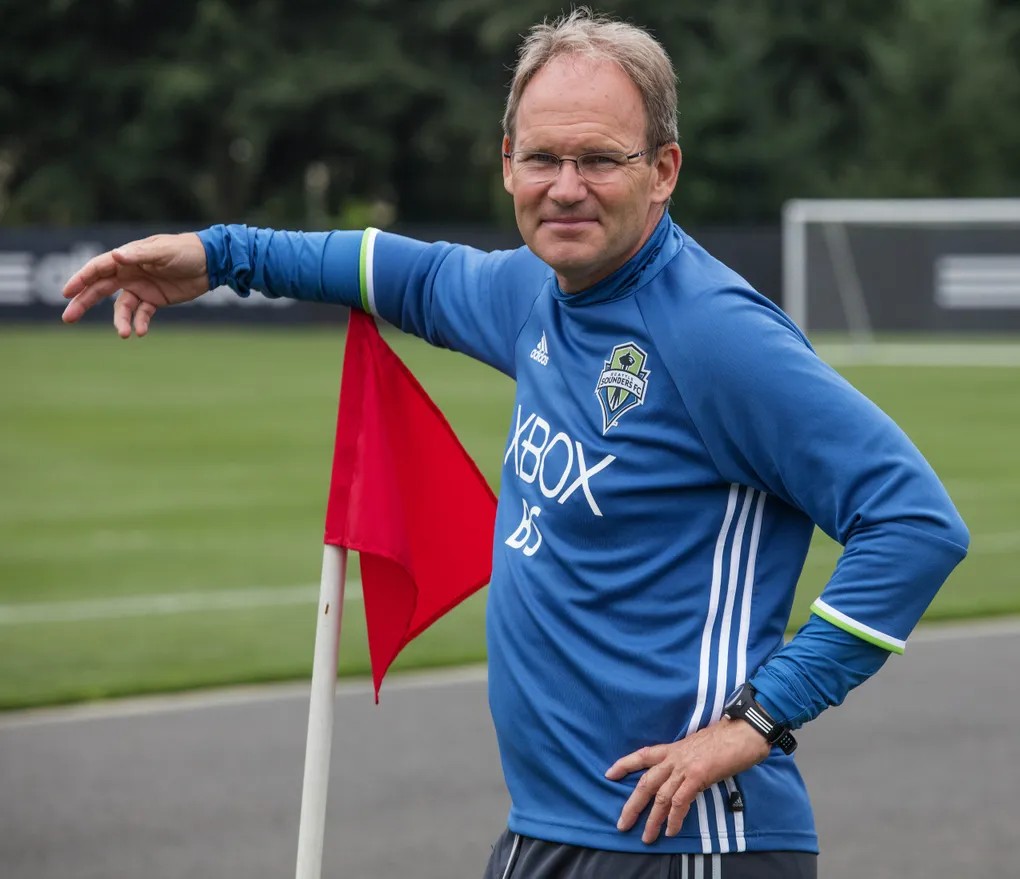
With eight trophies to his name, Brian Schmetzer may be one of the strongest and most accomplished domestic candidates available. His biggest achievement came when he led Seattle Sounders FC to the 2022 CONCACAF Champions League title, becoming the first MLS club to win the tournament under its modern format.
Peter Vermes (59)
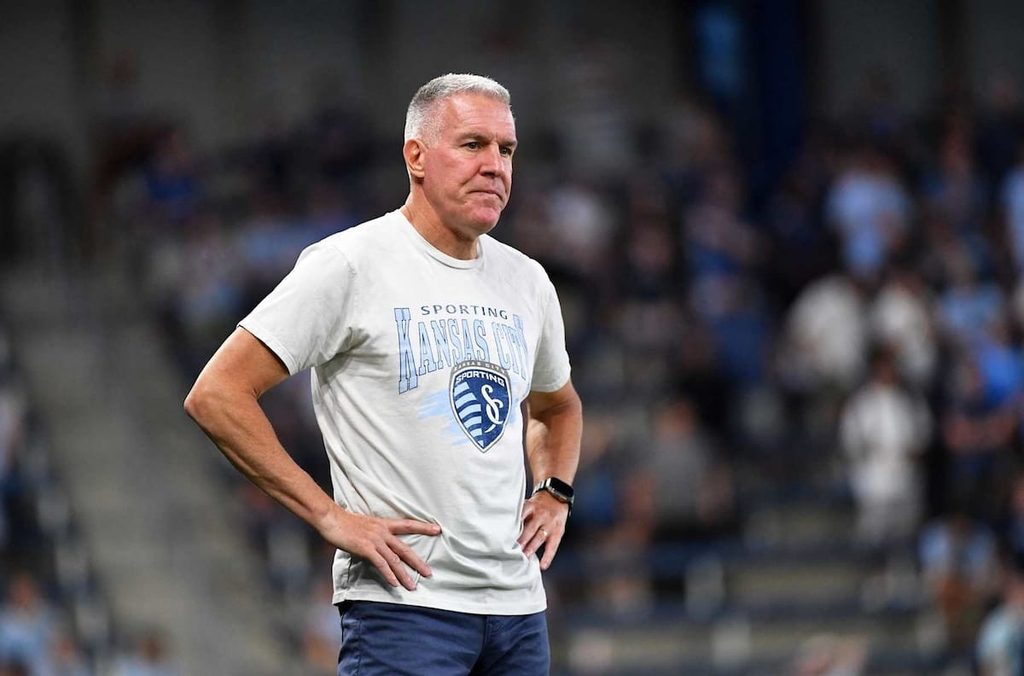
Former USMNT striker Peter Vermes deserves consideration given his success at Sporting KC, where he won four trophies as a manager. Vermes previously turned down interest from U.S. Soccer, but with him no longer actively coaching at club level, the timing could finally align for a move into the international game.
The Importance of Having a Succession Plan
The next USMNT manager could inherit a player pool filled with established veterans and exciting young talent, but U.S. Soccer’s vision and priorities have shifted frequently between cycles. If Pochettino is indeed leaving, that could send the federation in a different direction with its next hire.
My hope is that the long-term vision remains consistent with the approach heading into the 2022 World Cup. Given that Pochettino’s contract reportedly included a $10 million buyout clause, you would hope U.S. Soccer had contingency plans and potential replacements in mind. In recent cycles, the federation has appeared less prepared with backup options than it was in the past. How quickly U.S. Soccer moves will be important, but the search cannot drag on indefinitely. A process lasting a few months is reasonable, provided the federation identifies the right candidate well ahead of the next major FIFA window.
USMNT
The Next USMNT Star That Never Was: Revisiting America’s Biggest Teenage Prospects
USMNT
Building the Next Generation: Who Should Be on Pochettino’s USMNT Radar?


Will the Next USMNT Manager Be American?

The Next USMNT Star That Never Was: Revisiting America’s Biggest Teenage Prospects

Building the Next Generation: Who Should Be on Pochettino’s USMNT Radar?

-
 Club News6 years ago
CJ dos Santos, Benfica
-
 USMNT2 years ago
Gregg Berhalter’s Legacy
-
 Club News6 years ago
Give: Support Chasing a Cup by Supporting our Cause
-
 USMNT2 years ago
Medals on their Minds
-
 Club News7 years ago
Julian Vincente Araujo
-

 Club News2 years ago
American Transfers: Stock Up & Stock Down
-
 USMNT3 years ago
USMNT Kits Come in Different Styles and Colors
-
USMNT4 years ago
World Cup Format History