I did it for you all. I watched every broadcasted U17 match that featured an American MLS team. That means I was able to watch these clubs, some multiple times: Atlanta, LAFC, NYCFC, Seattle, Minnesota, LA Galaxy, NYRB, San Jose, Philadelphia, Columbus, Austin, Charlotte, Cincinnati, DC United, Miami, Houston and Real Salt Lake.
The following clubs did not get a broadcast at the U17 level: New England, Dallas, Orlando, KC, Portland, St. Louis, Colorado, Nashville or Chicago.
The U17 level consists of players born in 2005, 2006 and there were numerous players born in 2007 that were playing up a level. The 2005 age group has been a bit of a forgotten one from a Youth National Team (YNT) perspective, though the USSF just announced the hiring of Marko Mitrovic to lead the U19 group, which will focus on the 2005 age group. The reason they have been a bit of an afterthought is because the 2023 U20 World Cup will mostly feature 2003s and 2004s and the 2023 U17 World Cup will feature 2006s and 2007s.
Scouting players at this level is challenging. It can be messy. I rate players based on three categories: physical ability (strength, speed, quickness, explosiveness), technical ability (touch, dribbling, passing, shooting, tackling) and tactical/intellectual ability (creativity, mental processing, toughness).
At this age, I am looking for peaks and am not necessarily too concerned about valleys. I am looking for elite traits, even if they show up inconsistently. Obviously the players that do it more consistently get noted, but the key at this level is identify what a player could be and hope that through development, physical and mental maturation, and luck; the consistency will come and the areas of weakness can become strengths.
I’ve gone position by position to identify players that caught my eye:
Goalkeepers
Emmy Ochoa, San Jose Earthquakes (2005)
Emmy Ochoa is a Mexican-American that has played for Mexico at the U18 level, but is eligible to play for the US and is a likely target for the 2005 group. He signed as a homegrown player with San Jose as a 14 year old and currently starts for Earthquake II in MLS Next Pro. He’s the best 2005 US-eligible keeper that I have scouted. What stood out to me in the match I watched Emmy play vs River Plate was his ability with the ball at his feet and his intensity.
Jonathan Munteanu, Houston Dynamo (2005)
Jonathan has not played as a Youth International and is not on a pro contract, nor has he played for Dynamo 2. Jonathan caught my eye because of the explosiveness and demanding presence he showed between the pipes.
Left-Backs
Brian Alanis, Houston Dynamo (2006)
Brian Alanis is a youth international that has most recently joined a U17 camp in January. I liked Brian’s ability to maneuver in tight spaces and he has a really nice touch. He showed the ability to both initiate positive transitions and get on the end of transitional play by flying up the left sideline.
Christian McFarlane, NYCFC (2007)
Christian was one of the few standout 2007s playing up a level. He is a British-American that signed a homegrown contract with NYCFC as a 14 year old, but has not yet featured for NYCFC or NYCFC II in MLS Next Pro, though I’d expect that to happen at some point this year. Christian is big for his age, already standing at 6-0 tall. That also makes him bigger than you typically see at the full-back position, but I really like him out there. He’s really smooth on the ball and does a really nice job with his first touch. He showed a good ability to progress the ball forward and place passes right where they needed to be.
Right-Backs
Oscar Verhoeven, San Jose Earthquakes (2006)
Oscar is one of my favorite youth players to watch because he is so creative with the ball at his feet. Oscar has been called to the last couple U17 YNT camps and I expect him to be a fixture in that team. He has not signed a professional contract and has not played for Earthquakes II, but I think he will at some point this year. I saw more of what I had seen from Oscar, lightning quick feet, highly creative and good long passing and crosses. His defenses isn’t quite at the level of his offense, but he puts in a shift and he’s plenty fine physically at this level.
Izzy Boatwright, Inter Miami (2005)
Izzy played both Center-back and Right-back for Inter Miami, but played more so at RB, so I am placing him here. How Izzy develops physically will likely determine where he ends up. I first saw him play CB and loved his quickness and skill on the ball and as a passer. When I saw him play RB I was very intrigued, because he is a bigger guy. He showed even more creativity on the ball and was a monster in 1v1 defense. He was an absolute lock down 1v1 defender against the eventual championship side, Seattle.
Izzy Boatwright (2005) is a player that has caught my eye. He played really well at CB in group play and then played RB in the round of 16. He's got CB size and CBs don't usually do things like this. pic.twitter.com/qya1WafiOs
Diego was recently called into the U19 camp and has appeared for NYCFC II. I was impressed with Diego’s quick feet, pace and ability to connect play up the right side.
Center-Backs
Francis Westfield, Philadelphia Union (2005)
Francis has appeared in two matches for Union II, starting one. He, like Izzy Boatwright, plays both RB and CB. He played RCB in a back three in the match I saw against Flamengo, maybe one of the most impressive performances I saw by a MLS academy team against a giant like Flamengo. Westfield showed an incredible feel for the game, he was intercepting everything. He isn’t the tallest CB, but he moves well and is plenty comfortable with the ball at his feet, but for sure his most impressive trait was the way he reads the game and disrupts the opponent’s attack.
Ángel Martínez, Seattle Sounders (2005)
Ángel has played for the USYNT at the U15 level. Ángel might not be the most physically gifted CB in this age group, but he is so smart and reads the game so well. He and Stuart Hawkins were the most solid CB pairing I saw and was a big reason why Seattle one the U17 cup. Ángel showed some good long balls and good ability to dribble out of trouble, but his mental processing was what really stood out to me.
Tyler Hall, Inter Miami (2006)
I only saw Tyler for a half, but you only need to see Tyler play a little to see that he is special. Tyler captained the USYNT U17s in the last camp and he has been a starter for Inter Miami II. I think it is only a matter of time before Tyler gets a homegrown deal with Miami. He’s clearly very well thought of within that organization and within the USSF. He has all the makings of an elite CB prospect, especially if he hits a little bit of growth spurt. He’s extremely mobile, physical, smart and is very comfortable with the ball at his feet. Unfortunately Tyler got a knock and missed the quarter-finals and semi-finals. I thought Miami really missed his presence in the backline and was a big reason they did not go through to the finals. Hopefully he gets fit soon and can get back on the field for Inter Miami II. Tyler is one of the best 2006 prospects I’ve scouted in the USYNT pool.
Matai Akinmboni, DC United (2006)
Matai is a tall, left-footed Center-back that has played for DC United’s USL side, Loudoun United. He and Jace Clark are two highly regarded CBs within the DC program at the U17 level. These two had the tough task of taking on a high powered River Plate side in VERY windy conditions. It wasn’t a standout game from Matai, but there were enough flashes of his ability as a ball playing CB, and his ambition to break lines with his passes, to get me excited. Tyler and Matai would make a very exciting CB pairing at the U17 level.
Defensive-Mids
Ethan Kohler, San Jose Earthquakes (2005)
You can’t miss Ethan on the pitch because he rocks the short shorts. Ethan has not played at the youth international level and is not on any sort of pro contract, but he did make his debut with Earthquakes II last weekend, starting at RCB. Ethan caught my eye at the GA Cup because he covers a lot of ground and is fearless going into tackles and challenges. He showed a lot of leadership qualities on the pitch and was also solid in possession and distribution.
Bryan Moyada, LAFC (2005)
Bryan is more of a deep lying, playmaking 6 in the mold of a Danny Leyva. I watched LAFC U17 play Flamengo in a match where LAFC looked a bit over matched, however Flamengo struggled to put together any big time chances and I think that was in large part because of Bryan’s pitch control and his ability to minimize momentum through craft possession and passing.
Center-Mids
Niko Tsakiris, San Jose Earthquakes (2005)
Niko signed his homegrown contract with San Jose earlier this year and has been getting some minutes with the first team and he’s looked good. Niko has the looks of being one of the top 2005s in the USYNT pool and with more success in the MLS, he could start getting looks with the U20s, otherwise he will be a staple with the 2005 group. Niko was very strong against River, showing good body control and an ability to progress the ball into the final third. He was a menace all match and looked exactly how you’d want a professional to look in a youth tournament.
Benjamin Cremaschi, Inter Miami (2005)
Cremaschi is an Argentinian-American who signed with the Miami academy recently from Weston. Benjamin actually first caught my eye in a MLS Next Pro match against Philly where he scored a nice header goal against McGlynn and Paxten. He played really well all tournament as both an 8 and a 6. He’s physically advanced and plays very strong and aggressive. He reads the game well and breaks up a lot of plays defensively. He is also a good ball progressor and connects well with wings and strikers. He’s definitely one to keep an eye on. I think his future is as a 6.
Daniel Ordonez, Austin FC (2005)
Daniel is a super smart and crafty midfielder. He’s tidy with the ball at his feet and he reads the game super well. He showed many different ways to progress the ball and help get the ball in dangerous positions.
Brandon Tellez, LA Galaxy (2005)
I thought Brandon played really well against a very good Manchester United side. He was dangerous in attack, creative with the dribble and had very good ideas in getting out of tight situations. He was one of the bright players in a match where LAG went toe to toe with one of the best academies in the world.
Caleb Borneo, Columbus Crew (2005)
Caleb has not signed a homegrown contract nor has he played internationally, but he has made the bench for Crew 2 and his debut should be around the corner. I really loved Caleb’s versatility in the match I watched. In the first half he played more as a playmaking 6 and in the second half he played more as an attacking 10 and he was effective at both.
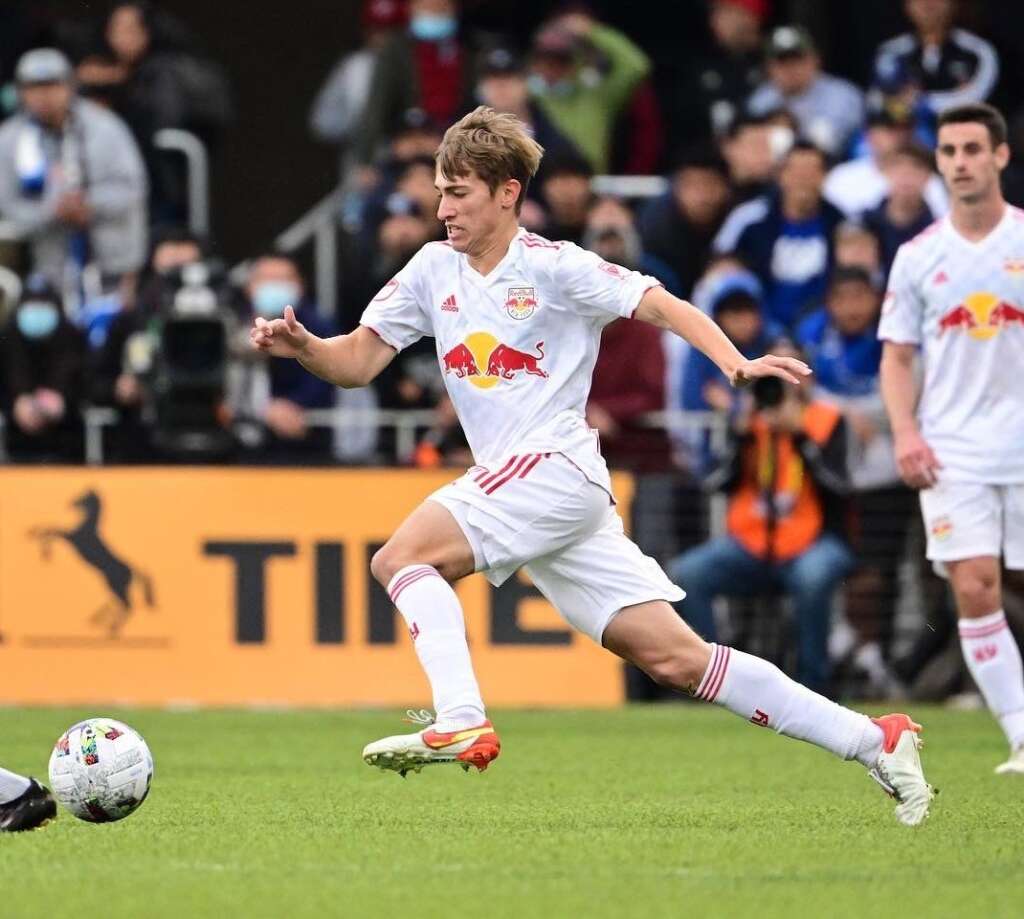
Nate Worth, NYRB (2007)
Nate is one of the four 2007s on this list. He has not signed a homegrown contract, but he is on loan to NYRB II in the USL and he has been with the USYNT U15s. It’s rumored that Nate is the best free kick taker in the USYNT pool, but we didn’t get to see too much of it. He did score a goal in the match I saw on a bit of a broken play. He looked a little bit overmatched physically, he’s not the biggest kid, but overall I thought he showed toughness and hung in well for someone playing up a level.
Attacking-Mids
Cruz Medina, San Jose Earthquakes (2006)
Cruz is a premier 2006 player in the USYNT pool. He has not yet signed a homegrown contract, but he has trained with clubs like Bayern Munich. I expect the homegrown deal to happen this year and I also expect him to play with Earthquakes II at some point soon. He has been a consistent call up to the USYNT U17s. Cruz has more of a 10 profile, but plays the 8 for SJ and USMNT. In San Jose’s match against River, I saw more of what I have seen from Cruz. He’s got a rare and special ability with the ball at his feet. He’s so creative in tight spaces and has some sneaky acceleration to get by people. He’s not the biggest or fastest, but his technical ability is remarkable.
Mr. Aquino was one of the stars of the tournament and the championship team’s best attacking player. He came off the bench in the three matches I watched and played a false 9 type of role. He scored a goal in both the semi-finals and the finals. The goal in the finals was from about 25 to 30 yards out. He has a smooth left foot and is crafty in creating space in tight areas. Just when you thought the 2006 USYNT midfield couldn’t get anymore stacked, now you can throw Aquino in the mix.
Álex is on LA Galaxy II, but has not yet played for the USL side. He is eligible to play for the US and Mexico. He’s undersized, but boy did he put on a show in the round of 16 against Manchester United. He nutmegged the MU left-back four or five times. His dribbling and creative problem solving in tight spaces was a joy to watch.
Justin is a pacey, aggressive winger who was up for the challenge against Manchester United. He was relentless in running at defenders and created a lot of problems. He scored the first goal in that match and it was a nice one.
Andre is another top 2006 and recently played with the USYNT U17s. Andre has a rare blend of athleticism and skill. He was a handful in the match I watched. He loves attacking players 1v1 and is able to have success with speed, power and skill.
Micah Burton, Austin FC (2006)
Micah recently played false 9 for the USYNT U17s, but he is better suited as a 10 or a winger. He’s undersized, but has a wonderful feel for the game and good technical ability. He scored on a very nice goal in the match I watched and was active all match long. I loved the different ways he got out of tight situations and he moved incredibly well without the ball.
The 2006 group has the looks of a historic one. Miles is another attacking player from that class that I am high on and he had some really nice moments in the GA Cup. He’s ambitious and creative with the dribble and loves to attack 1v1. I thought he held onto the ball a little too long in some instances and he wasn’t a major factor in the semi-final loss to Seattle, but there were tough circumstances in that match. Miles is more quick than fast and is very strong. I’d expect him to get a homegrown deal in the near future and also get a call from the USYNT.
Some thoughts on a couple Inter Miami U17s…
Someone many of you follow for USYNT info tried to tell me that Miles Perkovich (2006) wasn't a YNT level player. I am not sure how you can have watched him play and think that. Not very many 15 year old wingers do stuff like this. pic.twitter.com/4VSmtdTGdV
Etienne is another 2007 that played up in this tournament. He scored the second goal for Seattle in the U17 finals. He’s a pacey and hard working winger that was a nuisance all tournament long
I only saw Nelson for about 30 minutes vs Flamengo, but he was super impressive and an absolute load for the Brazilian side to handle. He has a rare blend of power and speed, reminiscent of Daryl Dike. He also had a goal that was Dike like with nice off ball movement and a killer finish from a tricky angle. Pierre is playing consistently with Union II and is a striker that the USMNT community should be excited about.
Destin is a player I knew little about before the tournament, but I was left impressed. He scored a beautiful goal against River in a match where he had a brace. In that match he also showed some of the best hold up play you will see at this level. He knows how to use his strong frame to hold off defenders and keep the ball in a position that the defender cannot disrupt. From there he was effective in buying time for his teammates to enter the attack and find them in good positions. I’d love to see Destin with the USYNT U17s in the next camp. They need a target striker like Destin.
Diego Rodriguez, Austin FC (2006)
Diego isn’t typically a starter for Austin’s U17s, but with Cruz Mesa out with an injury, he saw a lot of minutes in this tournament. I was impressed with his skill on the ball and his ability to make plays for his teammates.
Axel Kei, Real Salt Lake (2007)
I didn’t see much of Axel in the match I watched, but his physical profile at his age is undeniable. He and Christian McFarlane are the only two 2007s on homegrown deals.
Thomas Deschaine (@uskeeper on X and us_keeper on Instagram)
With the next wave of highly rated teenagers likely to be brought into the #USMNT during the 2030 World Cup cycle, I decided to look back at some of the young players who were once hyped as the next stars of the U.S. Men’s National Team but never established themselves as regular internationals.
Freddy Adu would seem to be at the top of this list. While he never became a regular for the #USMNT or the world-class face of U.S. Soccer many expected, he still earned 17 caps, scoring 2 goals and adding 3 assists. In many ways, he accomplished more at the international level than most of the players who are listed below combined.
Which former USMNT prospects did I miss, players who are no longer playing or are past their prime, who deserve to be on this list?
Cody Cropper – GK – 0 caps
U.S. youth international and longtime goalkeeper prospect who reached the Southampton and MLS systems but never earned a senior cap.
Junior Flores – AM – 0 caps
Creative midfielder who joined Borussia Dortmund’s system as a teenager and was viewed as a major U.S. prospect, but never reached the senior USMNT.
Eddie Gaven – MF/W – 8 caps
Teenage MLS phenom who became a league standout, but despite eight USMNT appearances, his international career never developed further.
Luis Gil – AM – 2 caps
One of the most hyped American midfield prospects of his generation; debuted for RSL at 16 but never translated that promise into a sustained USMNT career.
Emerson Hyndman – MF – 2 caps
Highly rated central midfielder who broke through at Fulham and earned two USMNT appearances, but never established himself internationally.
Perry Kitchen – DM/CB – 5 caps
U.S. youth captain and defensive midfielder who became a regular MLS starter, but his senior international career stalled after five caps.
Will Packwood – CB/DM – 0 caps
Birmingham City prospect who became the youngest American to play in the English Championship, but injuries severely disrupted his development.
Marc Pelosi – LB/CB – 0 caps
Highly regarded defender who moved to Liverpool as a teenager, but injuries and limited senior opportunities derailed his path to the USMNT.
Gedion Zelalem – MF – 0 caps
Arsenal wonderkid and one of the most highly regarded U.S. prospects of his generation. Injuries and inconsistent senior opportunities slowed his development, and he never made a senior USMNT appearance.
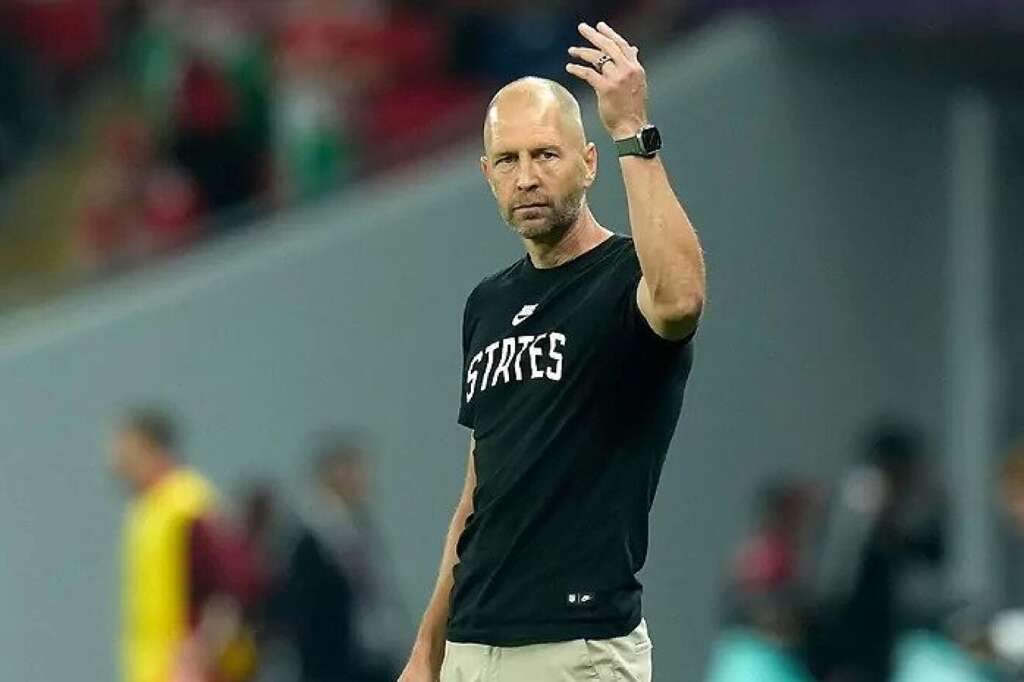
The number of young USMNT players in this September/October window is something we haven’t seen in quite some time. Some will catch the eye of newly extended USMNT manager Mauricio Pochettino, while others may not, but all of them have an opportunity during this cycle to make their case for World Cup qualifying and, ultimately, a spot on the 2026 World Cup roster.
It all starts now, and it should be fun to follow their development over the next four years.
Thomas Deschaine (@uskeeper on X and us_keeper on Instagram)
Header_NextGen
With the USMNT manager in place and the new cycle underway it’s time for recently extended Mauricio Pochettino to get some new young players on his radar and what better time to do this than the September/October double FIFA window.
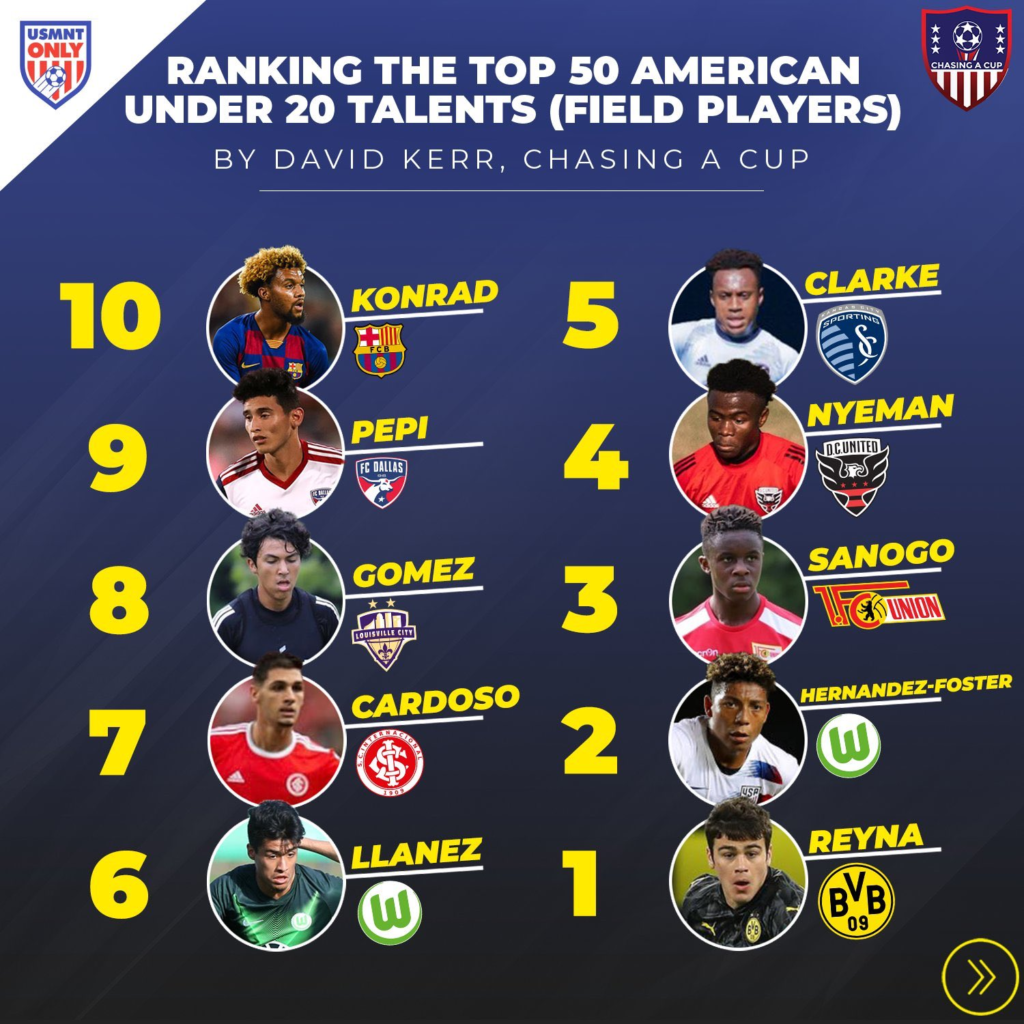
There are several U-23 players like Josh Wynder, Jalen Neal, Rokas Pukstas, Diego Kochen, Jonathan Gomez, Caleb Wiley, Cole Campbell, Chris Brady, Gaga, Slonina, Niko Tsakiris, Damion Downs, and Benjamin Cremaschi who have no caps order less than a handful with the USMNT.
Will USMNT snubs or overlooked players opportunities be during the 2030 cycle look like? Players like Diego Luna, Tanner Tessmann, Aidan Morris and Camron Carter-Vickers to name a few, we have to wonder how or if they will be part of this cycle of players. I would suggest some will likely get the opportunity in the early part of the cycle but will need to be performing n with their club to remain getting called back into camps.
Integrating a few of these youth USMNT players during each window for the first half of the cycle will allow Pochettino to evaluate them up close and see if there might be a role for them during this next cycle.
It’s extremely important that the USMNT have a few on their current U-20 teenagers’ breakthrough and become a reliable part of the USMNT in the second half of the cycle.
The below players will have an opportunity to play in next years U-20 World Cup being hosted by Azerbaijan and Uzbekistan as well as hopefully if their clubs release them being part of the 2028 Olympics USA Football squad to hopefully medal for the first time since 1904 when the US had two teams win Silver and Bronze. I think it’s also important to look at these players alongside some of the core USMNT in the upcoming window to see how they can integrate with one another.
Mathis Albert-17-Winger
Noahkai Banks-19-Centerback
Cole Campbell-20-Midfielder/Winger
Zavier Gozo-19-Winger
Julian Hall-18-Winger
Malik Jakupovic-17-Striker
Adri Mehmeti-17-Central Midfielder
Peyton Miller-18-Left Midfielder/Winger
Neil Pierre-18-Centerback
Cavan Sullivan-16-Attacking Midfielder
Whether we see all of these players, or just a handful, through the first half of the cycle, hopefully leading into another Copa América appearance, it’s clear that the time has come for Pochettino to begin integrating the next generation of USMNT players into the senior pool. How quickly that transition happens will be one of the most interesting storylines to follow.
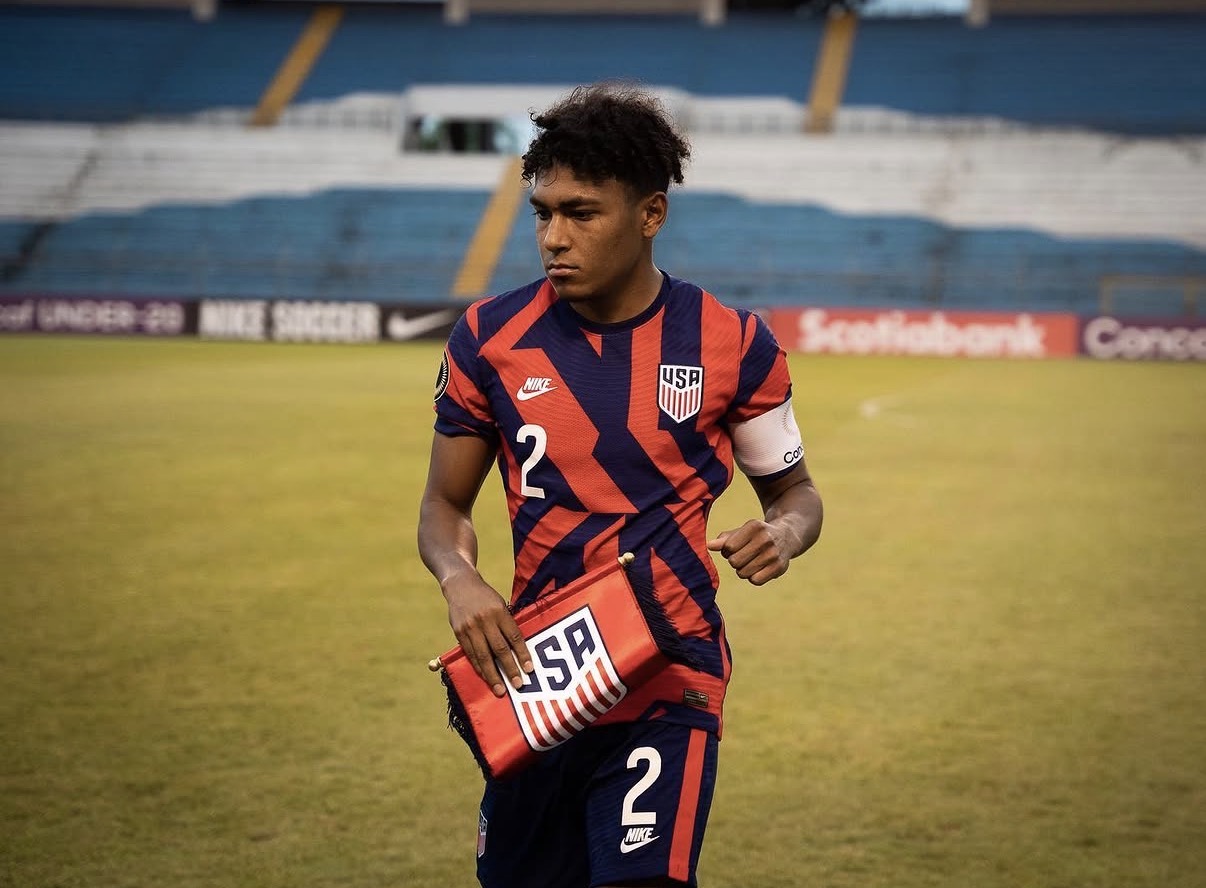
CHICAGO — Four years on from captaining the United States to their last CONCACAF Under-20 title, Mauricio Cuevas is quietly stepping back into the spotlight. Still only 23 years old, the talented right back just moved abroad, leaving his boyhood Los Angeles Galaxy for Liga MX side Santos Laguna in a summer move that slipped under the radar.
“To be able to get sold to a big club like Santos is a huge step forward for me,” Cuevas said in an exclusive interview this Saturday. “From the first day, I knew the challenge coming into it because the club hasn’t been meeting expectations in the past few years. Coming in and trying to be a difference-maker is something that I wanted. It’s a new challenge for me, and overall I’m just super excited.”
New Challenge in Mexico
As a teenager, Cuevas showcased himself as one of the country’s most exciting young fullbacks. Known for his technical prowess and set piece ability, the L.A. area native spent time at Belgium’s Club Brugge before returning to the Galaxy in 2023. There, he won an MLS Cup in 2024, appearing 78 times in total before his departure this summer.
“It’s always tough leaving home,” Cuevas said. “Obviously, it’s my boyhood club. My family still lives there, and I was great with all the guys at the club as well. I knew everybody, from the staff and the front office to the coaches. It’s never easy when you’re leaving home.”
“Honestly, the people in Torreón and Santos have all welcomed me with open arms since the first day. They’re all amazing people. It’s an amazing club and an amazing city.”
The move to Liga MX made sense from a number of angles; Santos manager Renato Paiva wanted a new right back, Cuevas’s Galaxy contract was winding down, and his Mexican passport made a move south of the border quite easy. Since joining, Santos have faced an extremely difficult run of games against CF Monterrey, Atlas, Club América, and New York City FC — all of which Cuevas started.
“It’s been great, to be honest,” Cuevas said of his adjustment to life in Torreón. “There hasn’t been much of an adjustment tactics-wise or playing-wise because Renato, our head coach, has similar concepts to what we had at the Galaxy. The players are really good as well. There’s so much quality on the team.”
“The only thing I’ve probably had to get adjusted to is the weather. It’s a little too hot out there, the sun is beaming a lot. But I love it, man. It’s a super-calm city. It’s beautiful, with great food and great people.”
Back in the U.S.
The game against NYCFC came in Leagues Cup, a competition with a razor-thin margin for error. To advance past the first round, teams ideally need to earn at least seven points from their three matches; after losing to New York City, qualification for the knockout rounds is now nearly impossible for Santos. They’ll face Gregg Berhalter, Robert Lewandowski, and the Chicago Fire on Sunday (8 p.m. Eastern Time on Apple TV) in a game where anything but a win in 90 minutes would certainly eliminate them.
“I think we go into every game with the belief that every game is a must-win for us, so that doesn’t really change much. We know now that there’s more on top of that, we have even more reason to win. We’re just focused on ourselves tomorrow. We had a long travel day yesterday, so it’s all about recovery now and setting a game plan that puts us in the best position to win.”
Having started against the Fire at Soldier Field in 2024 and facing former youth national team teammates Chris Brady and Sergio Oregel, Cuevas will hope to give something extra in this game and help keep Santos alive in the tournament.
“Any tournament that this club steps into, we always have that goal in mind of wanting to bring that trophy back to Mexico, back to Torreón with us. We’re a competitive club. We’re one of the best clubs, history-wise, in Mexico, so we know what this badge carries.”
USYNT Hero
Coincidentally enough, the U.S. U-20s advanced to a fifth consecutive CONCACAF final on Friday, setting up a date with hosts Mexico at Estadio Azteca on Sunday. The semifinal win also qualified the U.S. for next year’s Pan American Games in Lima, ensuring qualification for back-to-back editions.
In addition to being a central figure in the last U.S. U-20 CONCACAF victory in 2022, Cuevas was part of the last Pan Am Games team in 2023; the U.S. finished fourth in an unusual competition that included several intriguing names like Sergio Oregel, Brooklyn Raines, Danny Leyva, and a then-relatively unknown Alex Freeman. For Cuevas, that tournament was a special memory, and one he remembers fondly.
“I remember the whole trip, to be honest. I made a lot of great friends and met a lot of great people on and off the field, from the staff to the players – people I’m still in contact with. There are some that are in Liga MX as well, Nico (Carrera), Antonio (Carrera), Danny (Leyva).”
“Every player from that age group and that camp has been doing great. It’s lovely to see, to be honest, seeing everybody shine.”
On the immediate horizon for the U.S. is Sunday’s U-20 final (6:00 p.m. Eastern Time on FS2). The Americans will be hoping that this year’s final is more reminiscent of Cuevas’ age group (a 6-0 final win over the Dominican Republic) than the 2024 edition (a heartbreaking 2-1 loss to Mexico). As is often the case, the U.S. and Mexico will be without many of their top youth players for the tournament due to its concurrence with club games, but that has opened the door for others.
“We have two players from (Santos) that are representing Mexico, so congrats to them,” Cuevas said. “Huge shout out to (LA Galaxy’s) Ruben Ramos as well and Dylan Vanney, who are with the U.S.; they’ve been killing it. I’m just happy for all those guys. Proud of those guys.”










 Club News2 years ago
 USMNT3 years ago