USMNT
USMNT Positional Analysis: Right-Backs
Published
4 years agoon
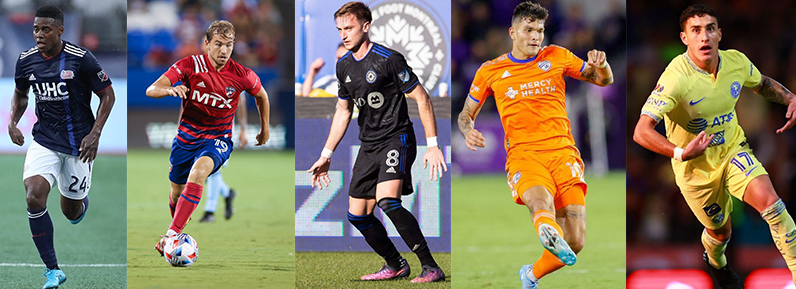
Dating back to last summer, many of us believed that our RB depth was going to be much better than it has been. Sergiño Dest is far and away the most talented of the group and the clear first choice RB. It seemed like Reggie Cannon was solidifying himself as the #2, while DeAndre Yedlin was the reliable veteran that could fill in when needed. Julian Araujo was also viewed as an up and coming RB prospect, but he chose to commit to Mexico. Bryan Reynolds was a player that a lot of people were excited about after signing with Roma.
Reggie was scheduled to be the starting RB in the Gold Cup, but injuries limited his availability and Shaq Moore was given the opportunity and played well.
Additionally, Joe Scally, a 19 year old that was not expected to impact Borussia Mönchengladbach, had a very successful start to the 2021 – 2022 season after injuries thrust him into the starting lineup.
All of these events led to a somewhat jumbled mess and now we have a clear competition for RB2 heading into the summer before the World Cup.
Look Like Locks
Sergiño Dest (Barcelona)
Without a doubt Sergiño Dest is the starting RB. He’s had some brilliant moments in WCQ, most notably the golazo against Costa Rica and locking up Tajon Buchannon in Canada. He’s also had some not so great moments, but overall, he’s been a real bright spot. His creativity in the attack is a dynamic element that USMNT needs. There is a noticeable gap when he is not in the lineup. The biggest challenge has been his availability. His reemergence at Barcelona is also a reason to be optimistic heading into the World Cup.
WCQ Stats:
436 minutes played
1 goal
1 assist
3.1 crosses per 90, 33% accuracy
9.1 dribble attempts per 90, 52.3% success rate
31.79 ground duels per 90, 46.1% success rate
In the Mix
DeAndre Yedlin (Inter Miami)
DeAndre is one of two players that are in the mix from the 2014 World Cup squad. DeAndre is one of the few “veterans” in the pool and Gregg has relied on that during qualifying. He’s participated in a lot of big matches, including both Mexico matches in WCQ. DeAndre is what he is at this point in his career. He’s not a game changer, but he’s reliable and tough on defense. To me, if none of the younger, more talented RBs emerge over the next several months, Yedlin is your reliable contingency plan that will bring World Cup experience and grit.
WCQ Stats:
393 minutes played
1 assist
2.52 crosses per 90, 54.5% accuracy
1.2 dribble attempts per 90, 40% success rate
19.47 ground duels per 90, 62.4% success rate
Reggie Cannon (Boavista)
Reggie has had a pretty rocky past 9 months dating back to the 2021 Gold Cup where he was supposed to be the starting RB, but was limited by a knock. That knock stuck around and limited him at Boavista for the first few months of the season. During that time another RWB emerged and Reggie has since predominantly played at RCB in a three back system. He’s been in and out of the USMNT setup during WCQ and hasn’t stood out, good or bad. Reggie still has a very good chance to make the World Cup roster, but I think it will take a strong finish to this club season and a strong start to make it happen.
WCQ Stats:
113 minutes played
4.78 crosses per 90, 16.7% accuracy
0.8 dribble attempts per 90, 100% success rate
13.5 ground duels per 90, 47.1% success rate
Shaq Moore (Tenerife)
Shaq is a very interesting player for me and how his club situation pans out over the next several months will be interesting to evaluate. Shaq impressed me in the Gold Cup. He had a poor performance against Panama in Panama and an impressive performance at home against Panama. His club season has been up and down. He’s been in and out of the starting lineup for a second division Spanish club, Tenerife, who are fighting for a promotion to LaLiga. MLS teams were in hot pursuit of Shaq this winter, but Tenerife wanted to keep him around for the promotion push. What I am curious about is what will happen with Shaq if Tenerife gets promoted? Do they keep him around for LaLiga next year? That would be a great challenge for Shaq. Do they upgrade and that means Shaq pursues MLS interest? If they don’t get promoted, you have to think a move for Shaq is inevitable.
Like Reggie, Shaq will really need to impress from now until November for him to win a spot on the World Cup roster. Rumor has it that Shaq will head to Nashville this summer, which will give him more of a chance to impress this summer leading up to the World Cup. This is a trend you might see a lot of with players looking to get on Gregg’s radar ahead of the World Cup.
WCQ Stats:
217 minutes played
4.15 crosses per 90, 10% accuracy
2.1 dribble attempts per 90, 80% success rate
20.3 ground duels per 90, 61.2% success rate
Keep an Eye On
Joe Scally (Borussia Mönchengladbach)
I think it’s fair to say that the number one complaint of USMNT fans, at least on Twitter, is Gregg’s evaluation of Joe Scally. Let’s be real, Joe was ahead of schedule in terms of having an impact in the German Bundesliga. That caught a lot of us by surprise. Joe was called into one camp and apparently Gregg was not impressed, and he hasn’t been called back since.
I don’t always agree with Gregg’s evaluation of players, but to his credit, he doesn’t usually give up on players forever, especially young players and I think we’ll see Joe get another chance. Anyone can have a bad camp. My hope is Joe gets a chance with USMNT this summer and at that point it is on him to change Gregg’s opinion. He can’t completely rely on his performances in Germany. He has to show up in camp as well. I think he needs one big time performance this summer to have a shot.
Joe has shown the highest level of play within this group outside of Dest, so hopefully he can rise in the eyes of Gregg this summer. Gregg usually takes a little longer to get to player evaluations that are aligned with the fanbase, but he does usually get there. Let’s hope that happens here.
Bryan Reynolds (Kortrijk / Roma)
Offensively, Bryan might have the highest ceiling at RB outside of Sergiño Dest. Unfortunately for Bryan, the Roma transfer has not been positive and so Bryan wasn’t able to show Gregg much for the entire first half of the season. Bryan was loaned to Belgian side, Kortrijk and has been a positive player for them. Bryan was invited to December camp, but did not start over Brooks Lennon, which was concerning, but did come in and look bright.
I would imagine Bryan and his camp is looking for a permanent move out of Roma this summer and with the right move and strong growth, Bryan has an outside chance to make some noise.
Brooks Lennon (Atlanta United)
I wouldn’t keep my eye on Brooks Lennon because I think he is a pretty limited player and below the quality of the rest of the guys in this group, but he has been called in recently so I feel compelled to have him on the list.
My way too early prediction: Sergiño Dest, DeAndre Yedlin, Joe Scally
The growth and success of Major League Soccer has led to more players from around the world representing MLS at the World Cup, with this summer’s tournament expected to feature the highest total yet.
1998 was the first World Cup played after the launch of Major League Soccer. Here’s a breakdown of MLS-based players on World Cup rosters by year:
1998 – 18 (T-8th)
Tied with Liga MX for 8th most. This would the first and only time the USMNT World Cup roster
2002 – 11 (18th)
All 11 were from the USMNT
2006 – 15 (14th)
11 of the 15 were #USMNT players.
2010 – 6 (25th)
The lowest total to date. Only 6 MLS players, with 4 on the USMNT. This coincided with the peak of US players based in Europe.
2014 – 21 (10th)
Less than half were USMNT players, though the US still led the way the 10 most notably DeAndre Yedlin (20) getting the call.
2018 – 18 (11th)
This number likely would’ve been significantly higher had the USMNT qualified, potentially pushing MLS into the top 7–8 leagues.
2022 – 36 (6th)
The highest total yet, just behind Ligue 1 for 5th. Also worth noting, rosters expanded from 23 to 26 players for this tournament and the first time that the USA didn’t have the most players
Overall, the trend shows steady growth in MLS representation, both domestically and internationally.
MLS Pipeline Continues for the USMNT
It’s rare for a World Cup–qualified nation not to have a strong share of its players featured across tournament rosters. Canada was a recent exception in 2022, though their ties to MLS remain significant with multiple clubs in the league.
With roster selection less than a month away, it’s reasonable to expect that roughly a third of the #USMNT squad will come from MLS. Below is a positional breakdown of the MLS players Mauricio Pochettino has called in during his tenure as USMNT manager.
Goalkeepers
The USMNT is set to start an MLS-based goalkeeper at a World Cup for the first time, with all of the top options currently playing in MLS.
Chris Brady is one of the goalkeepers I’m most excited to watch in the coming cycles. He’s been performing at a high level in Major League Soccer and looks like a strong candidate to fill the long-term role as the USMNT’s primary starter over the next few cycles.

Chris Brady
Roman Celentano
Matt Freese
Patrick Schulte
Matt Turner
Defenders
Veteran center-backs Tim Ream and Miles Robinson seem likely to be selected with Blackmon a possibility depending on the health of the remaining pool. Arfsten seems to be almost a lock due to his ability to attack and create scoring chances with his crosses from the wing.

Max Arfsten
Tristan Blackmon
Tim Ream
Miles Robinson
Midfielders
The USMNT has strong depth in midfield, and Mauricio Pochettino’s recent roster selections suggest he’ll likely round out the squad with some of the players listed below.
One of the biggest gaps in this USMNT roster is the true dynamic, creative spark in the attacking third. Diego Luna stands out in that role, capable of unsettling defenses, breaking lines, and changing the rhythm of a match. He’s exactly the type of player who could thrive in a super-sub role, coming on against tired legs and making an impact at this summer’s World Cup.

Sebastian Berhalter
Diego Luna
Jack McGlynn
Cristian Roldan
Timothy Tillman
Forwards
Striker may be the toughest position for the MLS group to crack the #USMNT World Cup roster, but Brian White is making a strong case, scoring eight goals in his first nine MLS matches at the time of writing.
Brian White is a highly productive, “old-school” style striker for the USMNT, known for his elite positioning, relentless work rate, and ability to finish in a variety of ways. That combination makes him a strong option as a striker off the bench, where he could be especially dangerous against tired defenses at this summer’s World Cup.

Paxten Aaronson
Josh Sargent
Brian White
MLS Representation in the USMNT Player Pool
Since 1998, the last time the majority of a USMNT World Cup roster was composed primarily of MLS-based players, it has become increasingly clear that a meaningful portion of the squad still comes from MLS. Consistently, roughly 30–40% of the roster has been drawn from the domestic league, reflecting a long-standing and relatively stable trend in player selection over time which I don’t seen changing anytime soon.
Thomas Deschaine (@uskeeper on X and us_keeper on Instagram)
In light of the recent resignation of Matt Crocker, I revisited something I wrote nearly a decade ago, an early attempt to capture what I called the “Dark Decades of US Soccer.” At the time, the piece was overly long and packed with detail—probably more than today’s audience would stick with.
But buried in that work were meaningful patterns, clear, recurring behaviors that shaped how the federation operated more than 60 years ago. What stood out most, looking back now, is how familiar some of those patterns still feel today.
So, I went back, stripped the piece down, and pulled out the most relevant sections, those that highlight the parallels between past and present. The goal isn’t to draw conclusions for you, but to put those similarities side by side and let you decide: how much has really changed?
World Cup Momentum to the First American Soccer Boom

Photo of Pele at the 1966 World Cup
Photograph: AP Photo
After the success and popularity of the 1966 World Cup which saw over one million viewers of the tournament many America investors saw the vision and believed that there was the market for soccer in the United States and Canada.
The investors moved very quickly and in 1967 there were two American professional leagues making their debuts the USSFA-sanctioned United Soccer Association (USA) and the independent National Professional Soccer League (NPSL).
These leagues would only last one year and be merged at the request of FIFA into the North American Soccer League (NASL) kicking off in 1968 and relying on mainly on foreign talent. The American investors believed building the interest in soccer in the US would have a direct impact on the growth and performance of the US Men’s National team which and of course more money for the investors and federation.
First Attempt at Modernizing the USMNT

Phil Woosnam, in 1977 as the commissioner of the NASL.
Photograph: AP Photo
Off the back of the success of the inaugural NASL season, the U.S. Soccer Federation appointed Phil Woosnam, fresh off leading the Atlanta Chiefs to a championship and earning Coach of the Year honors, to take charge of the U.S. Men’s National Team.
Woosnam immediately shifted the structure of the program. Instead of a player pool selected by committee, he pushed decision-making toward the coaching staff, allowing selections to be based on performance and fit rather than geography or internal bias. The move was not universally welcomed, and it reportedly created friction with members of the federation’s leadership.
With professional players now more fully available, Woosnam’s approach helped assemble what was widely considered the strongest possible squad at the time. He also introduced organized training camps ahead of friendlies and World Cup qualifiers, an uncommon practice in that era, but one that clearly improved cohesion and preparation. Those changes contributed to the U.S. advancing further in World Cup qualifying than it had in previous cycles.
By early 1969, the USMNT appeared to be building real momentum toward a potential place in the 1970 World Cup. However, tensions between Woosnam and the federation began to escalate. Frustrated with compensation issues and growing interference from the USSF in team operations, Woosnam stepped away from the national team in the spring of 1969. become commissioner of the NASL.
Following his departure, assistant coach Gordon Jago took over as manager. His tenure began under difficult circumstances, with not being able to set up pre-qualifying friendlies, an important part of the progress made under Woosnam along with interference from USSF board members as it related to roster selection which created instability and morale issues on the field. The USMNT struggled in qualifying and ultimately fell short, losing both matches to Haiti, a team they had previously been competitive with in a series of friendlies in 1968.
The Crocker Era: Coaching Chaos and Course Corrections

Photo of Cindy Parlow Cone, Gregg Berhalter, Matt Crocker and JT Batson
Photograph: AP Photo/Lucas Peliter
It’s been roughly three years since the Matt Crocker era began at U.S. Soccer, when he stepped in as Sporting Director, replacing Earnie Stewart.
One of Crocker’s first major responsibilities was hiring the next U.S. Men’s National Team manager. In the previous cycle, the federation had reportedly operated with a narrow set of internal criteria, preferences widely believed to favor English-speaking and American candidates, which significantly limited the coaching pool and shaped the direction of the search.
Roughly two months later, during the Concacaf Nations League semifinal window, it was announced that Gregg Berhalter would be reappointed as USMNT head coach. The decision caught many around the program and in the media off guard, raising questions about how the process had ultimately unfolded.
More recently, in an interview with GiveMeSport, Jesse Marsch stated he was effectively told he was set to become the next USMNT head coach in the late spring of 2023, only for that opportunity to be withdrawn at the last moment, a shift that reportedly had ripple effects on a potential move to Leicester City that was nearing completion.
The abrupt reversal and eventual rehiring of Berhalter has been widely attributed to a mix of factors, including rumored influence from within the player pool, with U.S. Soccer ultimately reversing course. Roughly a year later, after a disappointing Copa América campaign on home soil, Berhalter was dismissed.
Crocker’s second opportunity to reset the program took a different direction. He first secured the high-profile appointment of Emma Hayes, one of the most accomplished managers in women’s football, to lead the USWNT. That move was followed by the hiring of Mauricio Pochettino for the USMNT, a tenure that has delivered mixed early results and will ultimately be judged through the lens of the 2026 World Cup on home soil but truly disappointed that Crocker wouldn’t see through what he helped build, and you have to ask yourself why?
USMNT
The No. 9 Timeline: A Historical Look at USMNT Strikers
Published
4 weeks agoon
April 10, 2026
Thomas Deschaine (@uskeeper on X and us_keeper on Instagram)
Each generation of soccer can be understood through overlapping eras, each one feeding into the next. Some produce deeper pools of talent, while others rely on a handful of standout players. In a recent piece, I looked back at past USMNT goalkeepers and their impact on World Cup teams. That led to a natural follow-up: a deeper dive into the history of USMNT strikers.
For this article, I’ve divided that history into three distinct eras, focusing strictly on past strikers rather than the current pool. I’ll wrap up, however, with some thoughts on where today’s active strikers fit into that broader timeline. For each era I will spotlight four strikers.
According to their media guide, the modern era of the USMNT begins with the 1990 World Cup cycle. While that framing makes some sense, it does gloss over some of the program’s more challenging decades. For the purposes of this, though, we’ll start there as well, especially considering that from 1974 to 1986, the USMNT averaged fewer than 20 matches per cycle and scored less than a goal per game across those four cycles.
Trailblazers: The Early Era of USMNT Strikers
The story of USMNT strikers stretches back nearly 40 years, to a time when goals were often hard to come by, but a handful of players still managed to leave a lasting impression. This was an era defined less by consistent production and more by moments, flashes of quality that stood out during a formative period for the program.
Players like Chris Sullivan, Eric Eichmann, Frank Klopas, and Roy Wegerle all played roles in at least one World Cup cycle and delivered important goals along the way. However, consistency and longevity at the international level proved elusive, reflecting the broader challenges the USMNT faced during this period.
Even so, these players helped lay the groundwork for future generations, establishing the foundation for what the striker position would eventually become.

Bruce Murray (1985 – 1993)
85 Caps, 21 goals, 11 assists
A quick, opportunistic forward known for his movement and ability to capitalize on chances, Bruce Murray was the type of striker the USMNT hadn’t truly seen before. He filled that role throughout the 1990 cycle and into the lead-up to 1994, emerging as the team’s leading scorer during that stretch and helping guide the U.S. to its first World Cup appearance since 1950. At the 1990 World Cup, Murray contributed a goal and an assist, highlighting his impact on the international stage.
Despite his contributions, Murray was ultimately left off the 1994 World Cup squad, one of the final cuts as the program began to turn toward younger options and players competing in Europe at the time.
Eric Wynalda (1990 – 2000)
106 Caps, 34 goals, 17 assists
The premier striker of this era for the USMNT, Eric Wynalda featured in three consecutive World Cups. A dynamic and confident forward, he combined technical ability with a powerful shot, making him a constant goal threat and the focal point of the U.S. attack.
His iconic set-piece goal against Switzerland in the USMNT’s opening match of the 1994 FIFA World Cup remains one of the greatest in tournament history and stands among the best goals ever scored by the USMNT. Wynalda not only delivered in defining moments but also set the tone and standard for the strikers who followed.
Earnie Stewart (1990 – 2004)
101 Caps, 17 goals, 10 assists
Earnie Stewart was a key attacking figure for the USMNT throughout the 1990s and early 2000s, bringing a blend of technical quality, intelligence, and consistency to the squad. Comfortable as both a striker and a second forward, his versatility allowed him to influence matches in multiple ways while effectively linking midfield and attack.
While not a traditional No. 9, Stewart’s movement, awareness, and all-around contributions helped shape the evolution of the USMNT’s forward line during a critical period of growth for the program. He appeared in three World Cups—the 1994 FIFA World Cup, 1998 FIFA World Cup, and 2002 FIFA World Cup—and delivered one of the most iconic moments in U.S. soccer history, scoring the game-winning goal against heavily favored Colombia on home soil in 1994.
Second Generation USMNT Strikers (1996-2010)
The next era of USMNT strikers following the 1994 World Cup produced a tough, hard-nosed group. Several featured in one or more World Cup cycles, led by Josh Wolff, who made both the 2002 and 2006 squads.
Brian Ching and Eddie Johnson were also key figures, earning spots on the 2006 roster, with some arguing they were overlooked later in their careers. Other notable names from that period include Casey Coner, Ante Razov, and Taylor Twellman, players who all had opportunities with the USMNT, but whose form and timing didn’t quite align with World Cup selection. Twellman, in particular, still believes he should have been part of the 2006 squad.

Joe-Max Moore (1992 – 2002)
100 Caps, 24 goals, 14 assists
This was always a bit of a sneaky one for me. Joe-Max Moore was a consistently reliable attacking option for the USMNT during this era, even if he didn’t always get the spotlight. Currently ranked seventh all-time in USMNT goals, Moore contributed across three World Cup cycles and remained a steady presence in the attack.
He’s also one of just five USMNT players to score four goals in a single match, a standout performance that came against El Salvador in 1993. Despite his overall production and longevity, however, Moore was never able to find the back of the net on the World Cup (1994, 1998 and 2002) stage.
Brian McBride (1993 – 2006)
95 Caps, 30 goals, 11 assists
A traditional No. 9, Brian McBride was physical, relentless, and dependable, with a dominant aerial presence in the biggest moments. He put everything on the line for the USMNT, scoring in multiple World Cups (1998 and 2002) and cementing himself as a fixture at the striker position.
One of his most iconic moments came at the 2006 World Cup, when he was elbowed in the face by Italy’s Daniele De Rossi, leaving him bloodied and in need of stitches, yet he still played the full 90 minutes.
Clint Mathis (1998 – 2005)
46 Caps, 12 goals, 9 assists
While Clint Mathis had a relatively brief run with the USMNT, his impact on the attacking position was undeniable. Often deployed as a second striker behind Brian McBride, Mathis was anything but traditional—he thrived as a free-roaming attacker capable of changing a match in an instant, highlighted by his ability to score spectacular long-range goals.
He played a key role for the U.S. at the 2002 FIFA World Cup, scoring a memorable goal against South Korea in the group stage and adding an assist, helping power the team’s historic run.
The Evolving Striker Pool (2009 – 2018)
The striker pool from this generation is an interesting mix, some players were only involved with the USMNT for brief stretches, while others carried over from the previous era and overlapped with this group.
Strikers like Edson Buddle and Hercules Gomez, both part of the 2010 World Cup roster, had limited opportunities and production at the international level. Their inclusion was shaped in part by circumstance, as Charlie Davies’ recovery from his car accident less than a year before the tournament ultimately ruled him out of contention.
Looking ahead to 2014, Aron Jóhannsson and Chris Wondolowski earned World Cup roster spots but struggled to make a lasting impact in the biggest matches against top-tier opponents, which limited their long-term roles with the national team.
Players like Jordan Morris, Jesús Ferreira, and Gyasi Zardes emerged and saw increased opportunities following the failure to qualify for the 2018 World Cup. It’s easy to imagine that at least some of that younger group could have factored into the roster had the U.S. made it to Russia.

Clint Dempsey (2004 – 2017)
141 Caps, 57 goals, 19 assists
Clint Dempsey delivered some of the most iconic striker moments in USMNT history, big goals, clutch performances, and a relentless ability to show up when it mattered most. While he wasn’t a traditional target striker, his movement, instincts, and technical ability made him one of the most dangerous attacking players the U.S. has ever had.
He scored against top-tier opponents like Spain and Brazil at the 2009 Confederations Cup, found the net against England at the 2010 World Cup to help secure a crucial draw, and famously opened the scoring just seconds into the 2014 World Cup. He also delivered in the 2016 Copa América, with key goals against Ecuador in the quarterfinal and Paraguay in the group stage.
Dempsey wasn’t just a scorer, he was a moment-maker. Whether it was a scrappy finish, a composed strike, or stepping up in the biggest matches, he consistently delivered when the U.S. needed him most.
Jozy Altidore (2007 – 2019)
115 Caps, 42 goals, 14 assists
Jozy Altidore had a unique USMNT career, less about highlight-reel volume and more about physical presence, hold-up play, and stepping up in key moments. At his best, he was the focal point of the attack and a difference-maker. Jozy’s work ethic seemed to impact later stages of his club and USMNT career and impacted him becoming the all-time leading scorer in USMNT history.
Bobby Wood (2013 – 2018)
43 Caps, 13 goals, 3 assists
If it weren’t for Jürgen Klinsmann’s support after Bobby Wood secured a new club in Germany, it’s unclear whether his international career would have continued. While his peak was relatively brief at both club and national level, Wood made his mark with clutch moments, most memorably scoring game-winning goals in back-to-back 2015 friendlies: a 4–3 comeback victory over the Netherlands and a 2–1 win against Germany.
The Next Generation: Assessing the Future of USMNT Strikers
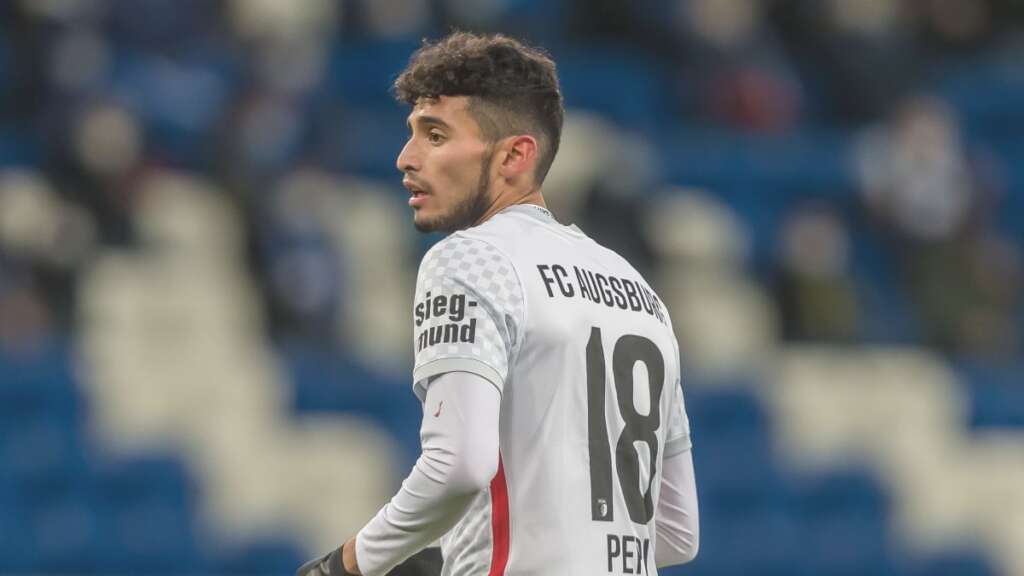
The current USMNT striker pool remains very unsettled. At the moment, Ricardo Pepi is the only regular forward to reach double-digit goals, with 13. He’s followed by Folarin Balogun with eight and Haji Wright with seven. Other notable names in the mix include Josh Sargent and Patrick Agyemang, each of whom has contributed five goals at the international level. However, Agyemang suffered an Achilles injury and has been ruled out of the World Cup, a significant setback given his recent form. For the USMNT to be successful at the 2026 FIFA World Cup their strikers will be a key role and contributing to the teams’ goals scored.

From a club perspective at the time of the article, Balogun is in excellent form, and the hope is that continues through the 2026 FIFA World Cup. At this point, it feels clear that Balogun and Pepi have established themselves as the top two striker options. The bigger question, though, is who else will step up to provide the depth and quality needed to sustain the position in this cycle and beyond.
The Expanding Impact of MLS on the World Cup
The More Things Change, The More They Remain the Same
The No. 9 Timeline: A Historical Look at USMNT Strikers
Trending
-
Club News2 years agoAmerican Transfers: Stock Up & Stock Down
-
USMNT2 years agoUSMNT Kits Come in Different Styles and Colors
-
Club News6 years agoCJ dos Santos, Benfica
-
USMNT6 years agoA Hidden Gem: Barça Residency Academy
-
Club News6 years agoJulian Vincente Araujo
-
USMNT3 years ago
World Cup Format History
-
USMNT2 years agoIs the MLS Specifically Targeting Expansion to USL Cities?
-
MLS4 years ago2022 Youth Series: MLS Club Youth Talent Rankings