Connect with us

USMNT

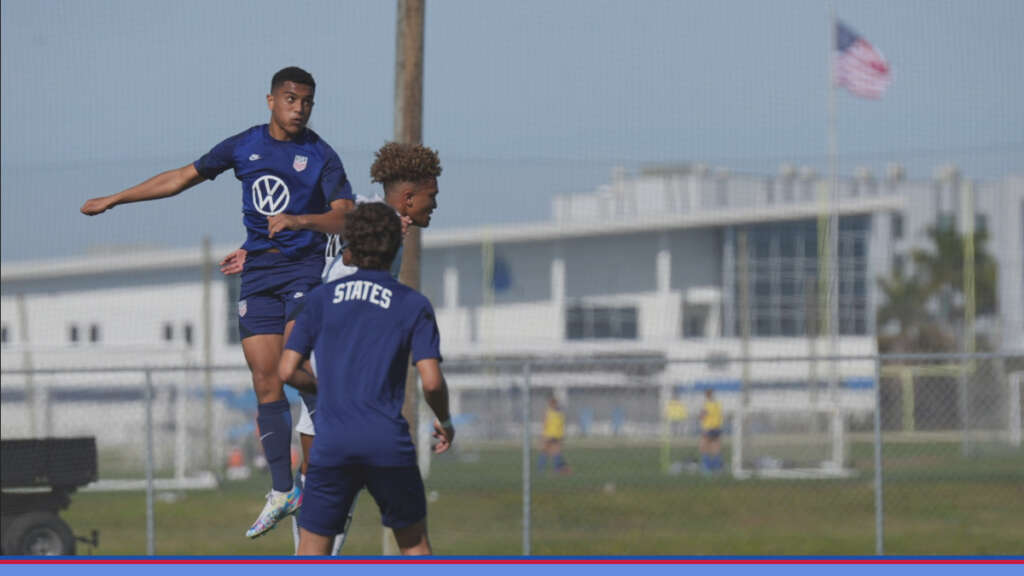
U17 VS ARGENTINA MATCH ANALYSIS

Published

on

Background

The U17s, which has been defined as players born in 2006 or later, in preparation for U17 2023 World Cup qualifying. This is the first time this group has played another federation since February 2020, right before the pandemic. The team is managed by Gonzalo Segares. 

THe LINEUP

GK: Diego Kochen, Barcelona Academy
LB: Riley Dalgado: LA Galaxy Academy
LCB: Stuart Hawkins: Seattle Academy
RCB: Tyler Hall, Miami Acacdemy
RB: Oscar Verhoeven, San Jose Academy
CDM: Edwyn Mendoza, San Jose Academy
LCM: Cruz Medina, San Jose Academy
RCM: Luis Moreno, Houston Academy
LW: Bajung Darboe, Philadelphia Academy
RW: Fidel Barajas, San Jose Academy
ST: Micah Burton, Austin Academy

Pineda brought in 8 subs, using all 8 of his field players available to him off the bench. It was a bit hard to tell who came in and where as it was not communicated on the footage that I watched, but here is my best guess: 

LB: Jayson Castillo, Seattle Academy
LCB: Gershon Henry, Salt Lake Academy
CDM: Pedro Soma, Cornella Academy
LCM: Brian Carmona, Charlotte Academy
RCM: Paulo Rudisill, LA Galaxy Academy
LW: Andre Gitau, Houston Academy
RW: Luke Zielinski, Phildaelphia Academy
ST: Ezekiel Soto: Houston Academy

MATCH ANALYSIS

When watching youth soccer, I am looking mostly for flashes of high quality play and moments of excitement. I am not concerned with the scoreline and I am not too concerned with the lows. These are kids and they are going to make a good amount of mistakes. The important thing is to identify potential and hope that over time consistency comes. 

Overall I was very impressed by the variation of skill, athleticism and mentality, especially with the starters. Stylistically, the boys played very similarly to how our senior team wants to play and I saw a real dedication to pushing the ball forward and applying pressure on Argentina. The press applied by the front three was very effective and caused a lot of problems for Argentina and subsequently created a lot of dangerous situations for USA. 

Our passing, for the most part, was decisive and crisp and we created a lot of good opportunities. The first half was even. We scored in the first minute after creating a turnover in the press and connecting two quick passes, ending in a clever back heal by Micah Burton to Cruz Medina who slid it past the Argentinian keeper for the opening goal. Argentina later scored two goals in the second half, creating almost all of their danger in counter attacks. The first on a driven cross that was inches away from being cleared by LB Dalgado. Kochen rightfully came out to close down the angle and the Argentinian winger found a small crease on the near side. The second goal was an own goal by Dalgada, who had a tough day defensively after Tyler Hall was caught out after a turnover. Again, the ball came down the left side and a low cross barely missed Stuart Hawkins feet and as Riley attempted to clear it over our own goal, he put in the back of our own net. 

Our boys dominated the second half. We kept the ball in their half and created a lot of good chances, just couldn’t get one home to even the score line. The quality noticeably dropped in some areas when the solutions came in. We’ll talk more about that. Overall I thought we deserved better, at least a tie and looked like the better side. I was very happy with how the boys played and the level of skill they showed. It was a very fun and open game to watch. Not all youth matches are like that. 

You can watch the full match here >>>

PLAYER ANALYSIS

Before we get in to each player’s evaluations, it’s important to not that these at 15 and 16 year old kids that are still developing physically, so a lot can and will change with them by the time most people are able to watch them as senior level players. Don’t take these evaluations as the final verdict on these players. There is a lot of development time left. 

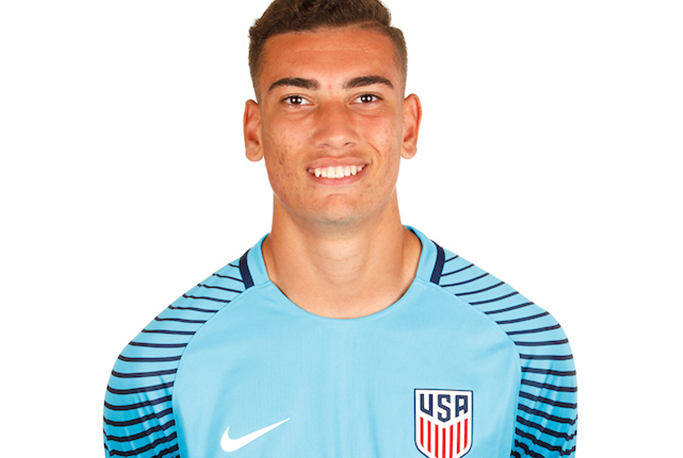
GK: Diego Kochen, Barcelona Academy

Kochen was super impressive. It’s very easy to see why he is playing up a couple of levels at La Masia. He’s in good positions, he’s aggressive, smart and athletic. He had a couple really nice reaction saves and made a couple of smart, aggressive decisions to come out and either punch the ball away or tackle the ball away. He was also impressive with his distribution and looked very comfortable on the ball. Assuming he continues to grow, he looks like the real deal. 

LB: Riley Dalgado: LA Galaxy Academy

Riley had a tough game defensively. He struggled to keep the Argentinian right winger in front of him and was late and off with his backside positioning on the two goals conceded, one of which was an unfortunate own goal. The pace of the right winger seemed to give him some challenges. 

I really loved how Riley kept fighting and got involved in the attack. He’s got a nice left foot and combined well with Darboe and Burton. He looks to have some skill on the ball and he kept fighting all game. I really respect that after a couple of tough moments. 

LCB: Stuart Hawkins, Seattle Academy

Stuart did not stand out to me as much as the other CB that we will talk about next. For a CB, that can be good and bad. Overall Stuart was solid. He is not naturally left footed, which stood out, and he was the taller of the two CBs. He had a couple of really nice long balls and timed a couple of tackles well. He had a good idea of when to step and close down defenders. He made a couple of questionable decisions on the ball, but nothing too concerning. He was late to identify the own goal cross and was a few inches away from being able to clear it. Overall, nothing remarkable but an overall solid performance. 

RCB: Tyler Hall, Miami Academy

The captain! And very easy to see why. Tyler plays with a ton of energy and passion and was all over the pitch. I loved his range and athleticism and he flashes some skill on the ball as well. He also had a couple of very nice line breaking passes. He was caught out in a tough position on the second goal, but overall I thought Tyler was easily one of the most impressive players on the day for the US team. 

RB: Oscar Verhoeven, San Jose Academy

This kid was super fun! He’s oozing with technical skill. He’s got a nice first touch, great range on his passing, dribbling ability and a really good feel for how to attack a defense. I am not sure he is best suited as a RB. He’s taller, and while not slow, not the profile you typically look for in a RB. I think his skill on the ball and long passing might be better suited in the middle of the field. He even tried to rainbow a defender! 

https://twitter.com/chai_asc/status/1503926549296279552?s=20&t=9Z3lTIH1Zqa3rmEvVjvd2Q

CDM: Edwyn Mendoza, San Jose Academy

Edwyn was very solid and competent as the 6. He showed up in good places on defense and was very effective in progressing the ball both with the dribble and with a pass. He has a smooth left foot. He might not be the quickest player, but he’s got skill and he was effective in ball progression. 

LCM: Cruz Medina, San Jose Academy

To me, Cruz was the best player on the pitch and he was also the most confident. He scored the only American goal and was constantly getting into duels and pushing the game forward. He’s got super quick feet, he’s aggressive, creative and he is equally effective dribbling by defenders and picking out a pass. He’s also very smooth on the half turn. There is a ton to love about Cruz’s game. Very easy to see why Bayern was interesting in having him trial. Definitely one to keep tabs on. Full comp here: 

https://twitter.com/USMNTZ/status/1503848761180626948?s=20&t=9Z3lTIH1Zqa3rmEvVjvd2Q


RCM: Luis Moreno, Houston Academy

Luis Moreno is a guy you want on your team. He’s scrappy and doesn’t back down from any dual or challenge. He’s not the biggest kid right now, which does impact his ball security, but he’s super tough and has really quick feet. He Medina both flashed nice technical ability in the midfield. 


LW: Bajung Darboe, Philadelphia Academy

Darboe is a very athletically gifted and strong kid for this age group. He was a menace in the press and created a lot of danger by terrorizing Argentina’s RB. He loves attacking defenses with the dribble and pushing the game at the back line. The ball got stuck on his feet a couple of times and he had one long range shot on goal. Overall it was a solid performance. 


RW: Fidel Barajas, San Jose Academy

Barajas loves to have a go at goal and he has a nice left foot. I loved seeing a right footed player attack from the left wing and a left footed player attacking from the right wing. Fidel is a little undersized at this level, but quick, aggressive in the press, and as I said, looks to get a shot from all distances. I thought he had a couple opportunities to setup his teammates for good chances that he either missed, was late to see or decided to shoot instead. 


ST: Micah Burton, Austin Academy

Micah was another player that flashed a ton of skill and feel for the game. He assisted Medina’s goal with a saucy back heel. He was connecting play all day as more of a Jesus Ferreira type 9 and had a good feel for making himself available to his teammates in build up. He struggled a little as a hold up player, he’s not a big kid, and probably would be better suited as a playmaking 10. 


CDM: Pedro Soma, Cornella Academy

Two subs caught my eye. The first is a player I am very high on, Pedro Soma, from the Cornella Academy in Spain. He subbed on for Mendoza as a 6, though I think he could be equally as effective as an 8. Pedro is a super smooth and athletically powerful player. He’s great in the air and he is very smooth on the ball. He weaves through defenders with ease, with a good understanding of how to shield defenders with his body leverage. He also distributes well. He had a nice moment of connection with Gitau that ended in a left footed strike from distance that was deflected. I hope to see him start vs Uruguay on Friday. 


LW: Andre Gitau, Houston Academy

Gitau was the other sub that caught my eye. He subbed in for Darboe at LW. He was also very active and disruptive in the press and he was very effective in attacking defenders 1v1. He had two very nice shot creation moments after some nice step over dribbles to unbalance the defender. He is a big, fast athlete that also has skill and some feel for finding his teammates. He is another I hope to get a longer look at next game. 

Next, the boys take on Uruguay on Friday. I have no idea what time they play and if we’ll get footage. US Soccer hasn’t been communicative with any of that. 

USMNT

Mauricio Cuevas Taking “Huge Step Forward” in Liga MX

Published

on

CHICAGO — Four years on from captaining the United States to their last CONCACAF Under-20 title, Mauricio Cuevas is quietly stepping back into the spotlight. Still only 23 years old, the talented right back just moved abroad, leaving his boyhood Los Angeles Galaxy for Liga MX side Santos Laguna in a summer move that slipped under the radar.

“To be able to get sold to a big club like Santos is a huge step forward for me,” Cuevas said in an exclusive interview this Saturday. “From the first day, I knew the challenge coming into it because the club hasn’t been meeting expectations in the past few years. Coming in and trying to be a difference-maker is something that I wanted. It’s a new challenge for me, and overall I’m just super excited.”

New Challenge in Mexico

As a teenager, Cuevas showcased himself as one of the country’s most exciting young fullbacks. Known for his technical prowess and set piece ability, the L.A. area native spent time at Belgium’s Club Brugge before returning to the Galaxy in 2023. There, he won an MLS Cup in 2024, appearing 78 times in total before his departure this summer.

“It’s always tough leaving home,” Cuevas said. “Obviously, it’s my boyhood club. My family still lives there, and I was great with all the guys at the club as well. I knew everybody, from the staff and the front office to the coaches. It’s never easy when you’re leaving home.”

“Honestly, the people in Torreón and Santos have all welcomed me with open arms since the first day. They’re all amazing people. It’s an amazing club and an amazing city.”

The move to Liga MX made sense from a number of angles; Santos manager Renato Paiva wanted a new right back, Cuevas’s Galaxy contract was winding down, and his Mexican passport made a move south of the border quite easy. Since joining, Santos have faced an extremely difficult run of games against CF Monterrey, Atlas, Club América, and New York City FC — all of which Cuevas started.

“It’s been great, to be honest,” Cuevas said of his adjustment to life in Torreón. “There hasn’t been much of an adjustment tactics-wise or playing-wise because Renato, our head coach, has similar concepts to what we had at the Galaxy. The players are really good as well. There’s so much quality on the team.”

“The only thing I’ve probably had to get adjusted to is the weather. It’s a little too hot out there, the sun is beaming a lot. But I love it, man. It’s a super-calm city. It’s beautiful, with great food and great people.”

Back in the U.S.

The game against NYCFC came in Leagues Cup, a competition with a razor-thin margin for error. To advance past the first round, teams ideally need to earn at least seven points from their three matches; after losing to New York City, qualification for the knockout rounds is now nearly impossible for Santos. They’ll face Gregg Berhalter, Robert Lewandowski, and the Chicago Fire on Sunday (8 p.m. Eastern Time on Apple TV) in a game where anything but a win in 90 minutes would certainly eliminate them.

“I think we go into every game with the belief that every game is a must-win for us, so that doesn’t really change much. We know now that there’s more on top of that, we have even more reason to win. We’re just focused on ourselves tomorrow. We had a long travel day yesterday, so it’s all about recovery now and setting a game plan that puts us in the best position to win.”

Having started against the Fire at Soldier Field in 2024 and facing former youth national team teammates Chris Brady and Sergio Oregel, Cuevas will hope to give something extra in this game and help keep Santos alive in the tournament.

“Any tournament that this club steps into, we always have that goal in mind of wanting to bring that trophy back to Mexico, back to Torreón with us. We’re a competitive club. We’re one of the best clubs, history-wise, in Mexico, so we know what this badge carries.”

USYNT Hero

Coincidentally enough, the U.S. U-20s advanced to a fifth consecutive CONCACAF final on Friday, setting up a date with hosts Mexico at Estadio Azteca on Sunday. The semifinal win also qualified the U.S. for next year’s Pan American Games in Lima, ensuring qualification for back-to-back editions.

In addition to being a central figure in the last U.S. U-20 CONCACAF victory in 2022, Cuevas was part of the last Pan Am Games team in 2023; the U.S. finished fourth in an unusual competition that included several intriguing names like Sergio Oregel, Brooklyn Raines, Danny Leyva, and a then-relatively unknown Alex Freeman. For Cuevas, that tournament was a special memory, and one he remembers fondly.

“I remember the whole trip, to be honest. I made a lot of great friends and met a lot of great people on and off the field, from the staff to the players – people I’m still in contact with. There are some that are in Liga MX as well, Nico (Carrera), Antonio (Carrera), Danny (Leyva).”

“Every player from that age group and that camp has been doing great. It’s lovely to see, to be honest, seeing everybody shine.”

On the immediate horizon for the U.S. is Sunday’s U-20 final (6:00 p.m. Eastern Time on FS2). The Americans will be hoping that this year’s final is more reminiscent of Cuevas’ age group (a 6-0 final win over the Dominican Republic) than the 2024 edition (a heartbreaking 2-1 loss to Mexico). As is often the case, the U.S. and Mexico will be without many of their top youth players for the tournament due to its concurrence with club games, but that has opened the door for others.

“We have two players from (Santos) that are representing Mexico, so congrats to them,” Cuevas said. “Huge shout out to (LA Galaxy’s) Ruben Ramos as well and Dylan Vanney, who are with the U.S.; they’ve been killing it. I’m just happy for all those guys. Proud of those guys.”

Continue Reading

USMNT

Way-too-early USMNT 2030 FIFA World Cup roster projection

Published

on

World Cup roster projections are a futile business.

That’s particularly true when you do it a whole four years out.

Yet, every four years, we do it anyway. The United States crashed out of their one-in-a-generation home World Cup this week after a 4-1 demolition by Belgium in Seattle, deferring their dreams of a first star for at least another cycle. Now it’s time to take a first-ever stab at who the players on that 2030 team will be.

Of course, this is more of an educated guess than a clear-cut prediction. A lot can happen in four years (see: Alex Freeman and Sebastian Berhalter or Yunus Musah and Josh Sargent). With that being said, here’s my current projected 26-man squad for the next World Cup, which will be held in Spain, Portugal, and Morocco.

Goalkeepers

1. Chris Brady (Current Club: Chicago Fire; Age in 2030: 26)

The crop of goalkeepers that the U.S. brought to the 2022 and 2026 World Cups is the weakest pool in decades. Fortunately, there are a few high-end prospects who will be old enough by 2030 to hopefully make progress on that front. One of those prospects – Chris Brady – was the third-string at this past World Cup (the youngest goalie the U.S. has brought to a World Cup since Tony Meola and Kasey Keller in 1990) and will be just beginning to enter his prime for the next one.

In terms of skill set, Brady has all the tools to be a world-class #1. His shot-stopping and reaction time are excellent; he possesses great size and reach, and has made progress on his ball-playing ability over the last three seasons in MLS. While his decision-making does leave something to be desired – meaning he isn’t quite ready yet to play regularly at the international level – it is an asset that will hopefully improve with time and experience and is completely normal for such a young goalkeeper. A move to a major European league should happen in the next few years, and he’s probably the current favorite to be the starter in 2030.

2. Diego Kochen (Lyngby Boldklub, on loan from FC Barcelona; 24)

In terms of talent, the other potential huge star is Barcelona’s Diego Kochen, who just joined Danish club Lyngby on loan in search of more minutes. Kochen was originally set to join the 2026 squad as a training player, but the need for a minor surgery meant he only stuck around for the pre-tournament friendlies. That’s been the story of his career so far: high hopes, but often paused by injuries or other setbacks. If that can be resolved, Kochen absolutely has a shot of competing with Brady, and those two seem like the best options to be the future of the U.S. goalkeeping position. If not, other talents like Julian Eyestone, Andrew Rick, or even still-quite-young Gaga Slonina could emerge to break into that picture.

3. Matt Turner (New England Revolution; 36)

With the hope being that two young goalkeepers will take over the position, it would be fair to guess that the third-string in four years will be a veteran. Matt Freese was the starter in 2026, but was clearly a weak link, and has had numerous blunders for the USMNT since his debut 13 months ago; he’ll absolutely stick around in the national team picture for at least a few more years, and still be 31 in 2030, but at this point I don’t know that he increases either the floor or the ceiling. For that reason, Matt Turner is my veteran pick for 2030, assuming he maintains his level in MLS with the Revolution; he will be 36, but would be a calm presence in the locker room with two prior World Cups under his belt, and fits the mold of a #3 keeper at that age.

Potential pool players: Matt Freese, Julian Eyestone, Andrew Rick, Gaga Slonina, Leonard Prescott

Center backs

July 6, 2026; Seattle, Washington, U.S.; Chris Richards of the U.S. in action with Belgium’s Charles De Ketelaere. Mandatory Credit: Steven Bisig-Imagn Images

1. Chris Richards (Crystal Palace; 30)

After playing every minute in four of the Americans’ five games in 2026, Richards is the bright spot in what has otherwise been a pretty poor generation of U.S. central defenders. Seeing as defenders typically peak between the ages of 28 and 31, the next World Cup could be his to be a true team leader in. In fact, as long as he stays healthy and continues to progress and mature in the Premier League, Richards currently seems like the safest bet for U.S. captain in 2030.

2. Noahkai Banks (FC Augsburg; 23)

This is where things get interesting. Tim Ream (who will be 42 at the next World Cup) defied all the odds to somehow still be a starter for the U.S. in 2026. Barring a medical and logical miracle, that means there are a lot of center back minutes up for grabs this cycle, and fortunately, the U.S. 2006-2008 age cohort possesses the most exciting group of blue-chip center back prospects the country has ever seen.

Chief among them is German-American Noahkai Banks, who featured 23 times for Augsburg in the Bundesliga last season and is arguably a top-10 center back prospect globally. The only problem is that he declined a March USMNT senior call-up to keep his dual-national eligibility intact. That doesn’t rule him out of representing the U.S. in the future, and the likes of Nico Schlotterbeck, Malick Thiaw, Finn Jeltsch, and €50 million Chelsea target Karim Coulibaly mean the pathway to Germany minutes is unclear. If Banks eventually decides to represent the U.S., he’ll be among the clear favorites to start from the get-go.

3. Christopher Cupps (Chicago Fire; 22)

This was one of the most challenging choices to make on the entire list. That aforementioned 2006-2008 age bracket has several center backs who could break into the national team picture in the next two years, and join Banks as a rare second young center back on a World Cup roster (though it would be far from a surprise, whether Banks commits to the U.S. or not, if multiple defenders from the 2006-2008 crop make the team).

Sporting Kansas City’s Ian James, the Philadelphia Union’s Neil Pierre, and Werder Bremen II’s Ramiz Hamouda are the three others I strongly considered, and any one of those could certainly explode in the near future. However, I find that Christopher Cupps, currently featuring for Chicago Fire II, has the highest ceiling of the bunch. Still just 18, Cupps has all the physical tools needed for an elite-level center back and has a top-level mindset that has enabled him to steadily develop his other skills. He has also shown those capabilities in a U.S. shirt, starring at the last U-17 World Cup and captaining practically every youth team he’s ever played on at every age group. While he has faced injury setbacks in the last year or so, if Cupps stays healthy and continues to develop to his full potential, he will be on the national team by 2030.

4. Auston Trusty (Celtic; 31)

I’ll be the first to admit that I was not an Auston Trusty advocate for a very, very long time. The last six months have changed my mind. In seeking a prime-age, left-footed center back to consider for 2030, Trusty currently seems like the best option, and is already someone who entered the USMNT history books when he scored the second-fastest goal in U.S. World Cup history last month. If he stays roughly level with the likes of Mark McKenzie, Miles Robinson, and Cameron Carter-Vickers, Trusty’s left-footedness will give him a clear edge.

Potential pool players: Mark McKenzie, Ian James, Neil Pierre, Ramiz Hamouda, Cameron Carter-Vickers, Josh Wynder

Full backs

1. Alex Freeman (Villarreal; 25)

Alex Freeman’s ascent from MLS Next Pro to USMNT World Cup star in the last 18 months has been something special. Now, he looks like a clear lock for the next edition as well and is currently on a trajectory to become a top La Liga right back within the next two seasons. Unless injuries crop up or his form completely stalls, Freeman will be a mainstay for the USMNT for years to come.

2. Peyton Miller (New England Revolution; 22)

Addressing the elephant in the room: Antonee Robinson is not on this list. While he has been a locked-in starter for the U.S. for six years, was at one point among the best in his position in the Premier League, and is arguably the country’s greatest-ever left back, the now 28-year-old has battled a truly painful run of injuries over the last few years. Robinson himself admitted it was a minor miracle that he was healthy enough to play in the 2026 World Cup, so given his injury history and the fact that he’ll be nearly 33 when 2030 kicks off, I decided to leave him out.

In terms of prospects, there are a few, and Peyton Miller is the most obvious, even if he’s spent much of his youth national team career playing as a winger. The 18-year-old from Connecticut heavily featured at the 2023 U-17 World Cup and 2025 U-20 World Cup, playing up age groups both times, and is a regular for a good team in MLS with European interest certain. If he develops, and particularly if the U.S. sticks with a wingback-reliant formation, I could see Miller emerging as a Robinson successor.

3. Luca Bombino (San Diego FC; 23)

A more traditional left-sided fullback for the future would be Luca Bombino of San Diego, who has developed well over the last year and a half and is now one of the best young left backs in MLS. The question now is whether he can take another big step in his development to fill the much-needed national team profile of lockdown left-back, and, if he can, eventually make the move to Europe. Christian McFarlane, Reed Baker-Whiting, and the still-talented but injury-riddled Caleb Wiley are other names who could make a push on the left side.

4. Sergiño Dest (PSV Eindhoven; 29)

It feels like just yesterday that Sergiño Dest was the skillful, adventurous young wingback at Ajax; it’s bizarre to even think about the fact that he’ll be 29 at the next World Cup. Dest has not reached the heights many hoped he would as a teenager; even if he has finally found a permanent home at the club level, it’s not at a European giant in a top five league. If (and this is a big if) he stays healthy, Dest should still make the 2030 roster, but he’ll certainly have to adapt his game as he inches toward the latter half of his prime.

5. Tim Weah (Olympique Marseille; 30)

Tim Weah is another one whose status as a clear roster lock will likely fade in the next cycle as younger players begin to emerge. The OM winger hardly played in this past World Cup and was, somewhat alarmingly, an unused substitute in both of the U.S.’s knockout games. Still, by 2030, his versatility and experience may make him a valuable option to keep around in a position group that could be very young for the U.S. in four years.

One more name I’d like to throw in there is Montrell Culbreath of Bayer 04 Leverkusen. If he commits to the United States over Germany, he is a wild-card right wing back option that almost certainly would walk straight into any U.S. roster overnight and if he continues his current ascent, could be an option to start in 2030.

Potential pool players: Montrell Culbreath, Frankie Westfield, Joe Scally, Reed Baker-Whiting, Christian McFarlane, Caleb Wiley

Central midfield

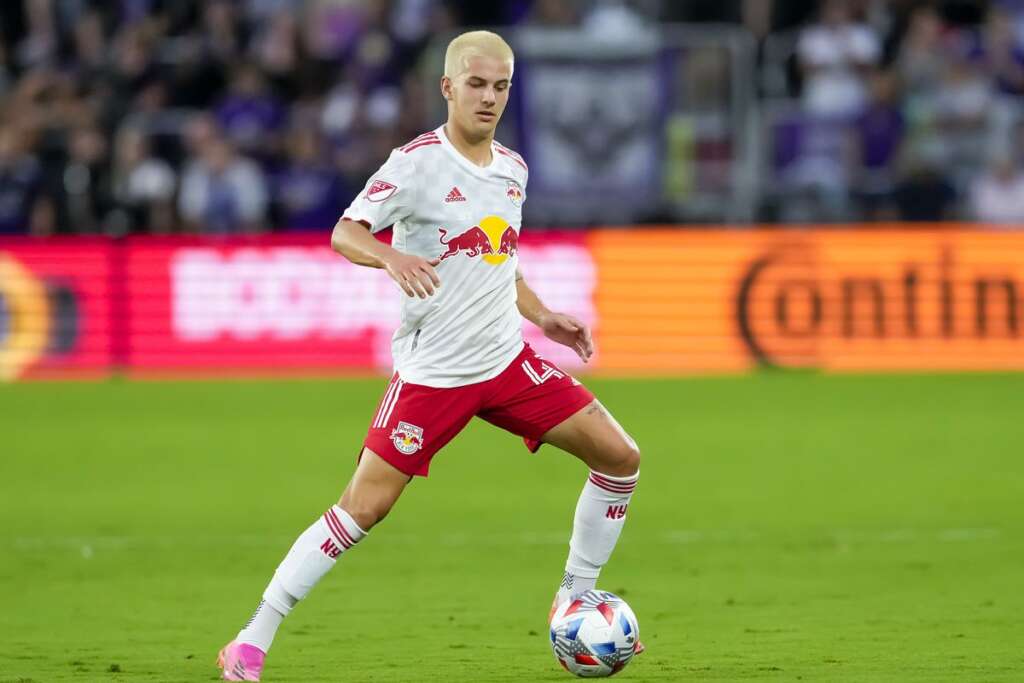
1. Adri Mehmeti (New York Red Bulls; 21)

The fact that only three true central midfielders went to the World Cup with the U.S. in 2026 indicates that it’s a position completely up for grabs in the next cycle. Enter Adri Mehmeti, who is one of the absolute most exciting U.S. prospects at the moment. The Albanian-American broke through into the New York Red Bulls first team at 16 this season and played the full 90 minutes in seven consecutive MLS games heading into the World Cup break. Learning under USMNT legend Michael Bradley, Mehmeti seems poised to be a Tyler Adams successor of sorts for club and country, and if he continues to progress at his current pace, could have his coming-out party at the 2030 World Cup.

2. Tyler Adams (AFC Bournemouth; 31)

Adams will still be around in four years and has been one of the USMNT’s most consistent players through his entire national team career. However, like Antonee Robinson, persistent injuries are taking a toll, and there’s no certainty he’ll be at as high a level as he once was come 2030. Nonetheless, unless his level drops too much, expect Adams to remain firmly entrenched as a veteran leader – and, by now, one of the U.S.’ greatest-ever midfielders – on the team at age 31.

3. Sebastian Berhalter (Vancouver Whitecaps; 29)

One of the most surprising stories of the last cycle was the emergence of Sebastian Berhalter, who, within two years, went from a fringe MLS starter to arguably the league’s best midfielder. An impressive showing in the World Cup, which saw him make four strong substitute appearances and score in his lone start, means his stock is higher than ever, and even at 25, a move to Europe seems like a distinct possibility. If he maintains that level throughout what are expected to be his prime years, Berhalter could be able to maintain his status as a national team squad player for 2030.

4. Jude Terry (Los Angeles FC; 21)

I’m taking a bit of a punt here by including LAFC’s Jude Terry as one of the final players to make the roster. He’s one of eight players on this list who will be 22 or younger in 2030, which is a lot compared to the two that made the 2026 roster (Brady and Freeman), but he’s a composed and tenacious profile that I quite like and stands out among the rather deep pool of talented young midfielders who could break into the pool for 2030… provided that LAFC enables him to find the right pathway. Niko Tsakiris, Brooklyn Raines, Pedro Soma, Matthew Corcoran, Taha Habroune, Benjamín Cremaschi, and even Sergio Oregel are among the names that have the talent to push for a spot, though the currently 17-year-old Terry is my favorite of the bunch.

Notably, I decided not to include any of the prime-age midfielders who failed to make the 2026 roster; Tanner Tessmann, Jack McGlynn, Aidan Morris, and Paxten Aaronson are the first to come to mind; seeing as I’ve retained all of the U.S. midfielders in this roster (barring Cristian Roldan, who will be 35), none of that group raise the floor of the team significantly if at all. I also left off Johnny Cardoso, despite clearly being a leading U.S. talent at the club level – he will be 28 and certainly in with a shout, but unless the next USMNT manager (whether it is Pochettino or someone else) can truly unlock his maximum level, his consistently poor performances at the international level may prevent him from making a World Cup roster. Similarly, Yunus Musah needs a revival at both the club and international levels if he wants to re-enter the picture.

Potential pool players: Johnny Cardoso, Niko Tsakiris, Yunus Musah, Aidan Morris, Brooklyn Raines, Jack McGlynn, Taha Habroune, Benjamín Cremaschi, Tanner Tessmann

Attacking midfield

1. Cavan Sullivan (Philadelphia Union, joining Manchester City; 20)

Something will have gone wrong for Cavan Sullivan if he isn’t a 20-year-old rising star on the USMNT’s World Cup roster four years from now. The Philadelphia Union’s biggest prospect, who has already agreed to join Manchester City in 2028 after he turns 18, has all the potential in the world and is already getting regular MLS minutes at the age of 16. Marketed as America’s greatest hope in many years, and one of the highest-rated teenage talents in U.S. history, 2030 could be a special opportunity for Sullivan to introduce himself to the wider U.S. public and footballing world.

Sullivan is the youngest player in this projected roster, though not the youngest mentioned; the Chicago Fire’s Robert Turdean, who is about three months younger than Sullivan and widely considered the second- or third-biggest prospect in that age bracket, is also one to keep an eye on. While a lot can happen in four years, 2030 may come too soon for him.

2. Malik Tillman (Bayer 04 Leverkusen; 28)

A pleasant surprise from the USMNT’s 2026 World Cup run was the fact that Malik Tillman – operating as a deep-lying playmaker next to Tyler Adams – was arguably the team’s top performer, despite playing the entire tournament outside of his natural position. He’s one of the biggest raw talents in the entire U.S. pool, so again, unless his form falls off of a cliff, he’ll be back in 2030 and should be in his prime. After a rough start to his international career, the FC Bayern product has finally found a rhythm and is now, quite incredibly, the United States’ joint-all-time leader in World Cup knockout goals.

3. Weston McKennie (Juventus; 31)

After a career year with Juventus in 2025/26 and a very solid World Cup performance, Weston McKennie has solidified himself not just as the consensus #2 USMNT player of his generation, but arguably as one of the greatest ever. If he continues playing at a high level, there’s no reason he won’t still be playing for the national team in 2030, even if he’s on the opposite side of his prime by then. It’s impossible to know what his position will be by then – he’s played a completely different role at each of the last three major tournaments – but it’s almost certain he’ll be involved in some capacity.

Potential pool players: Máximo Carrizo, Robert Turdean, Paxten Aaronson, Brenden Aaronson, Marvin Dills

Wingers

July 1, 2026; Santa Clara, California, U.S.; Christian Pulisic of the U.S. in action. Mandatory Credit: David Gonzales-Imagn Images

1. Christian Pulisic (AC Milan; 31)

There’s no need for reactionary post-2026 World Cup takes here: regardless of where in the world he’s playing, a healthy Christian Pulisic will almost certainly make the 2030 World Cup roster. At 27, there is a decent chance that the best and most consistent version of Pulisic is already behind us, and that is certainly a difficult pill to swallow. However, he still has plenty to give at both the club and international levels, and 2030 could be a great redemption opportunity for him in what will more than likely be his final World Cup.

2. Mathis Albert (Borussia Dortmund; 21)

From someone who broke through at Borussia Dortmund ten years ago to one who will break through there this year. Mathis Albert is one of the top U.S. prospects at the moment, and after debuting for BVB at the end of last season, he seems to be on the right trajectory toward being a future star. Additionally, the winger already has an impressive U-17 World Cup under his belt, shining at last fall’s edition despite playing up an age group; he’s eligible to return again for this year’s edition.

3. Zavier Gozo (Real Salt Lake; 23)

It’s clear that beyond Pulisic, winger is a position of desperate need for the U.S., which opens the door to lots of exciting young stars. As one of the final cuts from the 2026 roster despite still being uncapped, Zavier Gozo is clearly one of them. Gozo is one of MLS’ leading young talents right now and just made the league’s All-Star team as a 19-year-old; he also had a great U-20 World Cup last fall playing up two years. If he picks up his momentum from where he left off in the first half of the MLS season, the RSL homegrown will quickly break into the USMNT roster this fall, and should soon earn a move to a club in Europe’s top five leagues.

4. Gio Reyna (Borussia Mönchengladbach; 29)

Maybe a hopeful inclusion given his club form, but Reyna is undoubtedly the top U.S. talent in the early-2000s generation. He hasn’t been able to put it together regularly at the club level for years, but when he’s worn the national team uniform, he has consistently performed, and that earned him the trust of Mauricio Pochettino at the end of this past cycle. If Reyna can stay healthy and put the pieces together, I can see him making a third consecutive World Cup roster, likely once again as a wild card option from the bench. With that being said, he may need to take one step backward this summer to take two steps forward for the rest of the cycle.

An intentional omission here was Diego Luna, who has made many similar 2030 projections in recent days. While the 18-time U.S. international will probably get some call-ups in the coming months, he hasn’t done anything in a USMNT shirt anytime recently to suggest he has earned a return to the team. As a low-ceiling option whose only signature moments for the U.S. came in a January friendly and against Guatemala, there isn’t much point in persisting with Luna over younger, more exciting talents… like his club teammate Gozo.

Potential pool players: Cole Campbell, Nimfasha Berchimas, Quinn Sullivan, Kevin Paredes, Álex Zendejas

Center forwards

1. Folarin Balogun (AS Monaco; 28)

It’s been quite some time since the USMNT striker debate was this clear. The version of Folarin Balogun that showed up at the 2026 World Cup is arguably the best by an American striker in 96 years, and ridiculous red card controversy aside, he was one of the stories of the tournament for the U.S. team, scoring three times. As long as he keeps things rolling and continues scoring for club and country at the rate he is right now, Balogun will undoubtedly start for the U.S. once again in 2030 and at 28, he should be at the peak of his powers.

2. Julian Hall (New York Red Bulls; 22)

Another teenage MLS All-Star who seems poised for big things. Julian Hall exploded to start the 2026 season, playing so well that he was being talked about as a potential wild card option for this year’s World Cup. While that obviously didn’t happen, the 18-year-old – who notched his first senior hat trick against the Columbus Crew in May – is now someone firmly entrenched in the national team conversation and could break through as soon as this fall for friendly matches. The expectation would be that he will be in Europe within two to three years, and if that goes well, there’s likely no question he’ll be at the World Cup… as long as he doesn’t choose to represent Poland instead.

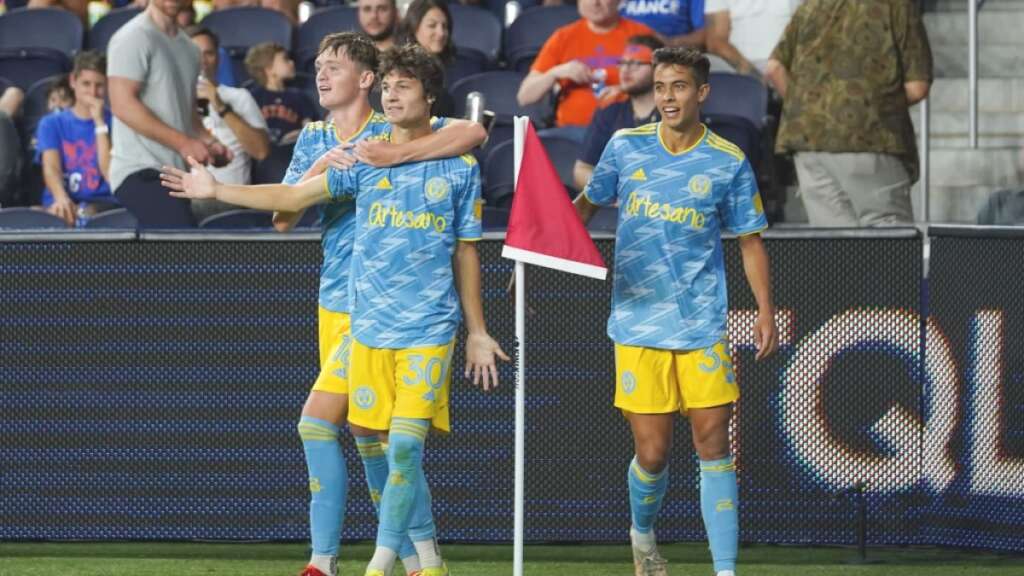
3. Malik Jakupović (Philadelphia Union; 21)

This is perhaps my boldest pick on the list, so I suppose I’m saving the best for last. Malik Jakupović is only 16 right now, but already stands at 6’3” (1.93m) and has an intriguing profile for a future off-the-bench USMNT attacking option. In addition to an excellent aerial ability, the Union striker presses very well and is rightfully getting minutes for an admittedly terrible Eastern Conference team. It is worth mentioning that Jakupović is also eligible for Bosnia & Herzegovina; U.S. Soccer will have to manage the situation well to avoid another Esmir Bajraktarević saga.

Unfortunately, the inclusion of Jakupović takes Ricardo Pepi out of the equation, which is one of the harshest decisions I had to make here. Despite being one of the top USMNT goal scorers under Gregg Berhalter, Pepi has struggled mightily since Mauricio Pochettino took over and has not scored for the U.S. in two years. Despite that, if he continues playing well at the club level, the El Paso native should be just fine.

CF: Ricardo Pepi, Damion Downs, Patrick Agyemang, Josh Sargent, Marcos Zambrano, Alexander Staff

Final Thoughts

In the impossible exercise that is future roster projection, I feel pretty good about this one. It includes 14 players from the current 2026 roster, which is just one more than the number that carried over from 2022 to 2026. The team’s average age is just over 26, making it slightly younger than the 2026 roster – aided by the absence of a nearly 39-year-old – but still older than the notably young 2022 team.

The more revealing detail, though, is the shape of the roster. Only three players on this list – Alex Freeman, Chris Brady, and Diego Kochen – would be between 24 and 27 years old in 2030, the age range that should theoretically be entering its prime. That reflects one of the defining developments of the last cycle, which is that many of the top prospects from the 2003 to 2006 age groups simply did not break through at the level once expected. It also doesn’t help that the two best American-born 2005s, Esmir Bajraktarević and Obed Vargas, now represent other national teams.

Four years ago, in my way-too-early projection for the 2026 roster, I correctly predicted 14 of 26 players. My biggest mistake was backing several prospects from those 2003-2006 age groups to emerge, only for late bloomers like Sebastian Berhalter, Max Arfsten, and Álex Zendejas to make the roster instead of players who were then part of the U.S. U-20 and U-17 pools.

The optimism here is less about the middle of the player pool and more about the next wave, particularly the 2007 to 2009 cohorts. Not all of those players will pan out, but there are enough high-end talents in those age groups to believe that several fresh faces will force their way into the USMNT picture before 2030.

The other notable thread is continuity from the last two tournaments. Seven players on this roster – Tyler Adams, Sergiño Dest, Weston McKennie, Christian Pulisic, Gio Reyna, Matt Turner, and Tim Weah – would be making a third World Cup roster. That group has defined this era of the USMNT, and if they are at the end of or past their prime four years from now, they would form the veteran spine around which the next generation is built – something that generation simply did not have to lean on in 2022.

Continue Reading

USMNT

When Your Team Keeps Breaking Your Heart: Life as a USMNT Fan

Published

on

Thomas Deschaine (@uskeeper on X and us_keeper on Instagram)

Christian Pulisic suffered a fresh injury blow against Belgium (Getty)

Another World Cup, with the Same Ending

What kind of fan walks away from the team they’ve supported for years because it keeps disappointing them? What do you do when your national team always seems to fall just short of taking the next step? Do you simply switch your allegiance to a perennial contender like France, Argentina, or Spain and enjoy winning for a change?

I’ve already seen several USMNT fans on social media say they’re ready to move on, and honestly, I can’t blame them. Supporting this team can be emotionally exhausting.

For me, though, I don’t think I could ever make that change. I’ve invested too much time, energy, and passion into following the USMNT over the past three decades. Even if it means accepting yet another Round of 16 exit, this team is still my team.

Unfortunately, that’s exactly where this World Cup ended.

The USMNT became the final host nation eliminated in the Round of 16, continuing what has become an all-too-familiar trend. Five of the last six times the USMNT has reached the knockout stage, its tournament has ended in the Round of 16, this loss being the worst performance in my lifetime.

Many fans will understandably point to this tournament as a success. The USMNT accomplished things we had never seen before, winning the group after just two matches winning three matches and scoring 11 goals, both program records at a FIFA World Cup.

Those achievements deserve recognition.

But there’s another side of the argument.

The expansion of the tournament from 32 to 48 teams fundamentally changed the competition. With 16 additional teams, the path became more favorable than in previous World Cups, making those records more attainable than they would have been under the old format.

When the competition stiffened, many of the same issues resurfaced.

Against an aging Belgium side in the Round of 16, the USMNT was second best for much of the match. Belgium controlled long stretches, created the better chances, and ultimately deserved to advance. Once again, the USMNT failed to produce the signature victory over an elite opponent that every memorable generation of American soccer has delivered but we have yet to see from this team over the past two cycles.

What’s Next for the USMNT?

As attention turns toward the 2030 World Cup cycle, it’s difficult to find much optimism.

Mauricio Pochettino’s future remains uncertain, although multiple reports suggest US Soccer is eager to retain him. Personally, I think that would be the wrong decision.

Whether US Soccer pursues another internationally proven manager or returns to hiring another American coach, this decision will define the next four years. I’ll have much more to say about that in my next article.

The Long Wait Begins Again

There’s always an emptiness after your team is eliminated from a World Cup.

The excitement disappears overnight and now comes another long wait until September’s FIFA window, which features four matches over a double international window. Hopefully, those games provide fresh storylines and genuine reasons for optimism.

Because after that?

We’ll likely find ourselves right back in Concacaf Nations League and another Gold Cup next summer, competitions that, while important for development, simply don’t carry the same significance or emotion as the FIFA World Cup.

As always, I’ll keep watching. I’ll keep analyzing. I’ll keep believing that one day this team will finally produce the defining World Cup moment that this generation has been chasing.

But after another Round of 16 exit on home soil, that belief is harder to hold onto than ever before.

Continue Reading

Trending