Connect with us

USMNT

Grouped OR GLORY: GROUP D
Published

on

France | Elo: 6 | FIFA: 4 |

History: For some, there is a line. A line that separates brilliance from catastrophe. It is on this line that Les Blues resides. From the semi-finals in 1982 and 1986, to failing to qualify in 1990 and 1994. From Jules Rimet holders in 1998, to winless in 2002. From finalists again in 2006, to winless again in 2010. France enter Qatar, champions once more. Will disaster ensue?

Piped by England to soccer’s conception as a sport, France retaliated by spearheading the formation of the Fédération Internationale de Football Association(FIFA), the body responsible for governing football world-wide. 

Unfortunately, despite helping codify international football as a concept, France wasn’t actually all that good at it, falling at the first hurdle, or failing to qualify altogether, for 10 of the first 12 editions of the Coupe du Monde. Then, in 1976, a host of new players, headlined by 3-time Ballon D’or winner Michel Plantini, made their debuts. 6 years on, France was in the semi-finals, losing to Germany on penalties in an all-time classic. In 1986, France returned, beating Italy – reigning champs – and Brazil – in another all-time classic – en route to a semi-final rematch against the Germans. Again, France would lose. And again, Germany would lose in the final

Les Blues would have their day in Europe, winning their first major trophy against Spain, before adding to their collection with gold in the 84 Olympics, and a triumph in a precursor to the Confederations Cup. With three major trophies sandwiched between back to back semi-final runs, France had reached a new zenith. And then they failed to qualify. Twice.

Unable to reach the World Cup themselves, FIFA gave the French a spot as hosts. Les Blues, now led by one Zinedine Zidane, capitalized, lifting Jules Rimet after a dominant victory against reigning champion Brazil  before downing the Italians to win a second European championship. And then, as the pattern goes, calamity ensued.

20 years on, France enter Qatar as champions, seeking to defy a trope their countrymen started.

Will history repeat itself? Or will Les Blues defy destiny?

Expected Finish: 2nd

Why?

While history is not destiny, it’s difficult to ignore 20 years of significant champion underperformance, when the current champion has significantly underperformed. France’s most recent underperformance involved being swept by the Danes.  France have also lost key pieces to injury

Still, the French boast a plethora of world-class players, and haven’t really done anything to warrant being rated lower than Tunisia or Australia; two teams who backed into the World Cup on thin margins and have been unimpressive continentally.

France should advance, but history, injury, and recent performance has me pegging Las Blues for 2nd. 

Why not?

Ranking top 3 per TMV and WCDCS, France still has a case as the most talented team in the world, and player for player, no one in group D comes close. 

Or maybe the French collapse all the way, finishing last like every champion has since 2002.

For what it’s worth, I think a first place finish is more likely than an exit.

Key Players

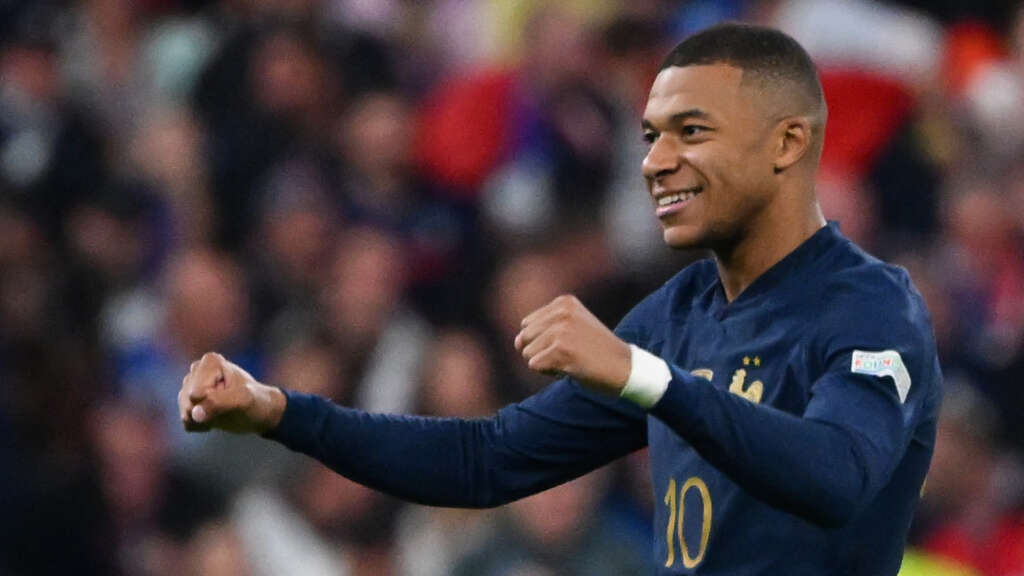
At 23, Kylian Mbappe is already being discussed as the potential GOAT. At 18, the young attacker burst into the scene at Monaco, leading his unfancied side to a Ligue 1 title and a semi-final finish in the Champions League. At 19, he was a World Cup winner. At 20, he was named the best player in France. Now 23, Mbappe has been dubbed Ligue 1’s best, three years in a row. With 29 goals in 60 appearances, including a tally in French’s triumphant final 4 years back, Kylian Mbappe is already the face of France. With a strong World Cup, he could be something more.

Aurélien Tchouameni joined the best club in the world this season. Less than half a season in, the 22 year old has already made himself indispensable. With star midfielders N’golo Kante and Paul Pogba absent, Tchouameni has become irreplaceable. A world-class defender and ball-progressor, capable of creating danger in the final third, Tchouameni could prove vital for a successful title defense.

Denmark | Elo: 9 | FIFA: 10

History: Here comes Danish Dynamite! Many people’s favorite pick for a surprise, Darkhorse Denmark enters the fray.

A “Denmark XI” first played in 1896, making Denmark one of the oldest national teams in the world. Denmark were actually quite good at the beginning, ranking 1st in Elo between 1912 and 1920 after winning two silvers from the 1908 and 1912 Olympics. The problem for the Danes was money. The Danish Football Federation(DBU), wasn’t very interested in international football, and didn’t want to foot the bill for soccer as a professional past-time. Thus many Danish players went abroad… and were promptly banished from the national team. Additionally, the DBU only sent teams for friendlies and the regional Nordic tournament until the 1948 Olympics where the Danes medalled once more. 

Eventually, with many of their best players banished abroad, the Danes started to fall behind. A disappointing quarter-final exit in the 58 Olympics prompted the DBU to stop competing there. After more disappointment in the 60’s, the DBU took action in 1971, finally allowing Danish leagues to turn professional while lifting the national team’s ban on players who voyaged abroad. In 1979 the DBU hired Sepp Piontek as Denmark’s first professional coach. Within a decade, Denmark had assembled all the components they needed for an explosion.

Denmark exploded into international prominence during Euro qualification, being dubbed Danish Dynamite after beating England to qualify for the 1984 European Championship. The Danes would combust all the way to the semis, where they lost on penalties to Spain.

 Denmark reached their first World Cup in 86 and opened with a bang, blasting the World’s first champion. In round two they face the Spaniards again and lost emphatically. Denmark would fully combust a couple years later, failing to qualify for the 1990 finals. Under Moller Nielsen, Denmark also failed to qualify for the 92 Euros, but were given a lifeline by a timely piece of warfare. War would pave a path to victory. Silver-medalists in 1912, the Danes were now the champions of Europe.

Winning Europe qualified Denmark for the 1995 Confederation Cup where they beat Argentina for a second piece of major silverware. The Danes went on to reach 5 more World Cups, memorably reaching the quarter-finals in the 98 edition. 

Thus far, the 2022 cycle has gone well, with Denmark reaching the semi-finals of the Euros while going perfect in qualifying, save for a match which meant a lot more for Scotland. All the Danes need now is a strong resolution. Can the Danish deliver a strong World Cup? Or will the Danes combust?

Expected Finish: 1st

Why?

Denmark are significantly more talented than either Australia or Tusnia, have only ever failed to advance from the group stage once, and are currently ranked top 10 in Elo and FIFA because they’ve entered Qatar in excellent form. They are clear favorites to advance. 

While France is vastly deeper and can field a significantly stronger lineup, Denmark have simply been better over the last 2 years. A lot of that was without their star player

All considered, I’m feeling good betting on some Danish delight.

Why not?

Denmark takes an unusual amount of risk when they attack. An over-eager foray from the wings may result in a speeding Kylian Mbappe breaking Danish hearts. 

Australia and Tunisia are fairly experienced at grinding out results in big games, with both teams reaching Qatar on the backs of 0-0 draws against more talented opposition. 

Denmark will want to avoid the fate of 2018 Poland, a red-hot European side that ultimately faltered when they encountered adversity. Denmark seems good, but the World Cup is hard and there are no guarantees.

Key Players

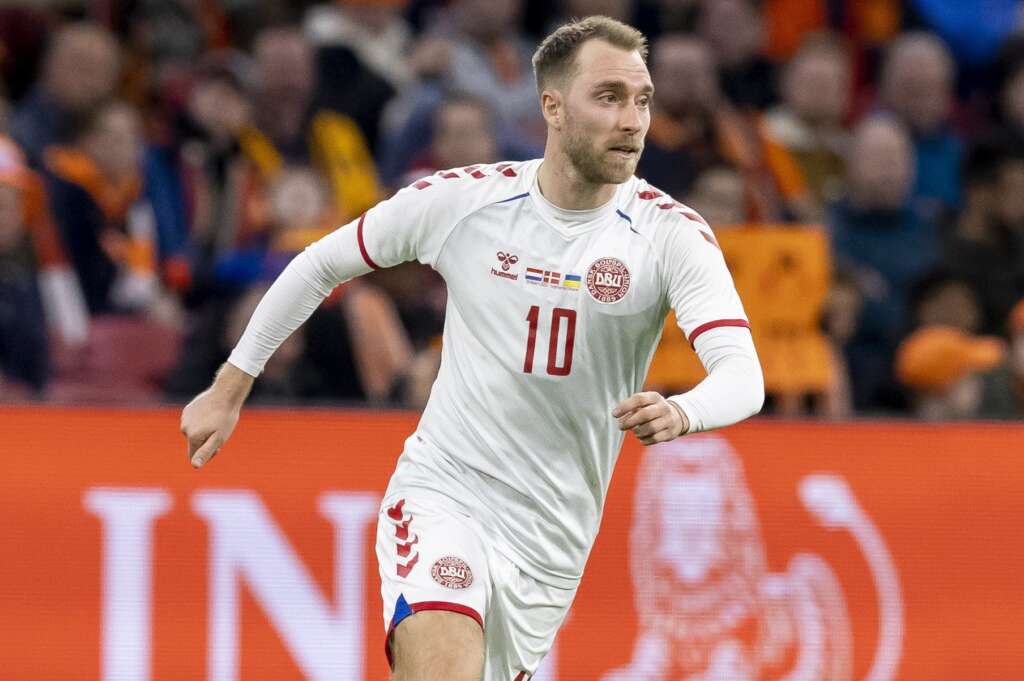
After nearly dying in the 2021 European Championship, Christian Eriksen’s return to professional soccer went incredibly well. Upon his arrival in 21-22, Brentford experienced an immediate uptick in form, going 7-3-1(W-L-T) with Eriksen on the field(they had a record of 5-15-6 without him). Denmark showed they could succeed without their superstar in 2021, but if Eriksen can do something similar for Danish Dynamite, the Danes may just pop off in all the right ways.

Pierre-Emile Höjbjerg has played every minute he’s been available for a Tottenham side competing to retain champions league qualification.  A strong ball-winner who is reliable in possession, Höjberg has been Denmark’s most reliable metronome. 
Tusnia | Elo: 43 | FIFA: 24 |

History: And now enter the Eagles of Carthage. Tunisia qualified for 6 World Cups, exiting in round one for 5 of them. Will their 6th entry end differently?

Before they gained independence, French protectorate Tunisia established an unofficial national team in 1928. Debuting against the b-team of their Colonial overlords, Tunisia lost by 6. Tunisia would need to wait until 1932 for their first unofficial victory, a 1-0 win over French Algeria. After gaining independence in 1956, Tunisia played their first official international against an independent Algeria. This time it was Algeria, in the midst of a civil war, who emerged victorious.

The 60’s brought a successful spell for the eagles who reached the final as hosts of the 1963 African Cup of Nations(AFCON). Tunisia entered the 1973 Palestine Cup of Nations and went perfect, winning six of six. Tunisia then qualified for the 1978 World Cup, eliminating old foes Algeria in the process.

Tunisia opened their debut with a win against Mexico, becoming the first African side to win at the World Cup. A close loss to the Poles proved fatal, but Tunisia exited impressively, holding reigning champion West Germany to a scoreless tie.

78 would prove to be Tunisia’s best performance at a World Cup. It would also stand as Tunisia’s only World Cup performance until 1998 when the Falcons of Carthage ushered in  a new era by going undefeated through African qualification. 

That success was foreshadowed by a run to the final of the 1994 AFCON. A remarkable achievement for a team that had failed to qualify for 6 of the prior 7 tournaments. Tunisia would reach another final in 96, before emerging as champions in 2004.

Outside of Africa, Tunisia managed to reach five of the seven world cups, finally notching their second win in 2018. After a difficult path to Qatar, the falcons have a chance to build from that base. 

Can the falcons surprise?

Expected Finish: 3rd

Why?

Ranking 26th in TMV and 30th in WCDCS, Tunisia is one of the least talented teams at this tournament. They also reached Qatar unconvincingly, barely surviving a group with Equatorial Guinea – Ranked 93rd by Elo – before edging Mali(56) in a playoff.

Tusnia have managed a total of 2 wins in 5 campaigns, and with the 4th oldest team in the tournament, the eagles may well be on their last legs.

Why not?

If recent history holds true, France will be eliminated leaving two spots up for grab between Australia, Denmark and Tunisia. Tunisia ranks higher in Elo and FIFA than Australia and are more talented per both Transfermarkt and WCDCS. Tunisia also may prove difficult to break down having only conceded 3 goals in 8 African qualifiers.

Tunisia are also battle-hardened, being made to work to reach Qatar. With age comes experience. Perhaps Tunisia can use this to grind out a couple of unlikely results.

Crazier things have happened.

Key Players

Capable on the ball and a strong defender, Ellyes Skhiri is perhaps Tunisia’s least replaceable player. Having played every minute possible for FC Koln in the Bundesliga, Ellyes Skhiri anchored the strongest defense in African qualification. Facing the likes of Mbappe in group D, Ellyes Skhiri may need to play the soccer of his life for Tunisia to survive.

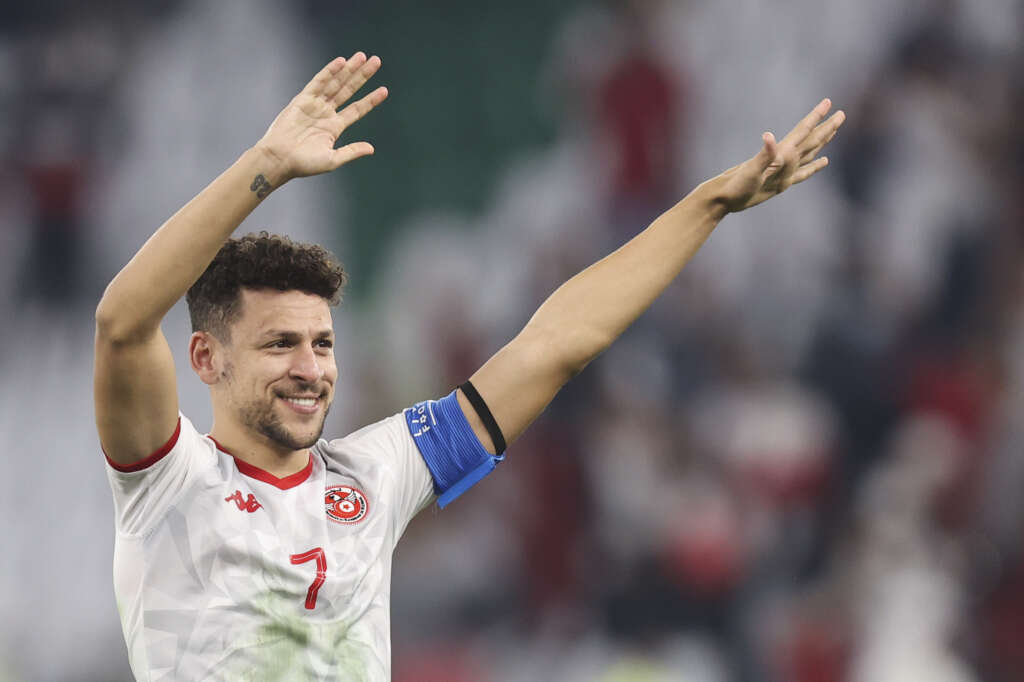
Youssef Msakni missed the last World Cup due to injury. A crushing blow for 17-18 Qatar Stars player of the year and Tunisia’s most capped active player. Now approaching 100 appearances for the eagles, Msakni is both captain and maybe the best creator on the team. At what might be his last World Cup, Msakni may need to lead both on and off the field for Tunisia to make history. 

Australia | Elo: 39 | FIFA: 38 |

History: The Socceroos return… again. With a surprise win against Peru, Australia booked a trip to their  5th straight World Cup.

Representing a country based in Oceania, yet currently competing in Asia, the Socceroos were formed in 1922 for a series of friendlies against New Zealand. The Aussies lost twice, giving New Zealand, for a brief period of time, a monopoly on bragging rights.  With the arrival of cheaper air travel in the 60’s, Australia had a chance to face teams outside of their small corner of the world. This moment proved critical, setting the stage for Australia to establish themselves as one of football’s great paper tigers.

 With all but two national teams withdrawing from World Cup qualification in the Africa, Asian, and Oceanian zone, all Australia had to do to reach the 1966 World Cup was win a two-legged against North Korea. They were destroyed. They lost more respectably to Israel in 1970, before reaching the 74 edition with a hard-fought victory against South Korea. There, a side of amateurs took a point from Chile after losses to both sides of Germany. 

Over these 40 years a dichotomy emerged. Australia dominated their own backyard, reaching 7 inter-confederation playoffs. But Australia were consistently exposed against stronger opponents, losing each matchup with the exception of the aforementioned win over Korea. This came to a head in qualification for 2002 where Australia won went perfect in OFC, racked up a +71 goal differential from 8 games, recorded what is, to this day, the biggest win in the history of international football, and still missed out on the tournament proper thanks to a decisive loss outside of the continent.

Australia finally broke through in 2006, reaching Germany’s World Cup after winning a rematch with Uruguay. There, the Socceroos surprised, beating Japan and tying Croatia to become the first Oceanian team to ever progress past the group stage. A controversial loss to the eventual Champs sullied celebrations, but Oceania had found its great hope… except the Aussies had already decided to turn tail a year earlier.

In 2010 they breezed through Asian qualifying going undefeated and putting up a continent best 22 points in the final round. At the tournament proper, they nearly replicated the magic of 06 only to be denied by a controversial penalty after a second red card. The first sending off, given to 06 hero Tim Cahil, ultimately doomed them to elimination via tiebreaker. While a victory against Serbia would prove insufficient, it would mark the last time the Socceroos won at a World Cup.

Indeed, despite the promise that better competition would make Australia stronger, Australia has not been able to translate regional success – headlined by an Asian Cup win in 2015 – outside of their continent. Perhaps there were bigger bones to pick than the quality of national  teams players face in a small fraction of their professional matches?

Now entering a 5th straight World Cup, Australia have gone from one of the stories of 2006, and perhaps more deserving than the actual story of 2010, to a presumed minnow in 2022.

Can the Aussies flip the script with a November surprise? Or will Australia leave another tournament as quickly as expected?

Expected Finish: 4th

Why?

Australia are the lowest ranked team in this group, and arguably the least talented. They backed into the World Cup with a penalty win against Peru, after backing into the inter-continental playoff with a narrow win against the United Arab Emirates, after backing into the AFC qualification playoff with back to back losses to Japan and Saudi Arabia.

Australia only managed to win one of their last 8 matches in the final round of Asian qualifying, are winless in their last 6 group stage games, and now enter a group with two teams that already advanced past them 4 years prior.

You can never guarantee that a team will fail, but Australia is about as close as you can get.

Why not?

Australia did manage to tie Denmark last time, and if the World Cup curse holds true, that opens up a spot. Australia also may have an advantage with institutional experience over Tusnia or Denmark playing at their 5th straight World Cup.

Anything is possible.

Key Players

When picking potential stars for a team looking to overperform expectations, it’s often a decent idea to take a look at who’s tasked with stopping the shots. Matthew Ryan may be Australia’s best player. With various stints at the big clubs across Europe, Champions League experience, a team-high 76 caps, and experience from several major international tournaments, the 2-time Belgian league keeper of the year, will probably need to be massive for the Socceroos to make some noise.

Aaron Mooy has had a bit of a resurgence at Celtic, getting regular minutes as the Scottish Giants have managed to capture some of their vintage glory. Aaron played a key part in Huddersfield’s Premier League promotion in 16/17, and has played a key part for the Aussies throughout the years, winning Australian Player of the Year three times on the trot. With 53 caps, Win or lose, Mooy will go down as one of Australia’s greatest players. He’ll need to play like that for Australia to survive.

Predicted Group Standings

1Denmark
2France
3Tunisia
4Australia

For more info on the methodology click here.

Group Previews:
A

B

C

D

E

F

G

H

Continue Reading

USMNT

The More Things Change, The More They Remain the Same

Published

on

Thomas Deschaine (@uskeeper on X and us_keeper on Instagram)

In light of the recent resignation of Matt Crocker, I revisited something I wrote nearly a decade ago, an early attempt to capture what I called the “Dark Decades of US Soccer.” At the time, the piece was overly long and packed with detail—probably more than today’s audience would stick with.

But buried in that work were meaningful patterns, clear, recurring behaviors that shaped how the federation operated more than 60 years ago. What stood out most, looking back now, is how familiar some of those patterns still feel today.

So, I went back, stripped the piece down, and pulled out the most relevant sections, those that highlight the parallels between past and present. The goal isn’t to draw conclusions for you, but to put those similarities side by side and let you decide: how much has really changed?

World Cup Momentum to the First American Soccer Boom

Soccer star Pele in action during World Cup competition.

Photo of Pele at the 1966 World Cup
Photograph: AP Photo

After the success and popularity of the 1966 World Cup which saw over one million viewers of the tournament many America investors saw the vision and believed that there was the market for soccer in the United States and Canada

The investors moved very quickly and in 1967 there were two American professional leagues making their debuts the USSFA-sanctioned United Soccer Association (USA) and the independent National Professional Soccer League (NPSL).  

These leagues would only last one year and be merged at the request of FIFA into the North American Soccer League (NASL) kicking off in 1968 and relying on mainly on foreign talent. The American investors believed building the interest in soccer in the US would have a direct impact on the growth and performance of the US Men’s National team which and of course more money for the investors and federation.

First Attempt at Modernizing the USMNT

Phil Woosnam, in 1977 as the commissioner of the NASL.
Photograph: AP Photo

Off the back of the success of the inaugural NASL season, the U.S. Soccer Federation appointed Phil Woosnam, fresh off leading the Atlanta Chiefs to a championship and earning Coach of the Year honors, to take charge of the U.S. Men’s National Team.

Woosnam immediately shifted the structure of the program. Instead of a player pool selected by committee, he pushed decision-making toward the coaching staff, allowing selections to be based on performance and fit rather than geography or internal bias. The move was not universally welcomed, and it reportedly created friction with members of the federation’s leadership.

With professional players now more fully available, Woosnam’s approach helped assemble what was widely considered the strongest possible squad at the time. He also introduced organized training camps ahead of friendlies and World Cup qualifiers, an uncommon practice in that era, but one that clearly improved cohesion and preparation. Those changes contributed to the U.S. advancing further in World Cup qualifying than it had in previous cycles.

By early 1969, the USMNT appeared to be building real momentum toward a potential place in the 1970 World Cup. However, tensions between Woosnam and the federation began to escalate. Frustrated with compensation issues and growing interference from the USSF in team operations, Woosnam stepped away from the national team in the spring of 1969. become commissioner of the NASL.

Following his departure, assistant coach Gordon Jago took over as manager. His tenure began under difficult circumstances, with not being able to set up pre-qualifying friendlies, an important part of the progress made under Woosnam along with interference from USSF board members as it related to roster selection which created instability and morale issues on the field. The USMNT struggled in qualifying and ultimately fell short, losing both matches to Haiti, a team they had previously been competitive with in a series of friendlies in 1968.

The Crocker Era: Coaching Chaos and Course Corrections

Photo of Cindy Parlow Cone, Gregg Berhalter, Matt Crocker and JT Batson
Photograph: AP Photo/Lucas Peliter

It’s been roughly three years since the Matt Crocker era began at U.S. Soccer, when he stepped in as Sporting Director, replacing Earnie Stewart.

One of Crocker’s first major responsibilities was hiring the next U.S. Men’s National Team manager. In the previous cycle, the federation had reportedly operated with a narrow set of internal criteria, preferences widely believed to favor English-speaking and American candidates, which significantly limited the coaching pool and shaped the direction of the search.

Roughly two months later, during the Concacaf Nations League semifinal window, it was announced that Gregg Berhalter would be reappointed as USMNT head coach. The decision caught many around the program and in the media off guard, raising questions about how the process had ultimately unfolded.

More recently, in an interview with GiveMeSport, Jesse Marsch stated he was effectively told he was set to become the next USMNT head coach in the late spring of 2023, only for that opportunity to be withdrawn at the last moment, a shift that reportedly had ripple effects on a potential move to Leicester City that was nearing completion.

The abrupt reversal and eventual rehiring of Berhalter has been widely attributed to a mix of factors, including rumored influence from within the player pool, with U.S. Soccer ultimately reversing course. Roughly a year later, after a disappointing Copa América campaign on home soil, Berhalter was dismissed.

Crocker’s second opportunity to reset the program took a different direction. He first secured the high-profile appointment of Emma Hayes, one of the most accomplished managers in women’s football, to lead the USWNT. That move was followed by the hiring of Mauricio Pochettino for the USMNT, a tenure that has delivered mixed early results and will ultimately be judged through the lens of the 2026 World Cup on home soil but truly disappointed that Crocker wouldn’t see through what he helped build, and you have to ask yourself why?

Continue Reading

USMNT

The No. 9 Timeline: A Historical Look at USMNT Strikers

Published

on

Thomas Deschaine (@uskeeper on X and us_keeper on Instagram)

Each generation of soccer can be understood through overlapping eras, each one feeding into the next. Some produce deeper pools of talent, while others rely on a handful of standout players. In a recent piece, I looked back at past USMNT goalkeepers and their impact on World Cup teams. That led to a natural follow-up: a deeper dive into the history of USMNT strikers.

For this article, I’ve divided that history into three distinct eras, focusing strictly on past strikers rather than the current pool. I’ll wrap up, however, with some thoughts on where today’s active strikers fit into that broader timeline. For each era I will spotlight four strikers.

According to their media guide, the modern era of the USMNT begins with the 1990 World Cup cycle. While that framing makes some sense, it does gloss over some of the program’s more challenging decades. For the purposes of this, though, we’ll start there as well, especially considering that from 1974 to 1986, the USMNT averaged fewer than 20 matches per cycle and scored less than a goal per game across those four cycles.

Trailblazers: The Early Era of USMNT Strikers

The story of USMNT strikers stretches back nearly 40 years, to a time when goals were often hard to come by, but a handful of players still managed to leave a lasting impression. This was an era defined less by consistent production and more by moments, flashes of quality that stood out during a formative period for the program.

Players like Chris Sullivan, Eric Eichmann, Frank Klopas, and Roy Wegerle all played roles in at least one World Cup cycle and delivered important goals along the way. However, consistency and longevity at the international level proved elusive, reflecting the broader challenges the USMNT faced during this period.

Even so, these players helped lay the groundwork for future generations, establishing the foundation for what the striker position would eventually become.


Bruce Murray (1985 – 1993)
85 Caps, 21 goals, 11 assists

A quick, opportunistic forward known for his movement and ability to capitalize on chances, Bruce Murray was the type of striker the USMNT hadn’t truly seen before. He filled that role throughout the 1990 cycle and into the lead-up to 1994, emerging as the team’s leading scorer during that stretch and helping guide the U.S. to its first World Cup appearance since 1950. At the 1990 World Cup, Murray contributed a goal and an assist, highlighting his impact on the international stage.

Despite his contributions, Murray was ultimately left off the 1994 World Cup squad, one of the final cuts as the program began to turn toward younger options and players competing in Europe at the time.

Eric Wynalda (1990 – 2000)
106 Caps, 34 goals, 17 assists

The premier striker of this era for the USMNT, Eric Wynalda featured in three consecutive World Cups. A dynamic and confident forward, he combined technical ability with a powerful shot, making him a constant goal threat and the focal point of the U.S. attack.

His iconic set-piece goal against Switzerland in the USMNT’s opening match of the 1994 FIFA World Cup remains one of the greatest in tournament history and stands among the best goals ever scored by the USMNT. Wynalda not only delivered in defining moments but also set the tone and standard for the strikers who followed.

Earnie Stewart (1990 – 2004)
101 Caps, 17 goals, 10 assists

Earnie Stewart was a key attacking figure for the USMNT throughout the 1990s and early 2000s, bringing a blend of technical quality, intelligence, and consistency to the squad. Comfortable as both a striker and a second forward, his versatility allowed him to influence matches in multiple ways while effectively linking midfield and attack.

While not a traditional No. 9, Stewart’s movement, awareness, and all-around contributions helped shape the evolution of the USMNT’s forward line during a critical period of growth for the program. He appeared in three World Cups—the 1994 FIFA World Cup, 1998 FIFA World Cup, and 2002 FIFA World Cup—and delivered one of the most iconic moments in U.S. soccer history, scoring the game-winning goal against heavily favored Colombia on home soil in 1994.

Second Generation USMNT Strikers (1996-2010)

The next era of USMNT strikers following the 1994 World Cup produced a tough, hard-nosed group. Several featured in one or more World Cup cycles, led by Josh Wolff, who made both the 2002 and 2006 squads.

Brian Ching and Eddie Johnson were also key figures, earning spots on the 2006 roster, with some arguing they were overlooked later in their careers. Other notable names from that period include Casey Coner, Ante Razov, and Taylor Twellman, players who all had opportunities with the USMNT, but whose form and timing didn’t quite align with World Cup selection. Twellman, in particular, still believes he should have been part of the 2006 squad.

Joe-Max Moore (1992 – 2002)
100 Caps, 24 goals, 14 assists

This was always a bit of a sneaky one for me. Joe-Max Moore was a consistently reliable attacking option for the USMNT during this era, even if he didn’t always get the spotlight. Currently ranked seventh all-time in USMNT goals, Moore contributed across three World Cup cycles and remained a steady presence in the attack.

He’s also one of just five USMNT players to score four goals in a single match, a standout performance that came against El Salvador in 1993. Despite his overall production and longevity, however, Moore was never able to find the back of the net on the World Cup (1994, 1998 and 2002) stage.

Brian McBride (1993 – 2006)
95 Caps, 30 goals, 11 assists

A traditional No. 9, Brian McBride was physical, relentless, and dependable, with a dominant aerial presence in the biggest moments. He put everything on the line for the USMNT, scoring in multiple World Cups (1998 and 2002) and cementing himself as a fixture at the striker position.

One of his most iconic moments came at the 2006 World Cup, when he was elbowed in the face by Italy’s Daniele De Rossi, leaving him bloodied and in need of stitches, yet he still played the full 90 minutes.

Clint Mathis (1998 – 2005)
46 Caps, 12 goals, 9 assists

While Clint Mathis had a relatively brief run with the USMNT, his impact on the attacking position was undeniable. Often deployed as a second striker behind Brian McBride, Mathis was anything but traditional—he thrived as a free-roaming attacker capable of changing a match in an instant, highlighted by his ability to score spectacular long-range goals.

He played a key role for the U.S. at the 2002 FIFA World Cup, scoring a memorable goal against South Korea in the group stage and adding an assist, helping power the team’s historic run.

The Evolving Striker Pool (2009 – 2018)

The striker pool from this generation is an interesting mix, some players were only involved with the USMNT for brief stretches, while others carried over from the previous era and overlapped with this group.

Strikers like Edson Buddle and Hercules Gomez, both part of the 2010 World Cup roster, had limited opportunities and production at the international level. Their inclusion was shaped in part by circumstance, as Charlie Davies’ recovery from his car accident less than a year before the tournament ultimately ruled him out of contention.

Looking ahead to 2014, Aron Jóhannsson and Chris Wondolowski earned World Cup roster spots but struggled to make a lasting impact in the biggest matches against top-tier opponents, which limited their long-term roles with the national team.

Players like Jordan Morris, Jesús Ferreira, and Gyasi Zardes emerged and saw increased opportunities following the failure to qualify for the 2018 World Cup. It’s easy to imagine that at least some of that younger group could have factored into the roster had the U.S. made it to Russia.

Clint Dempsey (2004 – 2017)
141 Caps, 57 goals, 19 assists

Clint Dempsey delivered some of the most iconic striker moments in USMNT history, big goals, clutch performances, and a relentless ability to show up when it mattered most. While he wasn’t a traditional target striker, his movement, instincts, and technical ability made him one of the most dangerous attacking players the U.S. has ever had.

He scored against top-tier opponents like Spain and Brazil at the 2009 Confederations Cup, found the net against England at the 2010 World Cup to help secure a crucial draw, and famously opened the scoring just seconds into the 2014 World Cup. He also delivered in the 2016 Copa América, with key goals against Ecuador in the quarterfinal and Paraguay in the group stage.

Dempsey wasn’t just a scorer, he was a moment-maker. Whether it was a scrappy finish, a composed strike, or stepping up in the biggest matches, he consistently delivered when the U.S. needed him most.

Jozy Altidore (2007 – 2019)
115 Caps, 42 goals, 14 assists

Jozy Altidore had a unique USMNT career, less about highlight-reel volume and more about physical presence, hold-up play, and stepping up in key moments. At his best, he was the focal point of the attack and a difference-maker. Jozy’s work ethic seemed to impact later stages of his club and USMNT career and impacted him becoming the all-time leading scorer in USMNT history.

Bobby Wood (2013 – 2018)
43 Caps, 13 goals, 3 assists

If it weren’t for Jürgen Klinsmann’s support after Bobby Wood secured a new club in Germany, it’s unclear whether his international career would have continued. While his peak was relatively brief at both club and national level, Wood made his mark with clutch moments, most memorably scoring game-winning goals in back-to-back 2015 friendlies: a 4–3 comeback victory over the Netherlands and a 2–1 win against Germany.

The Next Generation: Assessing the Future of USMNT Strikers

The current USMNT striker pool remains very unsettled. At the moment, Ricardo Pepi is the only regular forward to reach double-digit goals, with 13. He’s followed by Folarin Balogun with eight and Haji Wright with seven. Other notable names in the mix include Josh Sargent and Patrick Agyemang, each of whom has contributed five goals at the international level. However, Agyemang suffered an Achilles injury and has been ruled out of the World Cup, a significant setback given his recent form. For the USMNT to be successful at the 2026 FIFA World Cup their strikers will be a key role and contributing to the teams’ goals scored.

From a club perspective at the time of the article, Balogun is in excellent form, and the hope is that continues through the 2026 FIFA World Cup. At this point, it feels clear that Balogun and Pepi have established themselves as the top two striker options. The bigger question, though, is who else will step up to provide the depth and quality needed to sustain the position in this cycle and beyond.

Continue Reading

USMNT

Entry into US Men’s National Fandom

Published

on

Thomas Deschaine (@uskeeper on X and us_keeper on Instagram)

Every soccer fan has a player or a moment or signature win that pulls them into the game and binds them to a team, no matter how high or low the journey becomes.

For me, that moment was tied to the U.S. Men’s National Team hosting the 1994 World Cup, along with my own recent introduction to the sport as the starting goalkeeper for my school team. Tony Meola, in particular, stood out as one of many important icons and trailblazers for the USMNT during that era.

I imagine there are countless young fans around the world who have already had, or will soon have, that defining moment over the last few years: discovering their first international team and the players they’ll root for and follow for years to come.

Before the 1990 World Cup cycle, those moments were rare for the USMNT. The United States hadn’t even reached the final round of CONCACAF World Cup Qualifying. Their closest opportunity came during the 1986 cycle, when all the U.S. needed was a draw at home against Costa Rica, a result they had achieved just five days earlier on the road in Costa Rica.

In the 1980s, the USMNT qualified for the Olympics three times, once automatically as the host nation in 1984 and twice through the qualifying tournament. It’s also worth noting that Mexico was disqualified during both the 1980 and 1988 qualifying cycles.

Despite qualifying, the U.S. withdrew from the 1980 Olympics in protest of the Soviet invasion of Afghanistan. In the tournaments they did play (1984 and 1988), the USMNT struggled to make an impact, failing to advance out of the group stage and managing just one combined win across both competitions.

USMNT on the Rise (1988-1998)

This generation of trailblazers put the U.S. Men’s National Team back on the map—ending a 40-year World Cup drought, hosting the 1994 World Cup, and advancing further than the world expected.

1989 WCQ neutral side in Honduras vs El Salvador

A rare win away from home soil keeps US in hunt to qualify for 1990 World Cup. 

1989 – Qualification at Trinidad & Tobago

The win in Port of Spain sends the US to its first World Cup since 1950.

1990 – Return to the World Cup (Italy)

Results were tough, but simply qualifying restarted the program on the world stage.

1991 – USA 2–0 Mexico (Gold Cup)

The USMNT’s first “Dos a Cero” win against Mexico to advance to the first Gold Cup Final.

1993 – USA 2-0 England (U.S. Cup)

The USMNT first win against England since the 1950 World Cup.

1994 – USA 2–1 Colombia (World Cup)

One of the biggest upsets in World Cup history; launched U.S. soccer into the mainstream.

1995 – USA 3-0 Argentina (Copa America)

The apex win for this generation of USMNT trailblazers.

1998 – USA 1-0 Brazil (Gold Cup)

The USMNT only win over Brazil to date.

Earning Respect from the World (1999-2010)

After a disappointing performance at the 1998 World Cup, the USMNT reset by hiring American coach Bruce Arena. That decision, combined with the emergence of impactful young players, helped restore credibility and earn growing respect on the global stage—culminating in a deep and memorable run at the 2002 World Cup.

1999 – 2-0 Win over Germany (Confederations Cup)

USMNT second win over Germany in 1999.

2001 – First “Dos a Cero” vs Mexico in Columbus (World Cup Qualifier)

A rivalry-defining moment and a psychological turning point.

2002 – USA 3–2 Portugal (World Cup)

The world took notice. One of the greatest performances in USMNT history.

2002 – USA 2–0 Mexico (World Cup Round of 16)

Dominance over rival Mexico on the biggest stage.

2002 – World Cup Quarterfinal run (loss 1–0 to Germany)

Even in a loss the USMNT deepest World Cup run got attention from most.

2005 – USA 2-0 Mexico in Columbus (World Cup Qualifier)

USMNT WCQ win over Mexico qualified them for the World Cup.

2007 – Gold Cup Final: USA 2–1 Mexico (Gold Cup)

A signature win in Chicago with a classic Donovan goal.

2009 – USA 2–0 Spain (Confederations Cup)

Ends Spain’s 35-match unbeaten streak in a historic semifinal upset.

2010 – Donovan vs Algeria (90+1’)

The most iconic goal in USMNT history; dramatic group-stage escape.

The Klinsmann Era (2011-2017)

When Jürgen Klinsmann was hired to replace Bob Bradley, he introduced a new mindset for the USMNT, challenging players to compete at higher levels with their clubs. The opponents he scheduled during his tenure reflected that philosophy, consistently pushing the team against stronger international competition.

2012 – USA 1-0 Italy (Friendly)

A key road win for the USMNT under Klinsmann.

2012 – USA 1-0 Mexico (Friendly)

The Americans first ever win at Azteca in Mexico.

2013 – USA 4-3 Germany (Centennial Match)

Celebrating their centennial match in style with a win.

2013 – USA 4-3 Bosnia-Herzegovina (Friendly)

A comeback road win against the 13th ranked Bosnia-Herzegovina.

2013 – USA 2-0 Mexico (World Cup Qualifier)

Nothing better than Dos a Cero that qualifies you for the World Cup.

2014 – USA 2–1 Ghana (World Cup)

Revenge at last, with a clutch John Brooks header helping to advance from Group of Death.

2015 – USA 4-3 Netherlands (Friendly)

A thrilling comeback victory on the road against the Netherlands.

2015 – USA 2-1 Germany (Friendly)

Days after beating the Netherlands, the USMNT topped Germany in a hard-fought match.

2016 – USA 2-1 Ecuador (Copa America)

A quarter-final win for the Americans who advance to the semi-finals of Copa America.

The Rise of a New Generation (2018-Current)

After the failure to qualify for the 2018 World Cup, the USMNT landscape began to shift. A greater emphasis was placed on integrating younger players into the national team, even as it became increasingly difficult for the U.S. to schedule friendlies against top-level opponents from Europe and South America.

2021 – USA 3-2 Mexico (Nations League)

This extra-time win sparked a period of dominance over Mexico.

2022 – USA 3-0 Morocco (Friendly)

A victory over the eventual fourth-place finisher at the 2022 World Cup.

2022 – USA 1-0 Iran (World Cup)

A first-half strike from Christian Pulisic propels the U.S. into the knockout stage.

2023 – USA 3-0 Mexico (Nations League)

A dominant semifinal win preceded Gregg Berhalter’s rehiring.

2024 -USA 2-0 Mexico (Nations League)

Another victory over El Tri, extending the unbeaten run to seven matches.

A Chance to Win will bring in New Believers Ahead of 2026

The USMNT has a prime opportunity to build momentum and attract new supporters ahead of the 2026 World Cup, with upcoming friendlies against European powers Belgium, Portugal, and Germany, along with AFCON champions Senegal. These high-profile matchups offer a rare spotlight and a chance to measure themselves against the world’s best.

A deep World Cup run, reaching the quarterfinals or beyond, would go a long way toward winning and retaining new fans. But to truly grow the fanbase, success must be consistent, with fewer lapses and a standard of performance that reinforces belief long after the tournament ends.

Continue Reading

Trending